


We are based in Tokyo, and this guide is the short list we would give to someone who already loves Japanese craft. These are pieces for daily use: a sake cup after dinner, a bowl held in both hands for matcha, a wood scent by the front door. Some of them, like the Raku bowl and the cherry-bark tea canister, deepen with handling.
Every ceramic, lacquer and fragrance piece here is made in Japan, and we name the kiln, workshop or fragrance house behind each one wherever we can. Everything ships from Japan, packed by us. The guide is organised by the person you are buying for; for the full range, see all our Japanese gifts.
Giving for the holidays. Order by 10 December for delivery in the US before Christmas. Shipping is free on orders over $199. Prices do not include US import duties; they are calculated and paid at checkout, so nothing is due when the gift is delivered. Running late? Our digital gift card is delivered by email.
What makes a good Japanese gift?
A good Japanese gift is an object made for a daily ritual, by a maker or region you can name: a sake set for sharing, a matcha bowl held in both hands, a wood-scented diffuser. The best ones are used every day, improve with handling, and come with a story about where and how they were made.
Three questions decided what made this list. Can we say who made it and where? Will it be used often, not just admired once? And will it travel from Japan in good condition? Where we cannot name an individual maker, we name the region and the workshop tradition.
For the home: Japanese scent
Japanese scent has long centered on wood: aloeswood and sandalwood in incense, hinoki in temples and baths. Hinoki has a clean, almost citrus freshness, and is still the timber of temples and traditional bathtubs. Kuromoji, a native spicebush, is the wood confectioners use for the picks served with wagashi. These scents are quiet, and they suit people who dislike anything sweet or heavy. More in our Japanese home fragrance collection.
For an easy gift to get right: RYOKAN reed diffusers
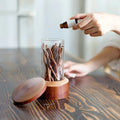
The RYOKAN Sandalwood & Hinoki Reed Diffuser Set includes two 2 fl oz bottles—one warm sandalwood and one fresh hinoki—each with its own reeds. There is no flame and nothing to plug in. The scents are woody rather than sweet, and the recipient can keep one in each room or save the second for later.

For a first taste of incense: kugiri TOKYO
The Tokyo Scent Morning & Night Incense Gift Set captures two scenes of Tokyo. Morning in Asakusa is green tea and petitgrain; night by the Sumida River is tea tree and igusa, the rush grass that tatami mats are woven from. Forty sticks of about ten minutes each and a holder, in a grey box with obi-style wrapping, ready to give.

For a desk or a wardrobe: kuromoji branch
The Kuromoji Branch Diffuser is a natural kuromoji branch with a small bottle of oil distilled from kuromoji branches and leaves. A few drops on the branch scent a desk, an entryway, or a wardrobe. It needs no electricity, water, or flame, and it is the smallest gift in this guide.

For wood-fired texture: Bizen
Bizen is one of the Six Old Kilns (Rokkoyō), among Japan's oldest continuous pottery traditions, and is traditionally left unglazed so that the clay and the fire do the work. The ONI BIZEN Chrysanthemum Incense Burner is formed by hand at Atobu-gama in Okayama and fired in a wood-burning climbing kiln, so its color and markings belong to that one firing. Smoke rises through the petal-shaped openings in the lid.

For the sake drinker
A tokkuri and a pair of small cups change how sake is drunk. The pours are small and frequent, and by custom you do not pour your own: you pour for the person beside you, and they pour for you. A sake set is a gift for sharing. Browse all our sake sets and sake cups, or read our guide to the tokkuri and how to warm sake.
For an evening for two: Black Oribe
Oribe ware takes its name from Furuta Oribe (1544–1615), the warrior and tea master whose taste for deliberately irregular forms shaped Mino ceramics in the early 1600s. The Black Oribe Mino Sake Set by Keizan Kiln keeps that spirit: glossy black glaze, loose white decoration, small differences from piece to piece. An 8.6 fl oz tokkuri and two 3.2 fl oz cups, in a wooden box.

For an unexpected side of Arita: cinnabar tenmoku
Arita, in Saga, is where porcelain was first made in Japan, in the early seventeenth century, and it is best known for blue-and-white. The Handmade Arita Cinnabar Tenmoku Sake Set shows another side of it. Shiro Kiln uses a yōhen ("kiln-change") tenmoku glaze that shifts with conditions inside the kiln: deep cinnabar red running into darker tones, never the same twice. A pourer and two cups, each made by hand. To see how Arita porcelain is made, from stone to finished piece, read our guide to how Arita ware is made.

For the host: Goyo guinomi
The Goyo Guinomi Sake Cup Set brings five handmade guinomi from Keizan Kiln, each a different shape and glaze: ivory, olive, ochre, one with dark brushwork. At about 2 fl oz each, they are for modest pours, and the fun is in letting every guest choose a favorite. The set comes in a wooden box, the traditional way fine ceramics are given in Japan, so it suits a host, a wedding or a housewarming.

For the tea lover
A matcha bowl, or chawan, is held in both hands and turned before drinking, so it is looked at and touched more closely than almost any other piece of tableware. That is why tea people care so much about them, and why a good one makes a lasting gift. See all our matcha bowls.
For winter tea: Ninsei camellias
The Ninsei Tsubaki Matcha Bowl by Josui Togaen sets crimson and cobalt camellias against drifts of gold, painted in the manner of Nonomura Ninsei, the seventeenth-century Kyoto potter. The camellia flowers in the coldest months, and in the tea room it is the flower of the hearth season, from the opening of the sunken hearth in November into early spring. It is a bowl to give as the tea year turns to winter.

For the purist: black Raku
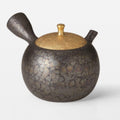
Raku was born in Kyoto in the late sixteenth century, when the potter Chōjirō made bowls for the tea master Sen no Rikyū. Raku bowls are shaped by hand and knife rather than on a wheel and fired at low temperature, which gives a soft body that holds the warmth of the tea. The Kuroraku Black Raku Matcha Bowl is the form at its plainest, and for many tea drinkers it is still the benchmark. Tea people still say Ichi Raku, ni Hagi, san Karatsu: for a tea bowl, Raku first. Shoraku Kiln is one of the Kyoto workshops working in this tradition; the Raku family itself continues in Kyoto in its sixteenth generation.

For someone new to matcha: a katakuchi starter set
The bowl in the Kegime Oribe Katakuchi Matcha Starter Set has a pouring lip (katakuchi), so you can whisk the tea and then pour it over milk or into a cup, which suits how most people drink matcha at home. Deep green Oribe glaze follows the grooved sides. The set includes an 80-prong bamboo whisk and a holder for drying it. The bowl is made in Gifu by Meisen Kiln; the whisk and holder are made in China. Matcha powder is not included. Other options are in our matcha starter sets and our guide to choosing a matcha set.

For the tea cupboard: Kabazaiku cherry bark
Kabazaiku is a craft from Kakunodate in Akita, made from the bark of the wild mountain cherry, yamazakura. The bark keeps out moisture and seals well, which keeps tea leaves or coffee beans fresh, and it darkens to a richer patina the more it is handled. Each Kabazaiku tea canister is scraped, polished, and assembled by hand, and no two have the same grain. At 5.3 oz, it is also light to send. It is often sold in English as "birch bark", a long-standing mistranslation; the bark is cherry. More tea canisters here.

For the cook and the table
Japanese tableware is bought in small sets and mixed freely; no two plates at a Japanese table need to match. A set of small dishes, a pair of chopsticks or a single good knife are gifts a cook uses every day. Explore our kitchen and cooking gifts.
For the serious cook: a Seki knife
Seki, in Gifu, has made blades since the age of swordsmiths and is still one of Japan's great knife towns. The TOWA Tsubatsuki I Japanese Chef Knife has a slender 7.1 in blade, comfortable on a small board for meat, fish and vegetables. In Japan a knife can be given to wish someone a path cut open to the future, though it is usually avoided as a wedding gift because a blade also suggests cutting ties. See all our Japanese knives.

For a couple: Oshidori chopsticks
Mandarin ducks, oshidori, swim in pairs, and in Japan they stand for a devoted couple. The Oshidori Chopsticks & Rest Pair Set by Hyozaemon gives two pairs of chopsticks coated in genuine urushi lacquer, with duck-shaped rests, presented in a paulownia box that can later hold letters. It is the natural gift for a wedding or an anniversary. Hand wash only. See all our Japanese chopsticks.

For a short course in Mino glazes: Rokugama plates
The Handmade Rokugama Small Plate Set gathers six 4.5 in plates by the ceramicist Kazufumi Wada of Keizan Kiln, each in a different classic Mino glaze: cobalt gosu marbling, carved green Oribe, combed yellow Kiseto and more. On the table, they hold sweets, pickles, or a single serving of something good.

For the collector's shelf
Two pieces made to be looked at as much as used, from regions with centuries-old decorative traditions.
For bold colour: Ko-Kutani style
Kutani porcelain, from Ishikawa, is known for its bold overglaze colour: deep greens, blues, yellows and purples held in dark outlines. The early Ko-Kutani style of the mid-1600s was revived in the nineteenth century and still defines the ware. The Ko-Kutani style bird and flower incense burner follows it, with birds among branching foliage around the body and a pierced yellow lid above. It works as well on a shelf as it does with incense.

For letters and photographs: Kishū lacquer
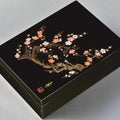
Kishū, in Wakayama, is one of Japan's historic lacquer centres, and also the country's great plum-growing region. On the Kishū Lacquer Keepsake Box, plum blossom, the first flower of the year, is hand-painted across deep black. The box is MDF finished in cashew lacquer, the hard-wearing modern coating Kishū workshops use for everyday pieces, so it can be handled daily without the care solid-wood urushi needs. At 13.6 × 9.6 × 4.3 in, it holds letters, photographs or anything worth keeping.

Quick finder
| If they… | Consider | Budget |
|---|---|---|
| Love a beautiful home | RYOKAN Reed Diffuser Set | $100–$200 |
| Are curious about incense | Tokyo Scent Incense Set | Under $100 |
| Already burn incense | RYOKAN Yadori Incense Set | $100–$200 |
| Enjoy sake or fine wine | Black Oribe Sake Set | $100–$200 |
| Host dinners | Goyo Guinomi Cup Set | Under $100 |
| Drink matcha every day | Kuroraku Raku Bowl | $100–$200 |
| Want to start with matcha | Kegime Oribe Starter Set | Under $100 |
| Cook seriously | TOWA Chef Knife | $100–$200 |
| Appreciate fine decoration | Ninsei Tsubaki Matcha Bowl | Over $200 |
| Keep letters and photographs | Kishū Lacquer Keepsake Box | Over $200 |
| Need a small, thoughtful extra | Kuromoji Branch Diffuser | Under $50 |
| Hard to choose for | Gift card | From $50 |
| For | Consider |
|---|---|
| Japanese gifts for him | Black Oribe sake set, TOWA chef knife, Bizen incense burner |
| Japanese gifts for her | Ninsei Tsubaki bowl, RYOKAN reed diffuser, Kishū keepsake box |
| A couple | Oshidori chopstick pair, Black Oribe sake set for two |
| A tea lover | Japanese tea lover gifts |
Japanese gift-giving etiquette, briefly
Pairs for couples. Meoto pairs (literally "husband and wife") of rice bowls, teacups or chopsticks are a classic wedding and anniversary gift. The two are rarely identical: one is slightly larger, or the colours differ. Pairs are also the accepted exception to the custom of giving odd numbers at weddings, since an even number can be divided.
Five, not four. Japanese tableware is traditionally sold in sets of five, enough to serve guests. Sets of four are avoided as gifts because shi, four, sounds like the word for death. Nine is avoided for the same reason: ku also means suffering. Our Goyo cups come as five.
The box is part of the gift. Fine ceramics in Japan are given in a fitted wooden box (tomobako). When the maker signs and seals the lid, the box becomes the piece's record of origin, and collectors keep the two together for generations.
Wrapping and giving. Gifts are often carried in a furoshiki, a square of cloth tied around the box, and formal gifts carry a noshi, a printed or folded paper band. A gift is offered and received with both hands.
What to avoid. Combs (kushi, which echoes ku and shi), handkerchiefs at a parting, and knives at a wedding are traditionally passed over.
Before giving tableware or lacquer, check the care notes; our ceramic care guide covers washing and storage.
Explore all our Japanese gifts
Sources and author
Written by Jean in Tokyo. Product details follow our store listings, checked when this guide was written. Background on Kabazaiku comes from the Japan Tourism Agency multilingual commentary database: Kaba-zaiku, crafting with cherry bark.

Written by Jean
My Japanese World
Jean has lived in Japan for more than 20 years. His passion is to bridge cultures. He runs My Japanese World with his wife, Kazumi, to share Japanese culture and heritage with the world. Meet the team on our About Us page.
Frequently asked questions
Is everything in this guide handmade?
No, and we would rather be clear about it. Some pieces, such as the Raku bowl, the Bizen incense burner, the Goyo sake cups, the Arita sake set, the Rokugama plates and the Kabazaiku canister, are made by hand. Others are made in small Japanese workshops using traditional production methods. Each product page explains how the piece is made.
What is a good Japanese gift for someone who has everything?
Something small, used daily and impossible to find locally: the Kabazaiku cherry-bark canister, the kuromoji branch diffuser or the Goyo set of five sake cups.
Can I send a gift straight to the recipient?
Yes. Enter the recipient's address as the shipping address at checkout.
Will the recipient see the price?
International shipments carry a customs declaration that states the value of the contents, so the declared value travels with the parcel.
How long does delivery take?
Orders are packed and dispatched from Japan, then delivered by FedEx, usually 3–5 business days after dispatch. Allow up to two weeks from order to delivery in busy periods.
Do prices include import duties?
No. Our prices do not include US import duties. They are calculated and paid at checkout, so a gift arrives with nothing for the recipient to pay.
Are these pieces dishwasher safe?
Not all of them. Raku, urushi lacquer and Kabazaiku should always be washed or wiped by hand. Care instructions are on each product page.
What if something arrives damaged?
Every package is fully covered for shipping damage. Contact us with a photo and we will put it right.