This site uses cookies for better user experience and analytics.
Towa Chef Knife – 7.1 inches (18 cm)
$169.00
2 reviews
Special Tenless Steel • 7.1 in (18 cm) blade • Made in Japan
In stock
Ships within 4 business days
Secure, insured delivery from Japan
Worldwide shipping from $30 · free over $150. Shipping policy
$169 with this item · qualifies for free shipping
U.S. duties prepaid
No extra import charges on delivery — the price you see is the price you pay. Learn more
Sourced in Japan, from the makers
Direct from Japanese workshops and their authorised channels.
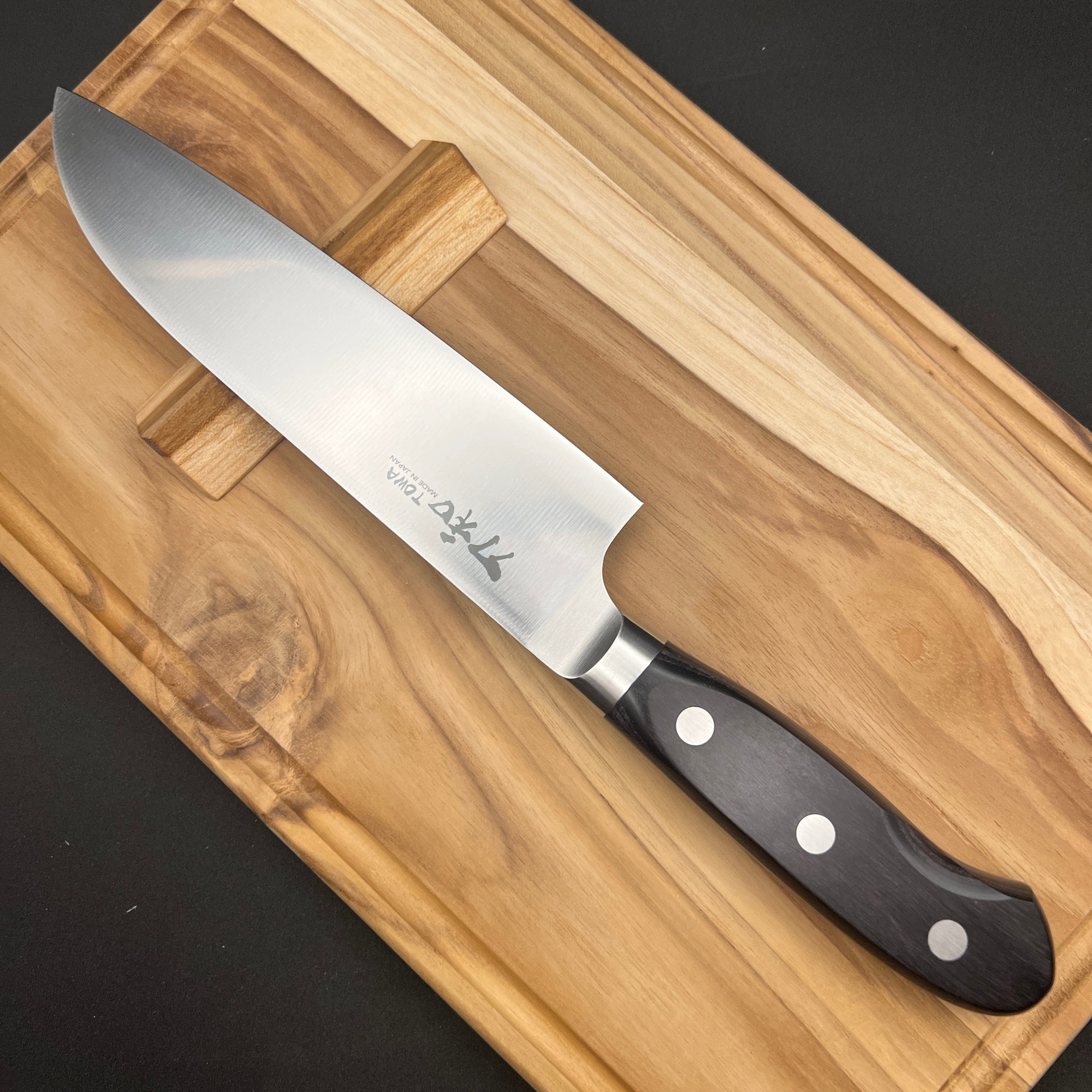
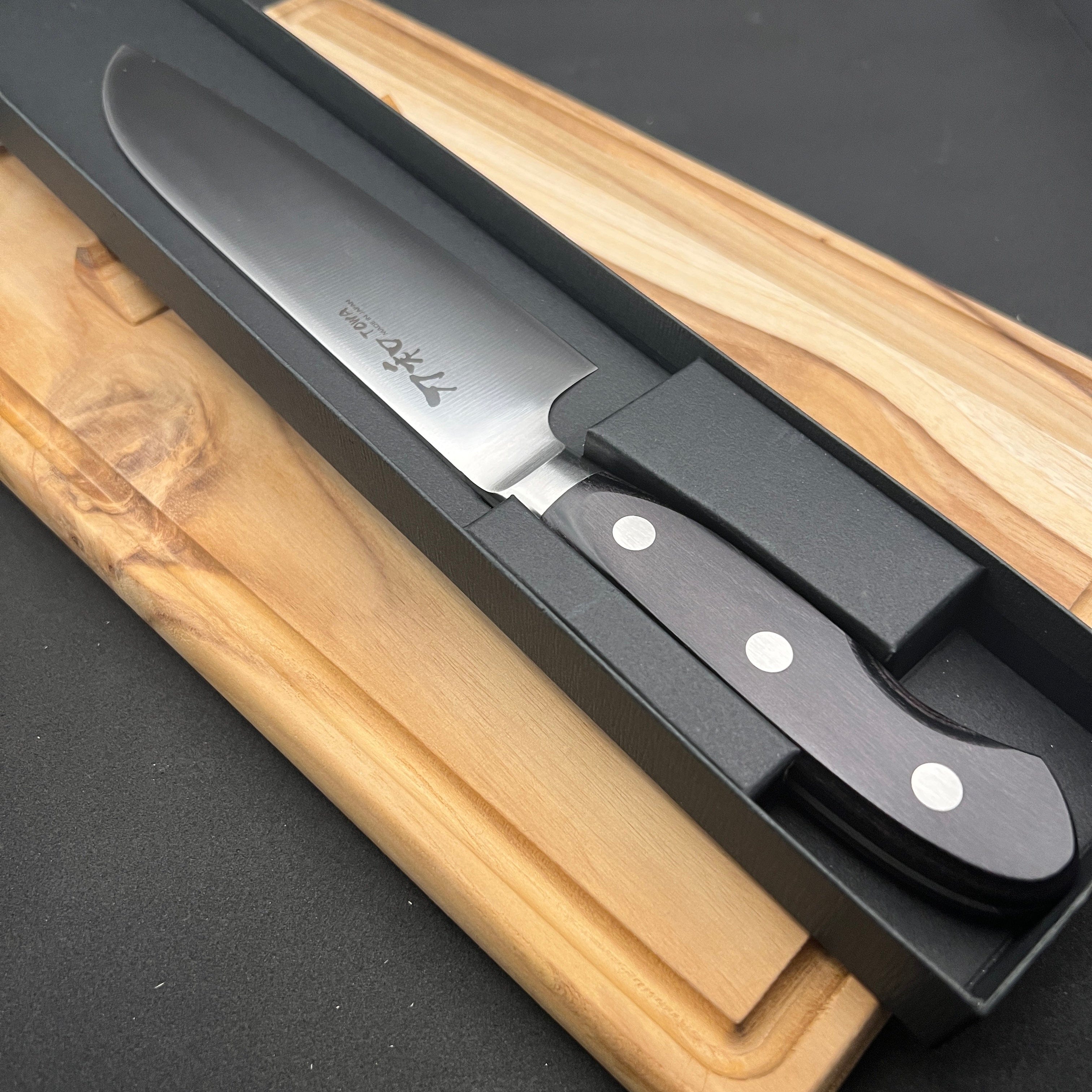
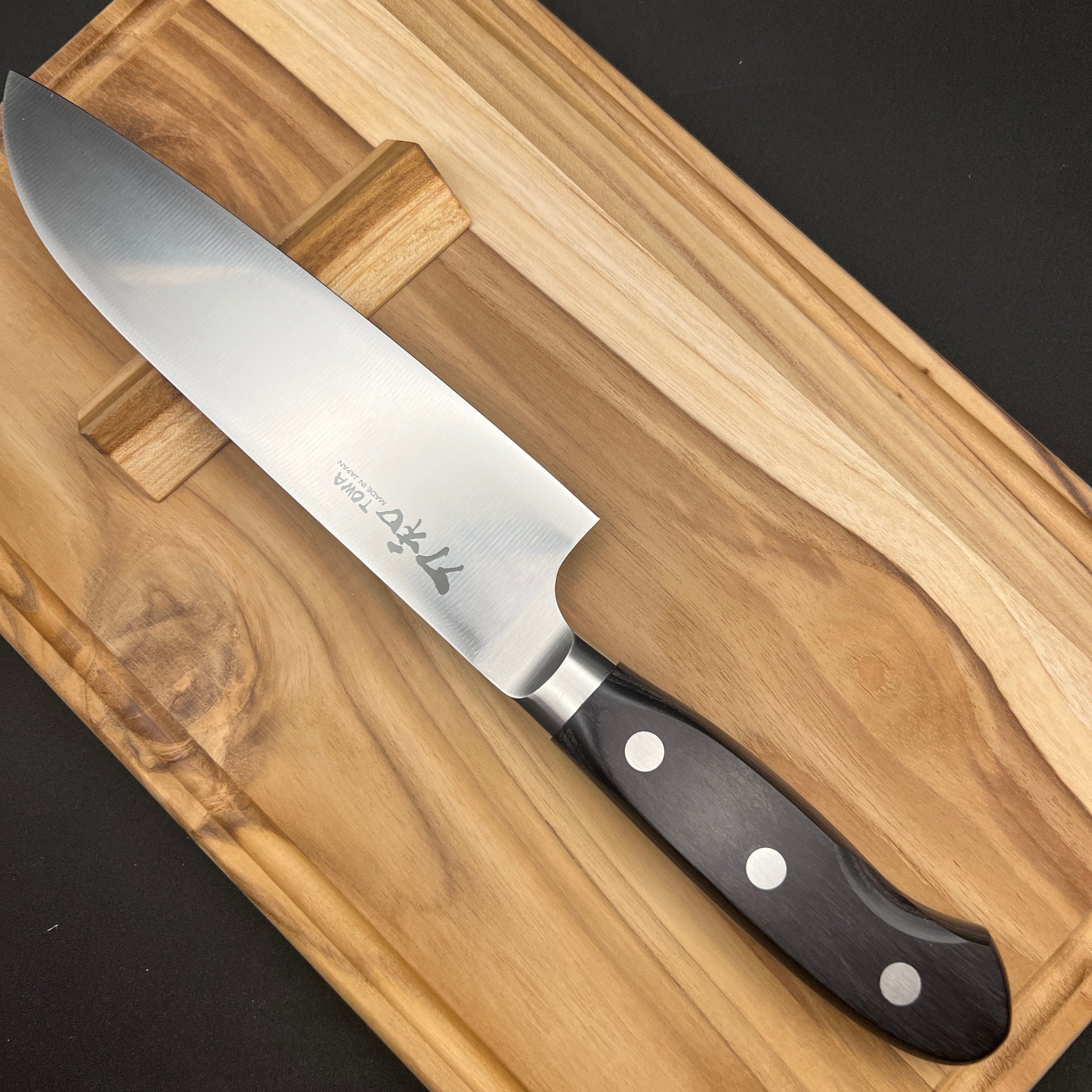
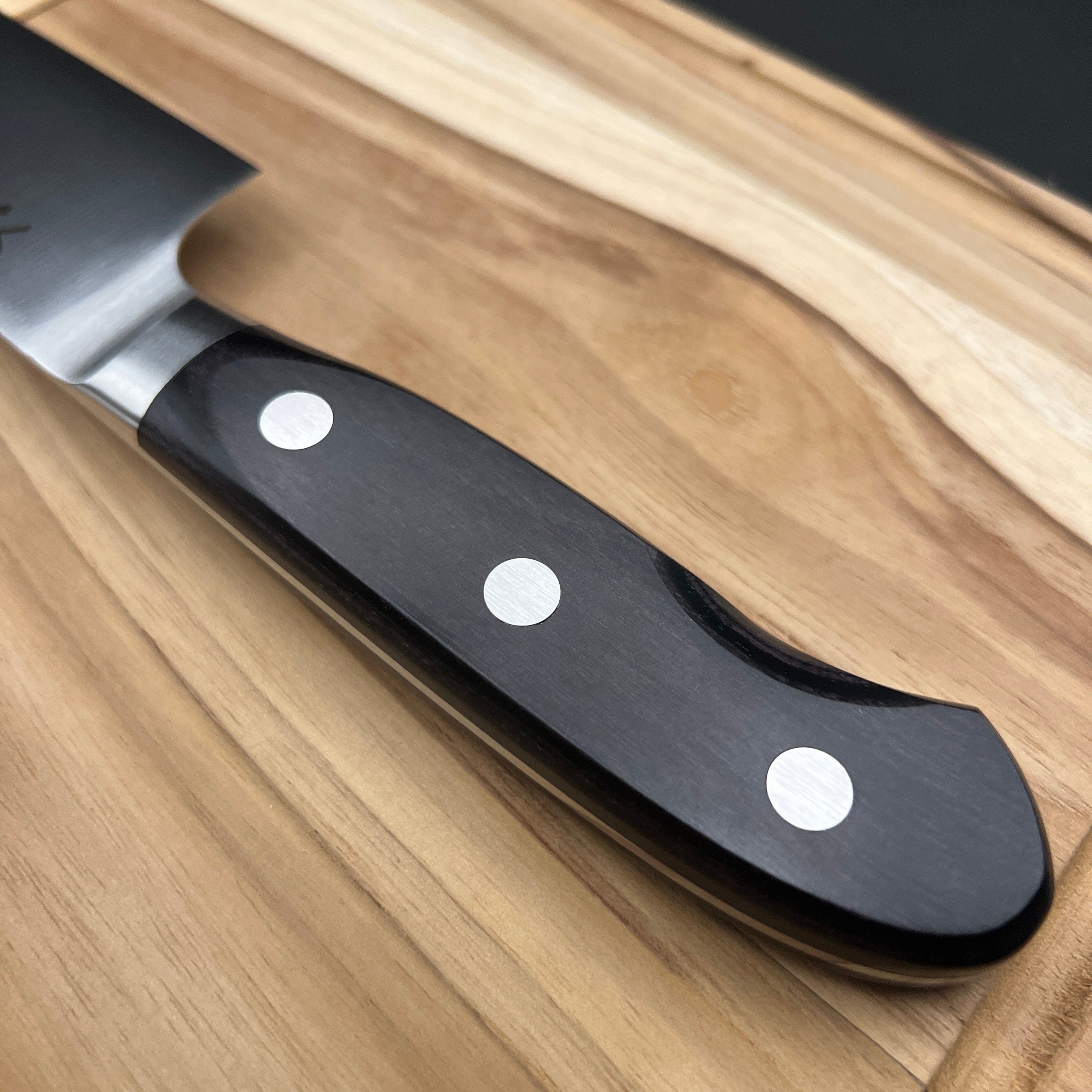
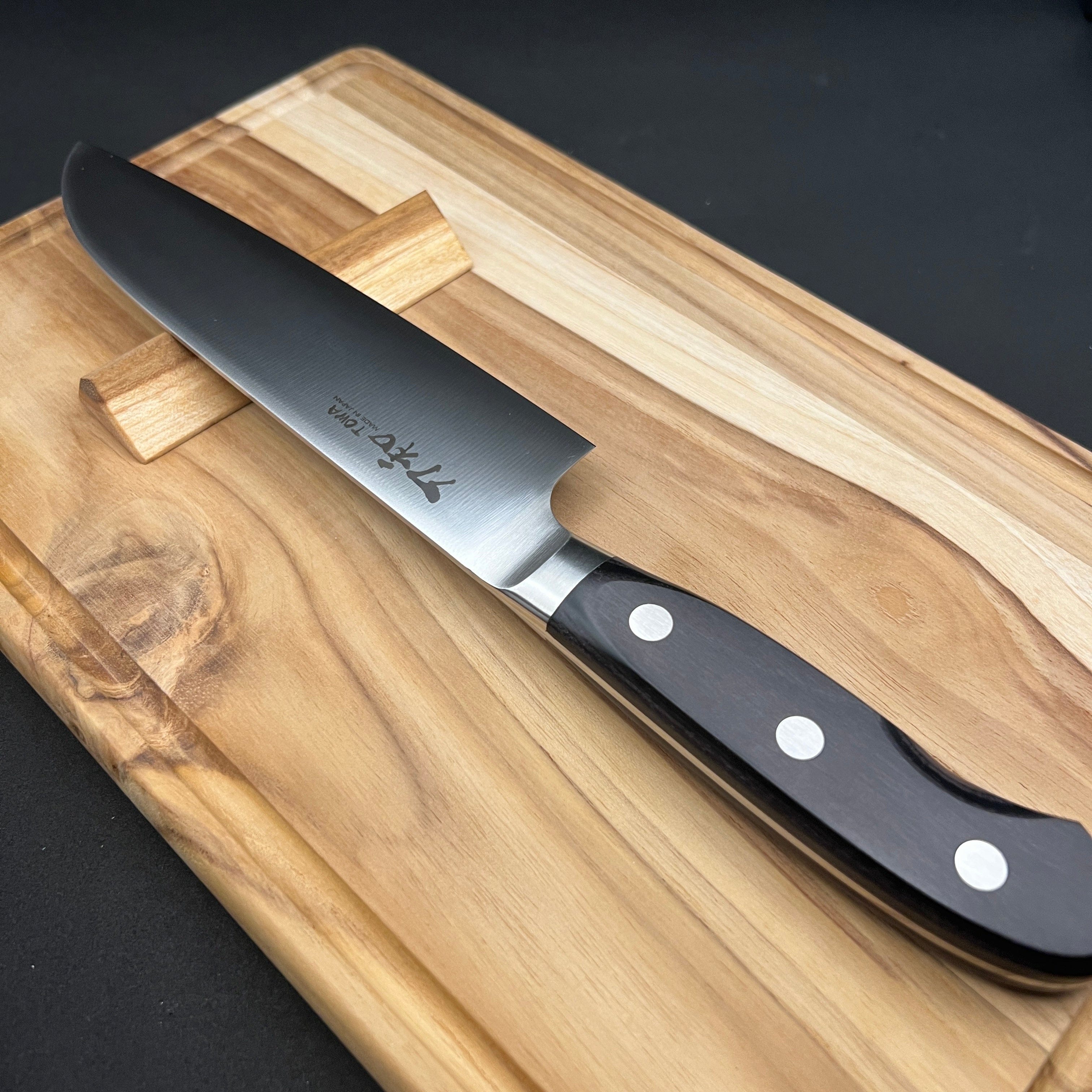
The Towa Chef Knife has a slender 7.1 in (18 cm) blade for clean, controlled slices through large cuts of meat, roast beef, ham, and sashimi saku. Its sword-style brim adds weight and hand protection, while the laminated black plywood handle supports a steady grip during detailed prep.
Why You’ll Love It
Slice large cuts of meat, roast beef, ham, and sashimi saku with the slender 7.1 in (18 cm) blade.
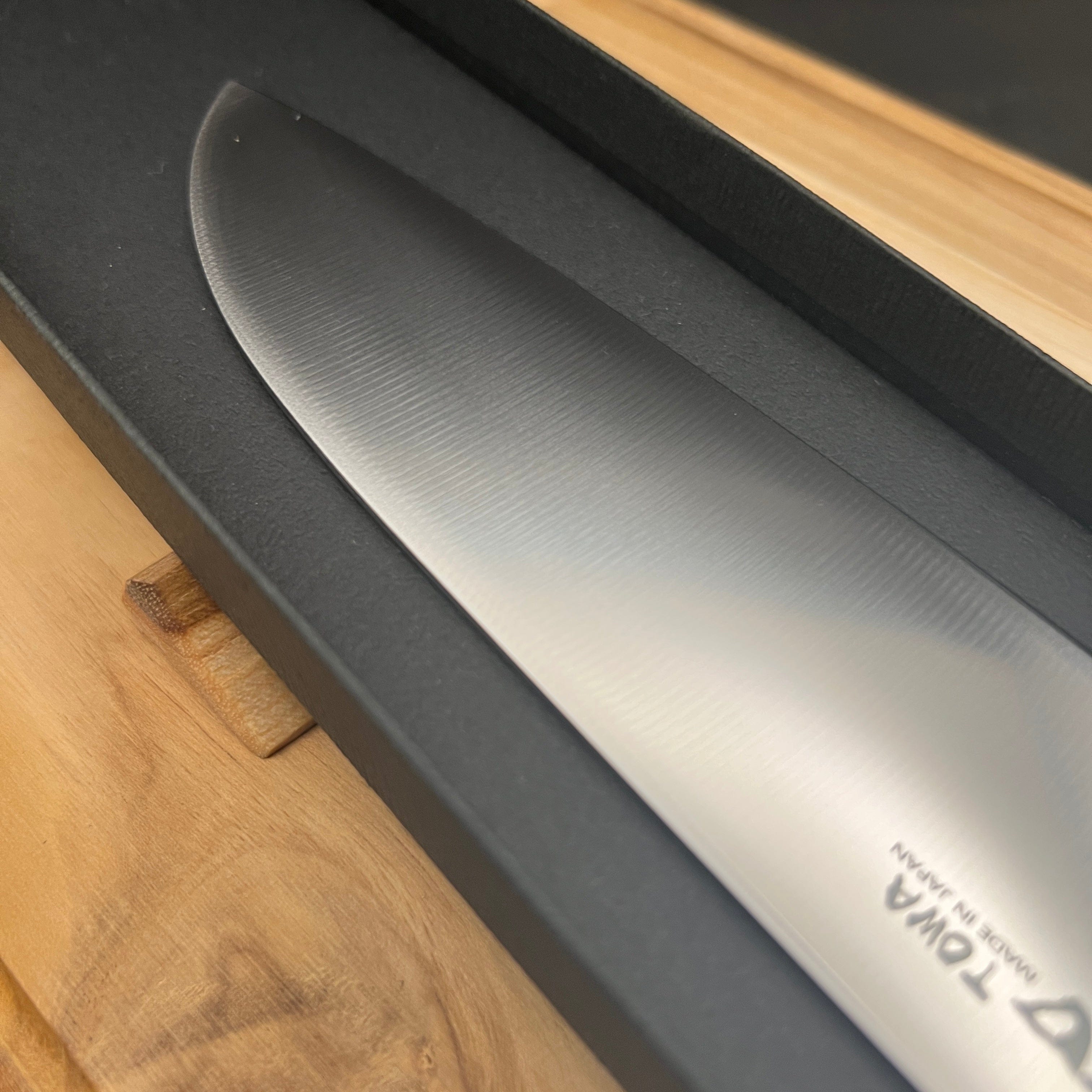
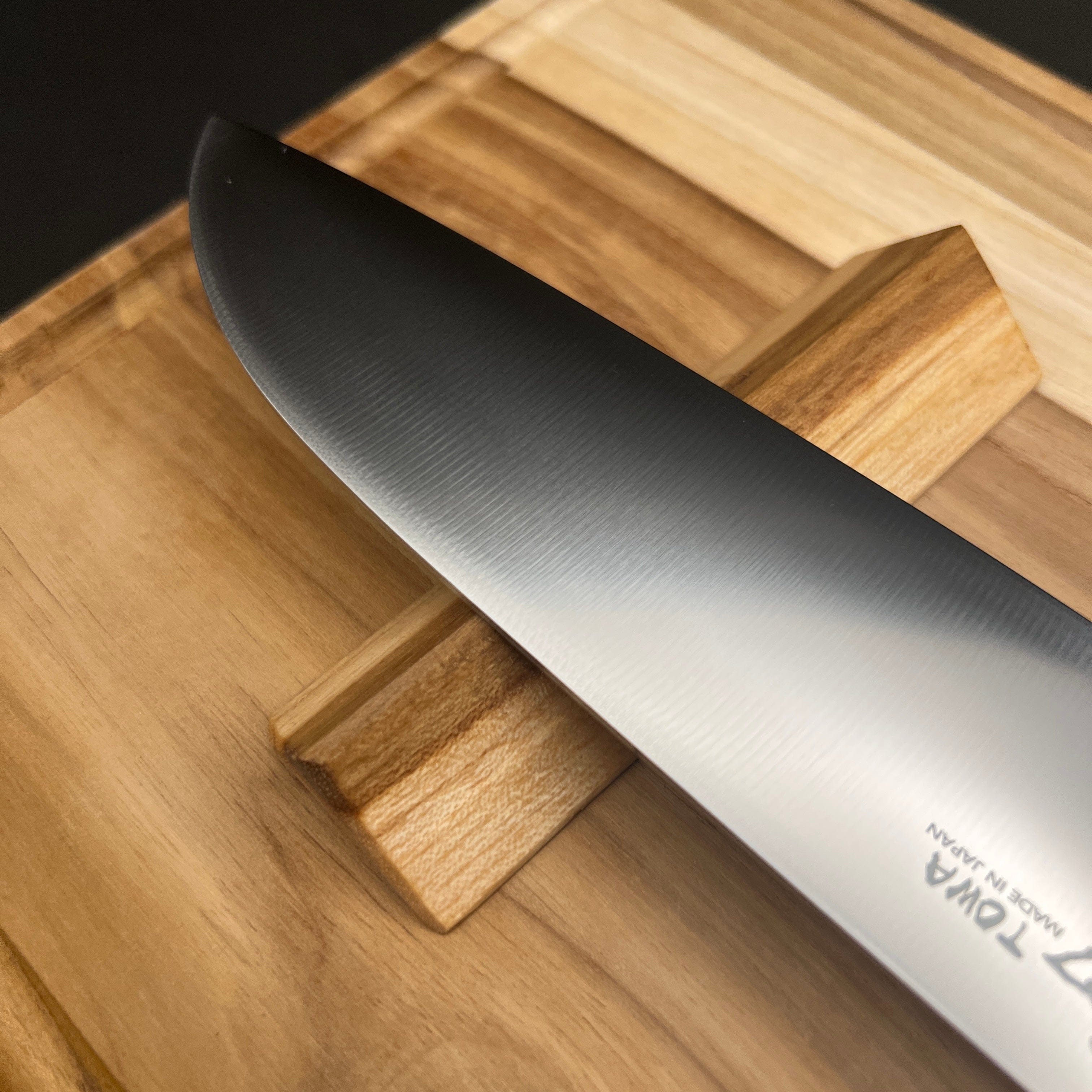
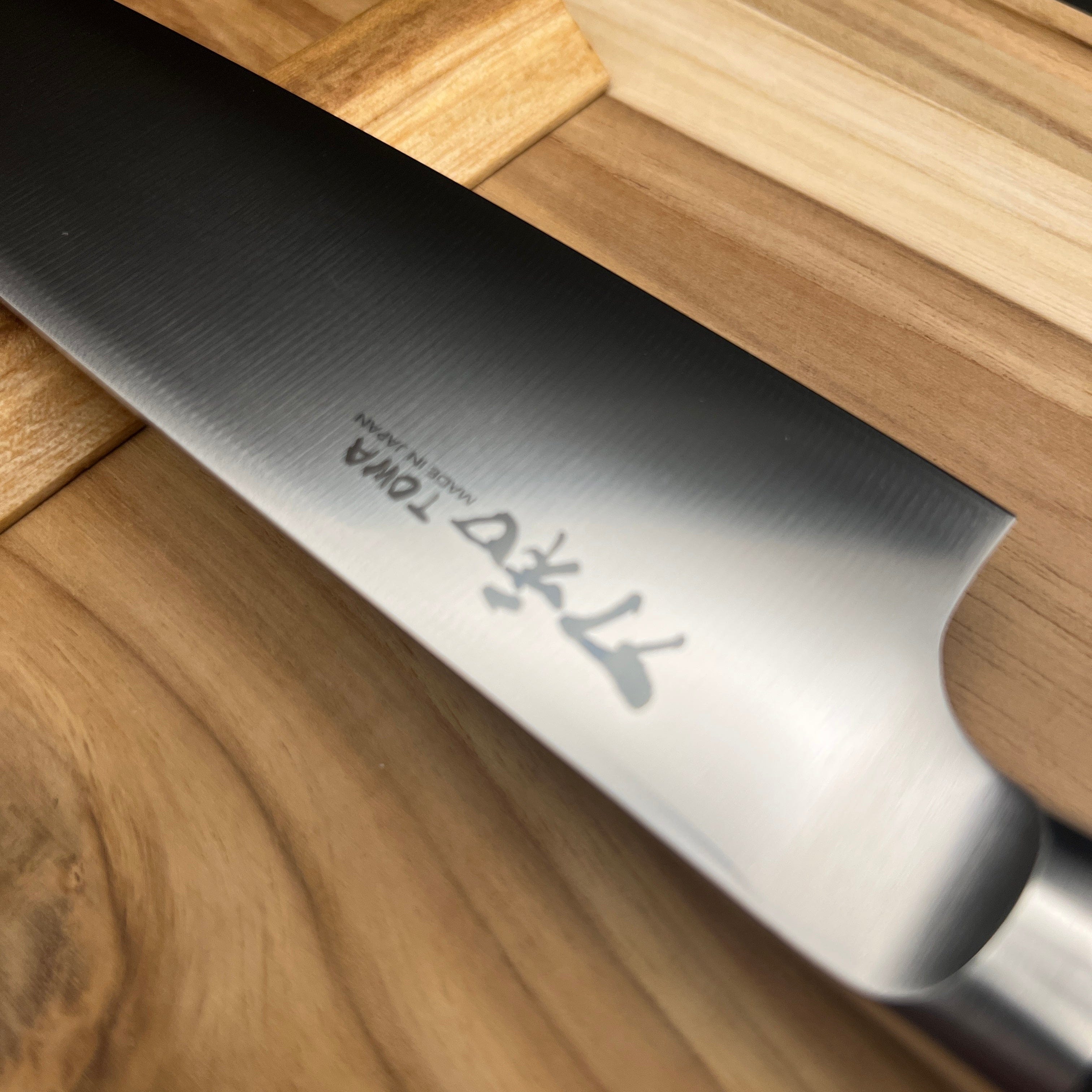
Special Tenless Steel provides hardness, edge retention, and a smooth glide through food.
The sword-style brim adds weight, stability, control, and hand protection.
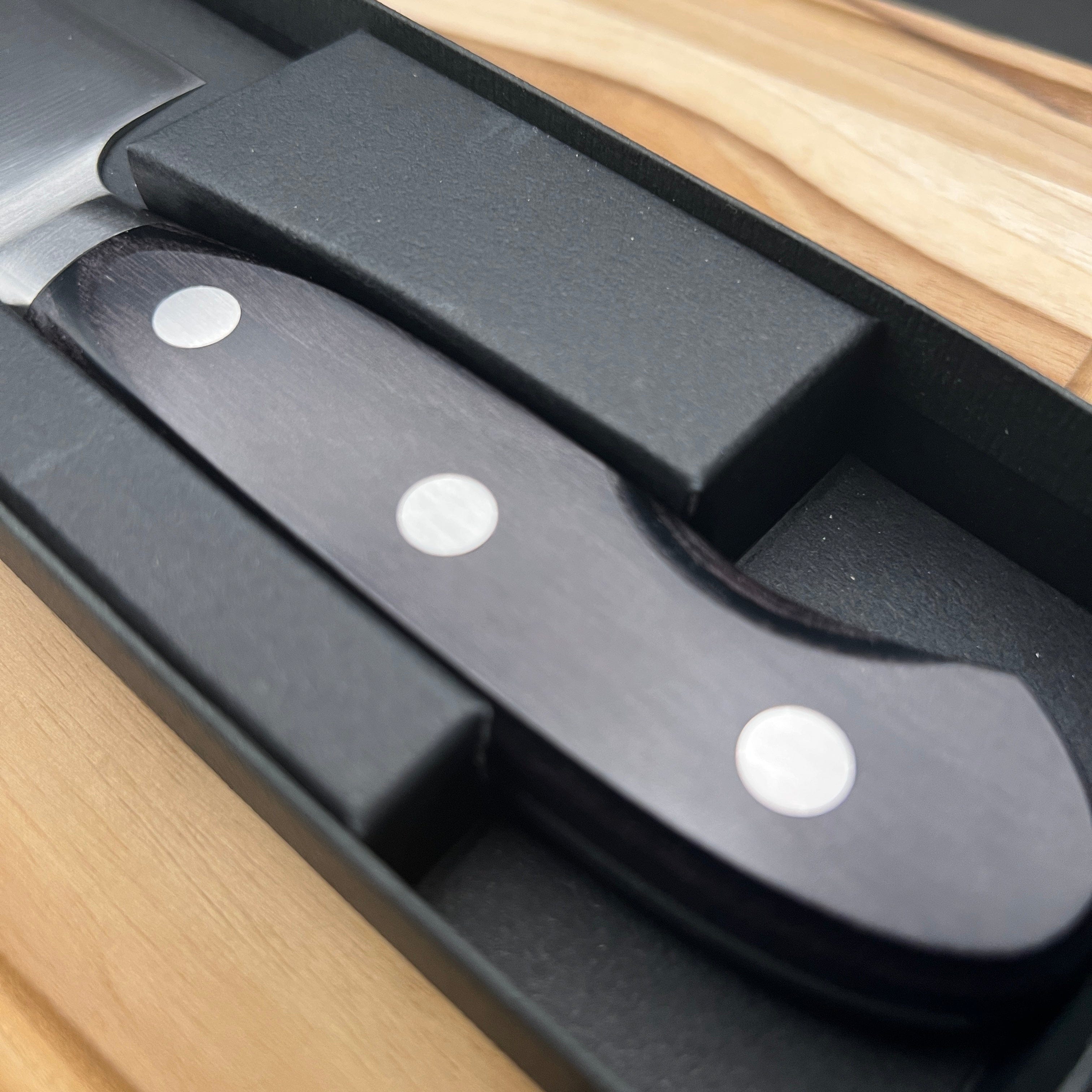
The laminated black plywood handle is durable, sleek, and moisture-resistant.
Hand-finished by skilled cutlery artisans in Seki City, Gifu Prefecture.
Japanese craftsmanship meets professional performance.
The Chef Knife with Sword Brim has a 7.1 in (18 cm) blade and an 11.81 in (30 cm) overall body size. Made in Seki City, Gifu Prefecture, Japan, it is hand-finished by skilled cutlery artisans.
The blade is made from Special Tenless Steel, valued for its hardness, edge retention, and smooth glide through food. Its thinner, sharper cutting edge than a Santoku knife suits slicing large cuts of meat along the grain, carving roast beef or ham, and preparing sashimi saku.
The sword-style brim adds weight, stability, control, and hand protection. The laminated black plywood handle is durable, sleek, and moisture-resistant, supporting fluid slicing from heel to tip.
After use, wash the knife with mild detergent, dry it thoroughly with a cloth, and store it in a cool, dry place. The knife is dishwasher-safe. To maintain optimal sharpness, resharpen the blade every few months.
After use, wash with mild detergent, dry thoroughly with a cloth, and store in a cool, dry place. Dishwasher-safe. To maintain optimal sharpness, resharpen the blade every few months.
Artisan & Craft
Made by Towa in Seki City, Gifu Prefecture, Japan
Note
Because this knife is hand-finished by skilled cutlery artisans, slight variations in its finish or appearance may occur. These natural differences are part of its individual character, not a defect.
Seki 関 - The city of Blades
In Gifu Prefecture, the city of Seki has been Japan’s blade-forging capital for over 800 years, earning a reputation as the “City of Blades.”
Its legacy began in the Kamakura period, when master swordsmiths—seeking the ideal conditions for forging—settled in Seki for its pure river water, rich charcoal, and fine iron sand.
These artisans developed a unique forging technique known for producing swords that were both incredibly sharp and exceptionally durable, prized by samurai across Japan.
Today, Seki’s blacksmiths uphold this tradition, seamlessly blending centuries-old methods with modern metallurgy to craft kitchen knives of unmatched precision and elegance, trusted by chefs and collectors around the world.
Made by Towa in Japan
Towa knives are meticulously manufactured in a renowned knife factory in Seki City, Gifu Prefecture—a town with an 800-year legacy of swordsmithing excellence.
Known as the “City of Blades,” Seki has long been home to master swordsmiths who forged weapons for samurai with unmatched precision and skill.
Towa continues this storied tradition by collaborating directly with local artisans to create original, high-performance kitchen knives.
Each blade reflects a seamless blend of time-honored craftsmanship and thoughtful innovation, delivering the sharpness, balance, and durability that define true Japanese quality.
Made by Towa in Japan
Towa knives are meticulously manufactured in a renowned knife factory in Seki City, Gifu Prefecture—a town with an 800-year legacy of swordsmithing excellence.
Known as the “City of Blades,” Seki has long been home to master swordsmiths who forged weapons for samurai with unmatched precision and skill.
Towa continues this storied tradition by collaborating directly with local artisans to create original, high-performance kitchen knives.
Each blade reflects a seamless blend of time-honored craftsmanship and thoughtful innovation, delivering the sharpness, balance, and durability that define true Japanese quality.
FAQs
All you need to know about Japanese Knives.
What makes Japanese knives different from Western knives?
Japanese knives typically feature harder steel, thinner and sharper blades, and lighter handles compared to Western knives. These characteristics allow for precision cutting, especially suited for detailed culinary tasks, but require careful maintenance to preserve sharpness and avoid damage.
How should I maintain and sharpen a Japanese knife?
Regularly hand-wash and dry your knife immediately after use to prevent rust and corrosion. Sharpen using a whetstone designed specifically for Japanese knives, maintaining a consistent angle (usually around 15 degrees). Avoid dishwashers and harsh cleaning methods to preserve blade integrity.
Can Japanese knives be used for any type of food preparation?
While versatile, certain Japanese knives are specialized: Gyuto (chef’s knife) handles most ingredients, Santoku excels in chopping vegetables and meats, while Yanagiba is specifically suited for slicing sashimi and seafood. Selecting the right knife enhances performance and preserves blade condition.
Why are Japanese knives often more expensive?
Japanese knives are handcrafted, employing traditional methods and premium high-carbon steel, which contributes to their exceptional sharpness, durability, and aesthetics. This artisanal craftsmanship and the high-quality materials used typically result in higher pricing compared to mass-produced knives.
Are Japanese knives suitable for beginners?
Yes, beginners can effectively use Japanese knives, but it’s essential to start with user-friendly styles like Santoku or Gyuto, known for balanced handling and versatility. Proper care, handling, and regular sharpening practices will ensure a positive experience, even for novices.
Choosing a selection results in a full page refresh.