





 01
Japanese Tableware: Tradition & Everyday Style
Discover the shapes, seasonal details and ceramic traditions that bring character to Japanese plates and everyday table settings.
Read the guide
Explore the tableware traditions behind Japanese oblong and sushi plates, from thoughtful presentation to distinctive ceramic glazes.
01
Discover the shapes, seasonal details and ceramic traditions that bring character to Japanese plates and everyday table settings.
Read the guide 02
Explore Shino, Oribe and other Mino glazes, with ideas for pairing their colours and textures with sashimi, grilled dishes and more.
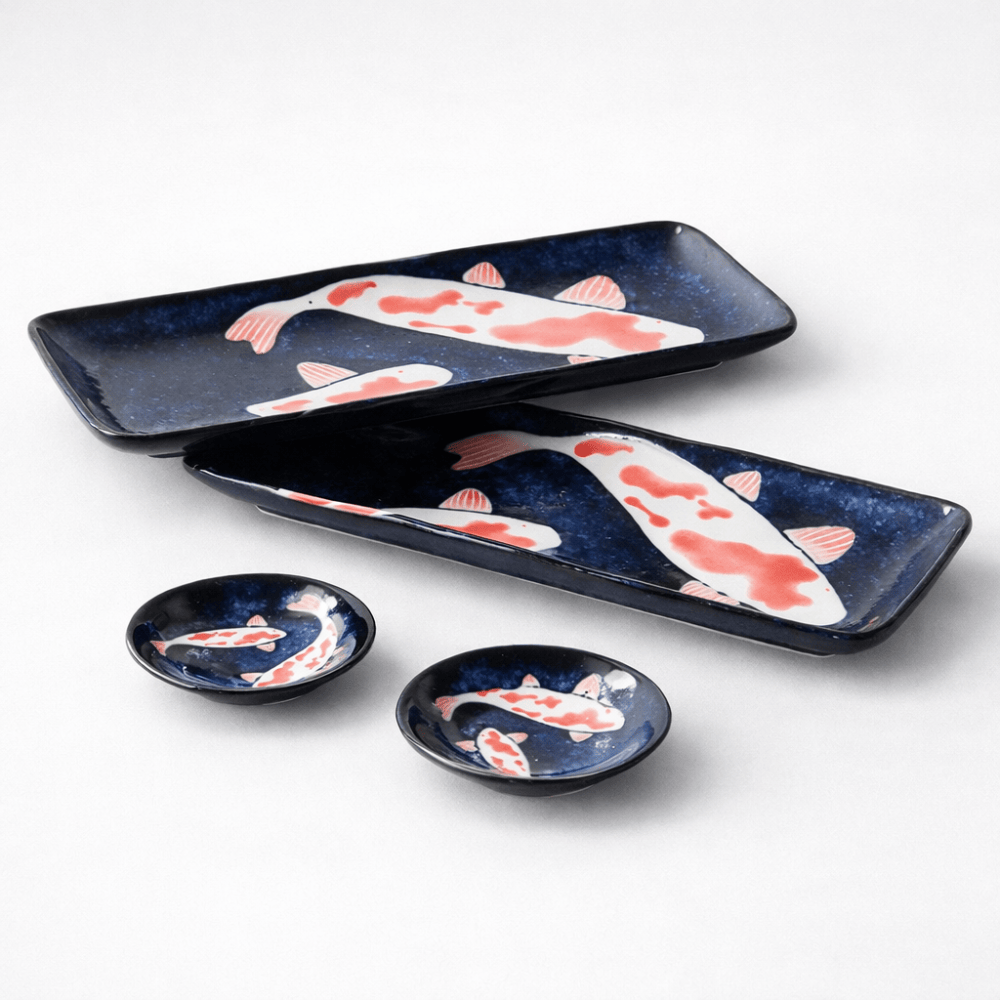
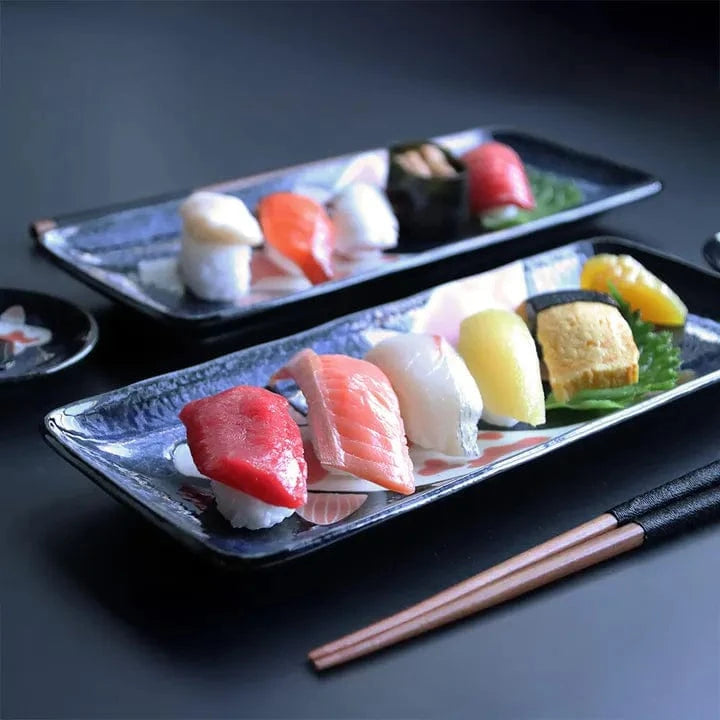
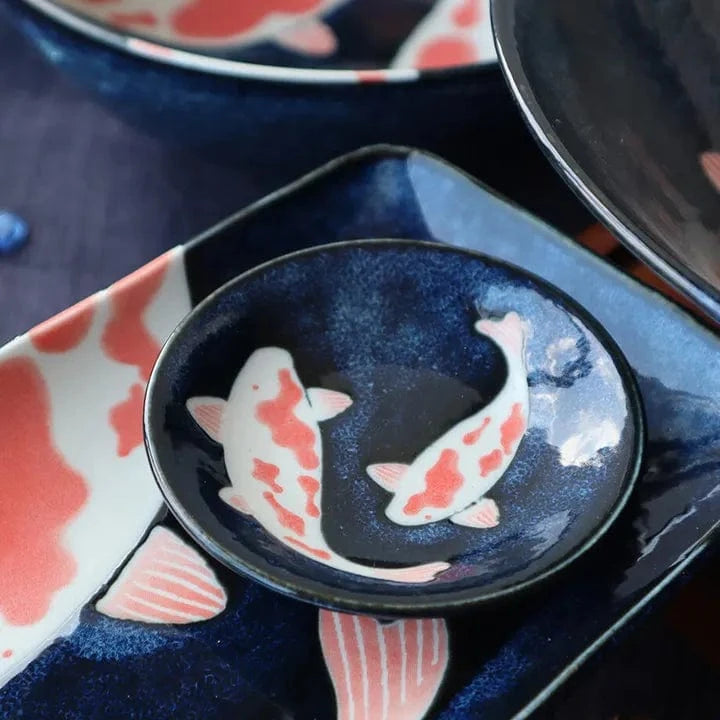
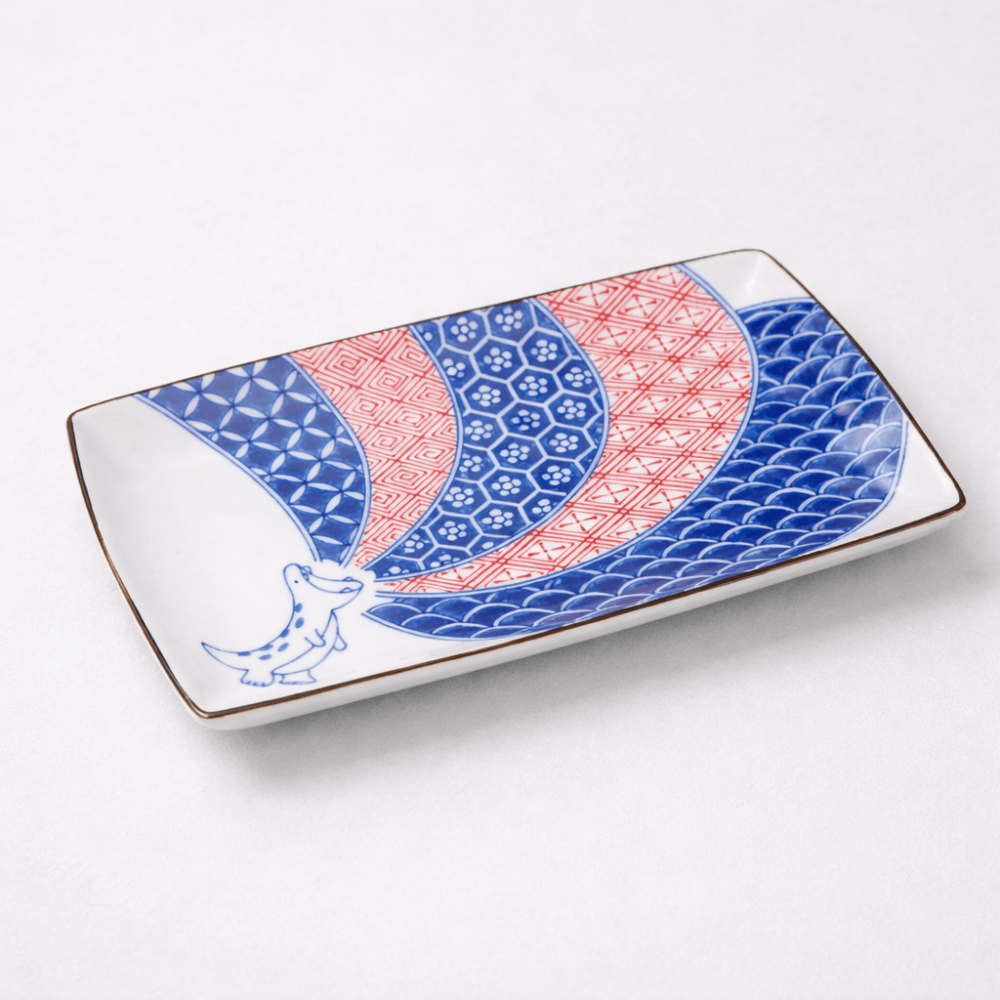
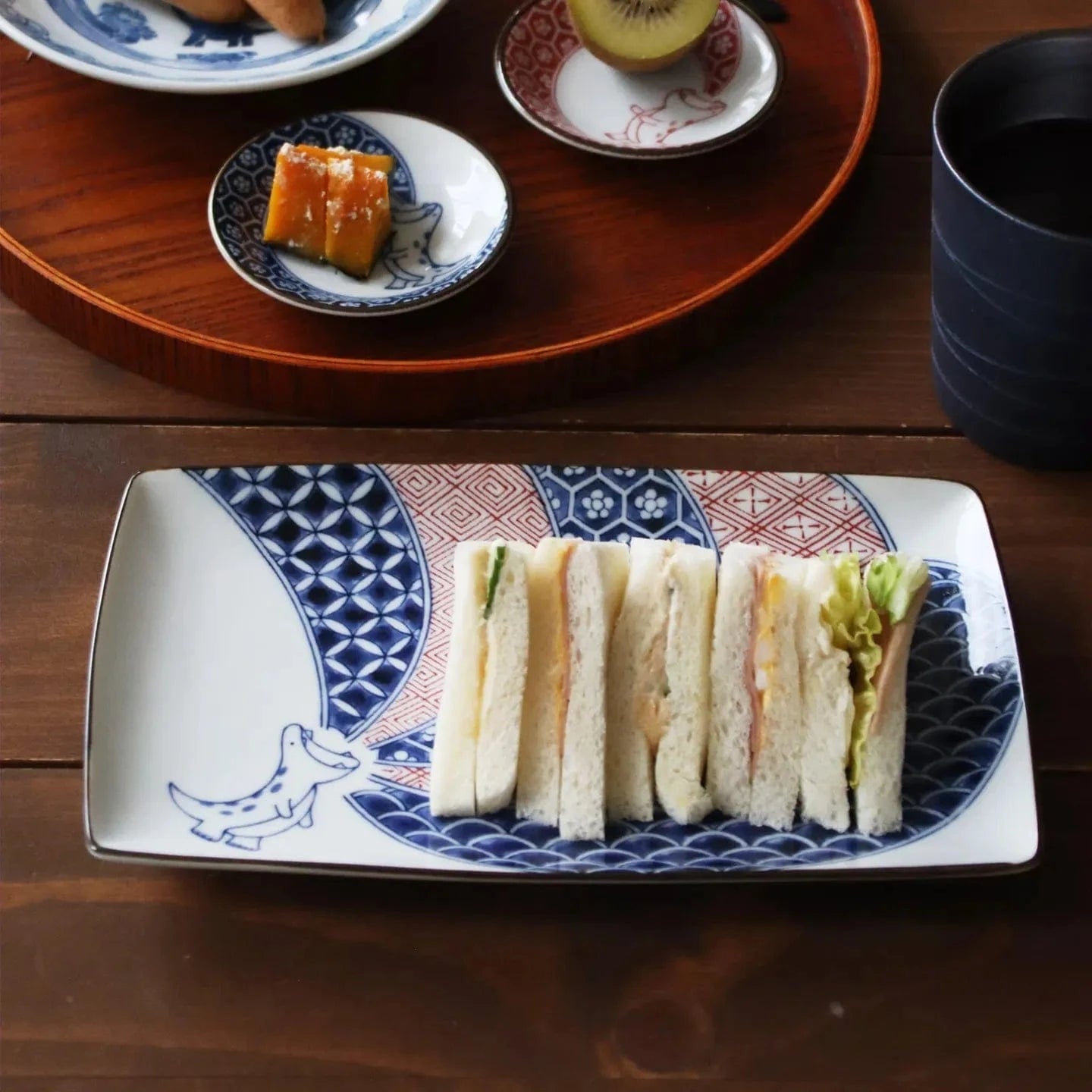
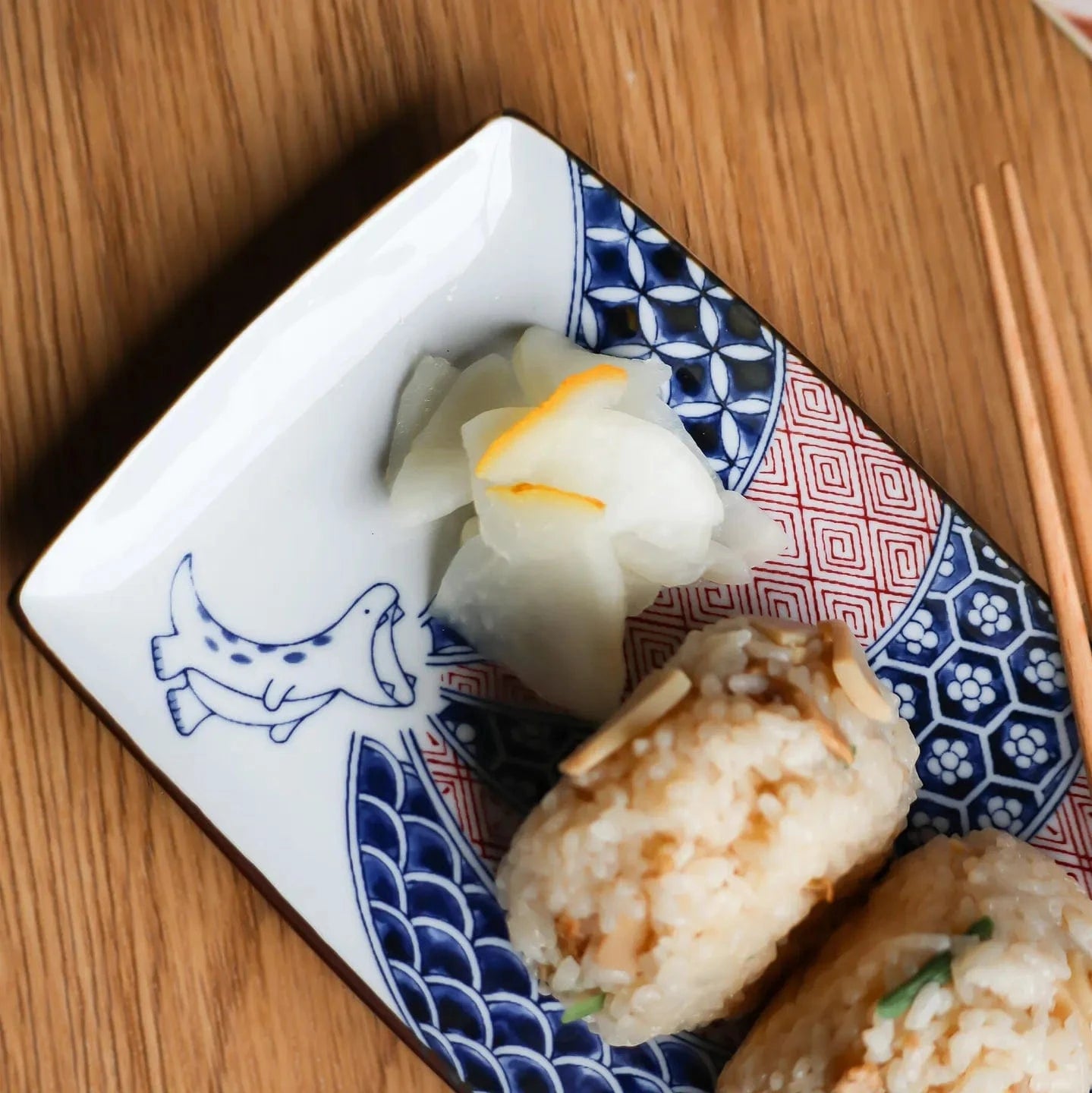
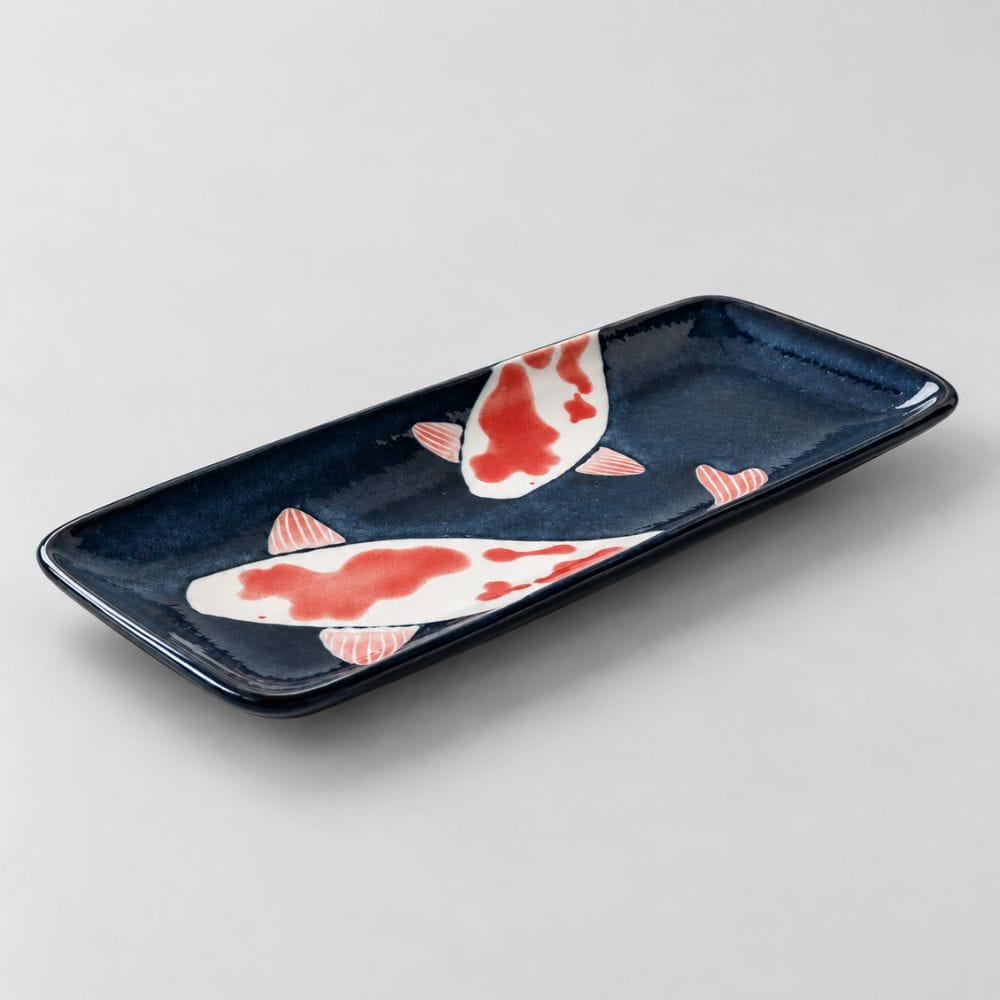
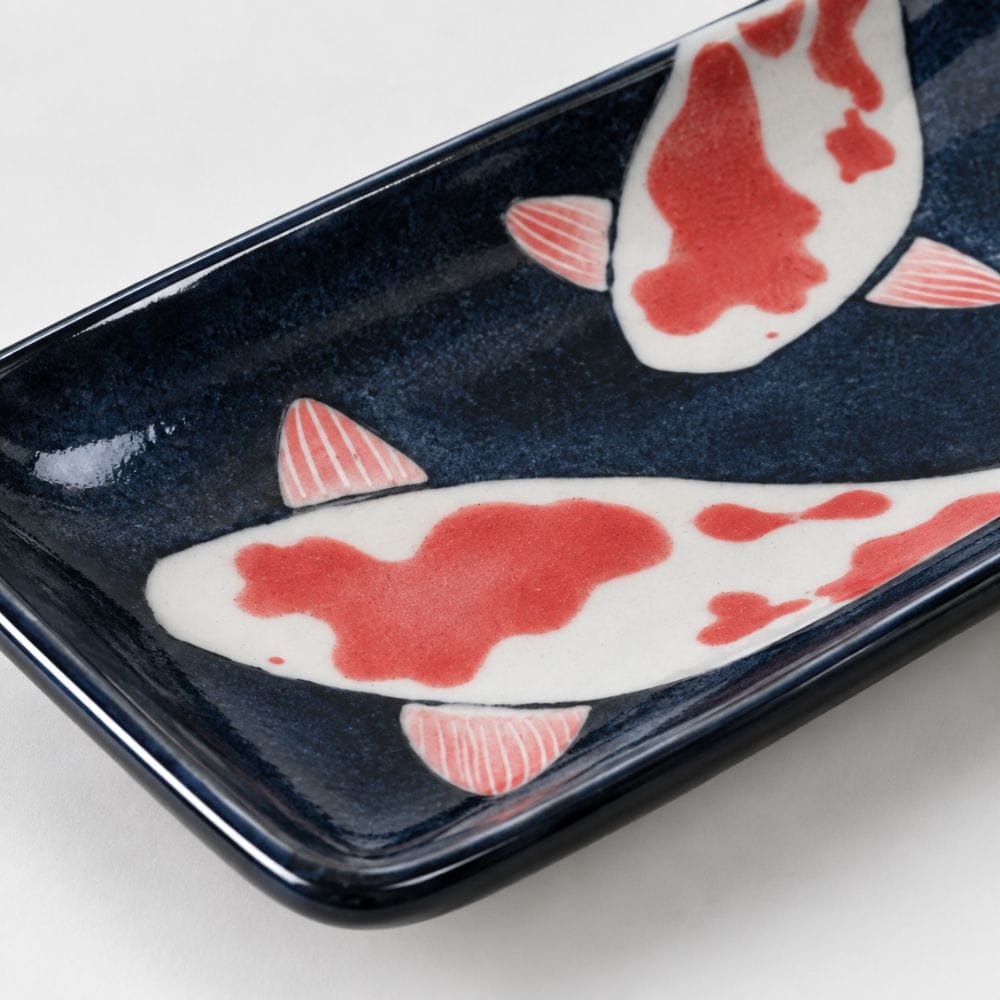
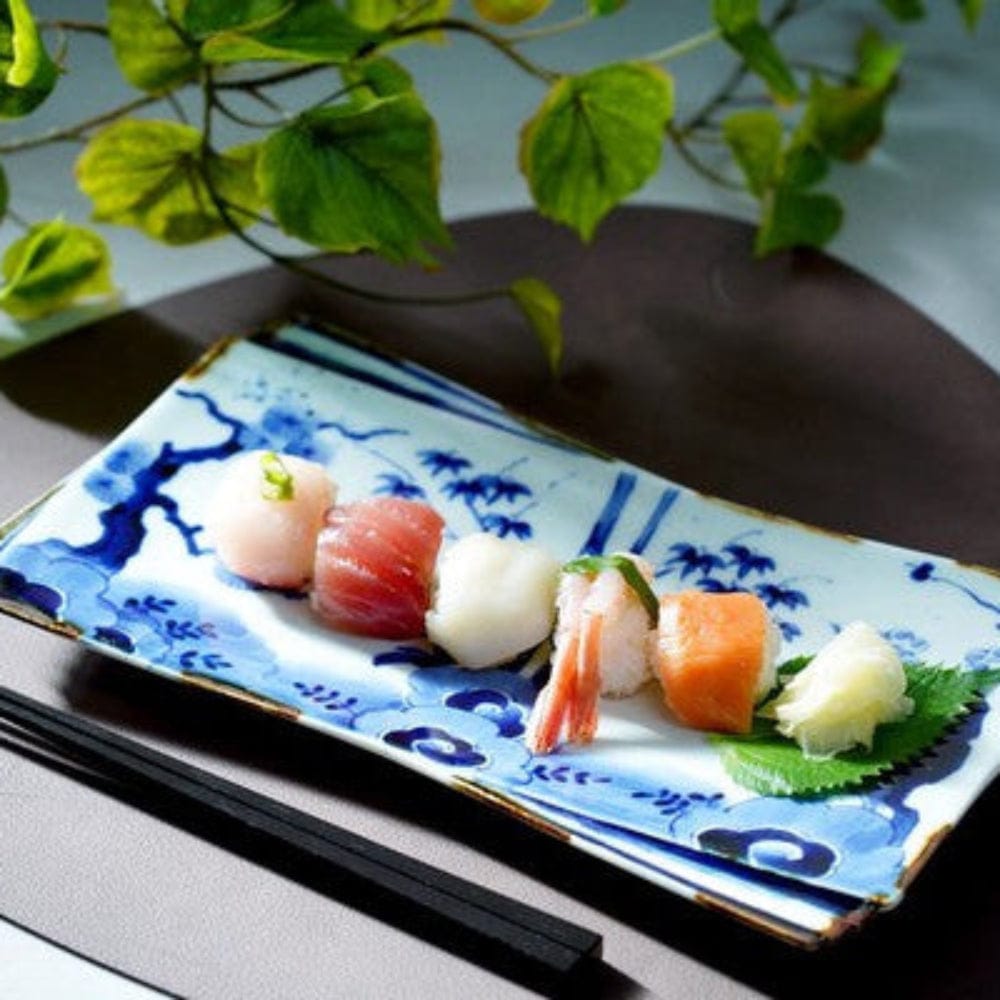
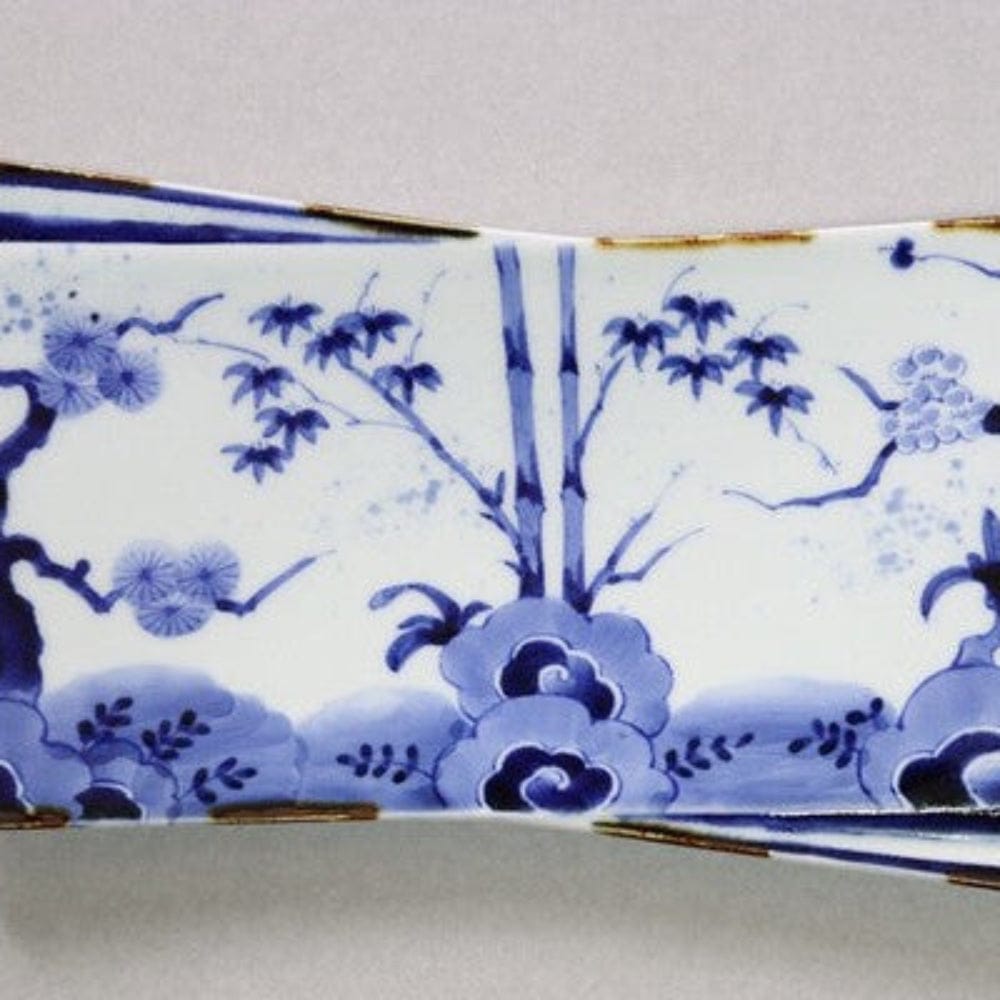
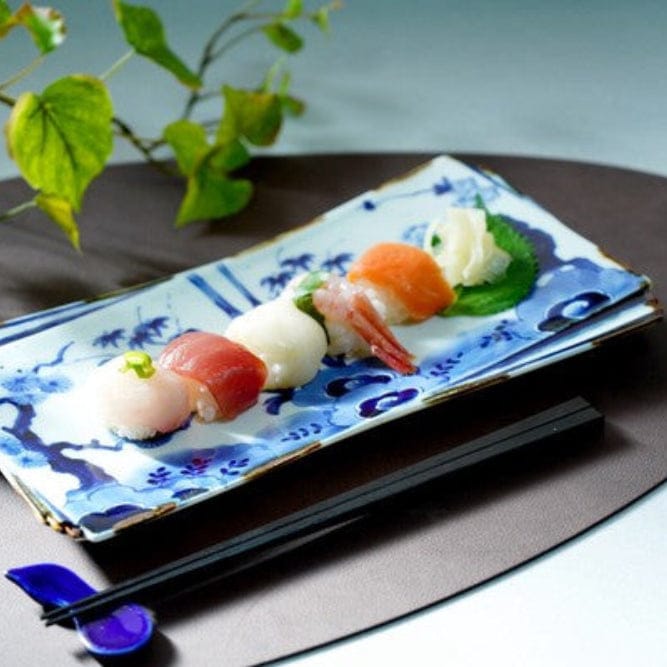
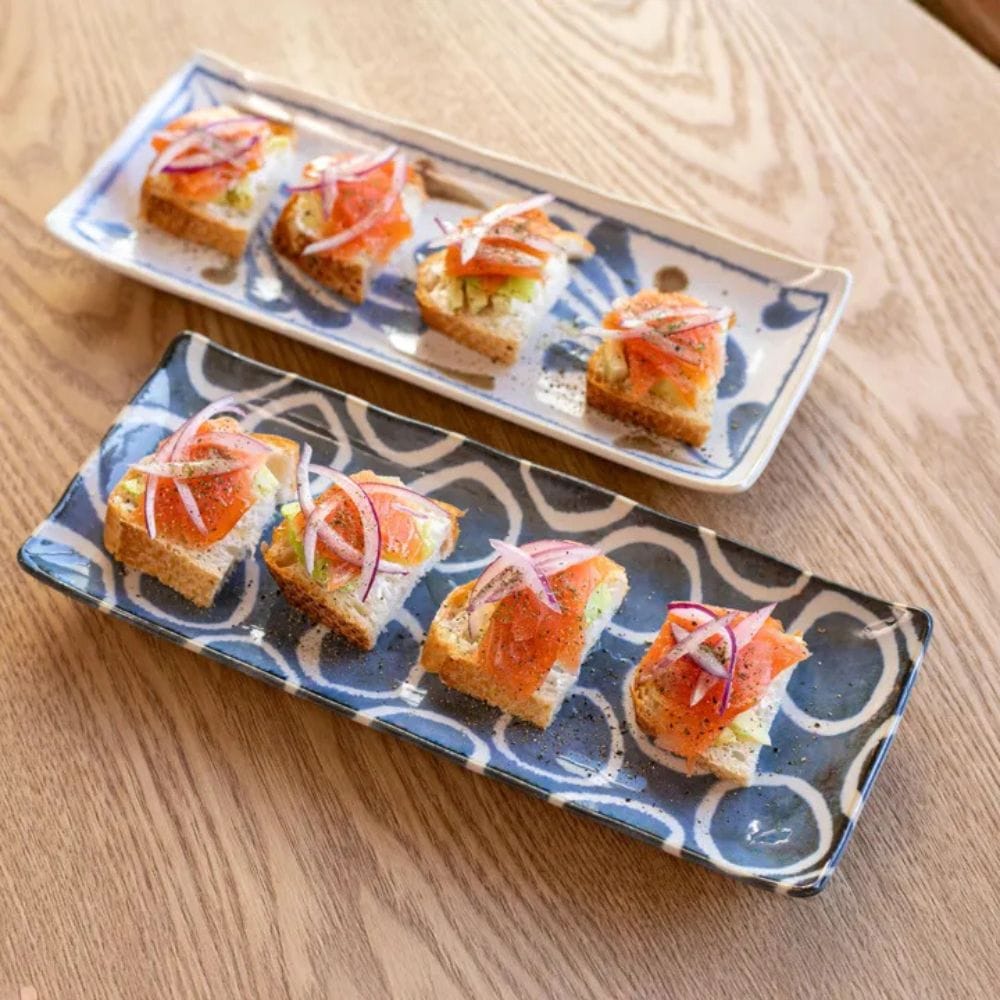
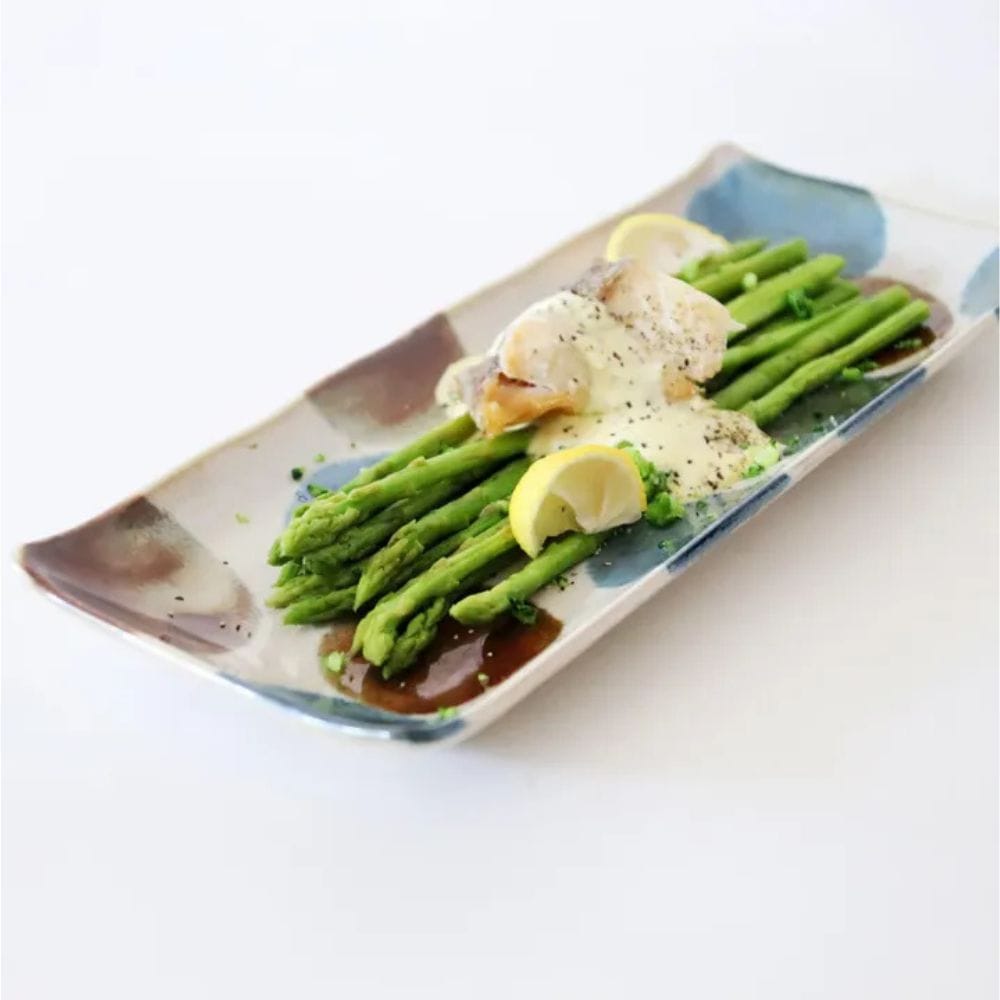
Read the articleJapanese oblong and sushi plates give food room to unfold along the table. Use their elongated shape for a row of sushi, slices of sashimi, grilled fish or seasonal appetisers. Leave a little space between each element to let the food and the plate's surface work together.
Choose with the serving in mind. A broad, flatter centre gives you space to arrange individual pieces, while a raised rim helps contain sauces and juices. Check both length and width: a long, narrow plate can offer less usable space than its overall dimensions suggest.
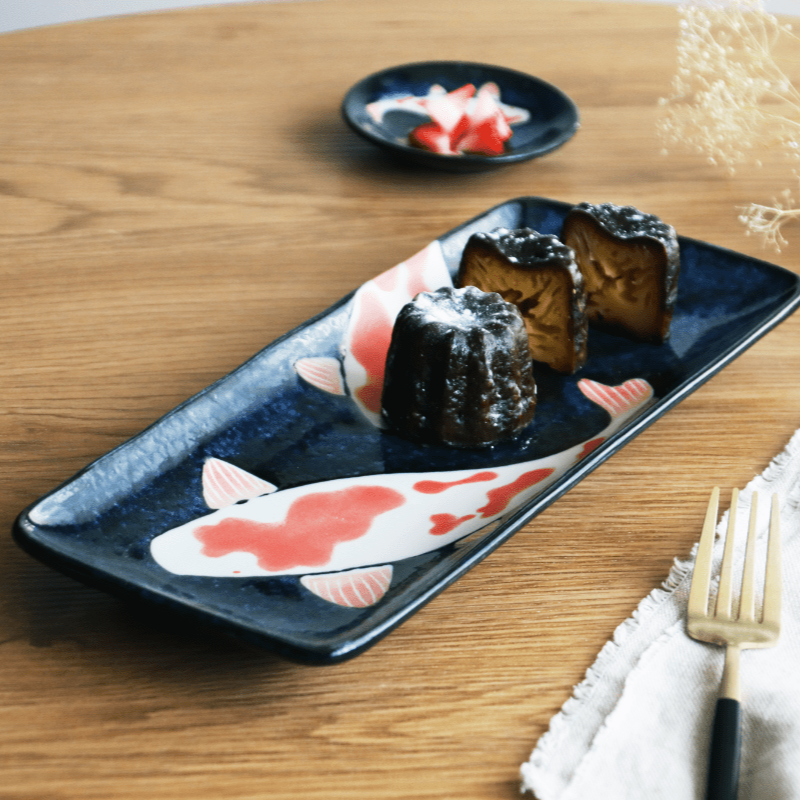
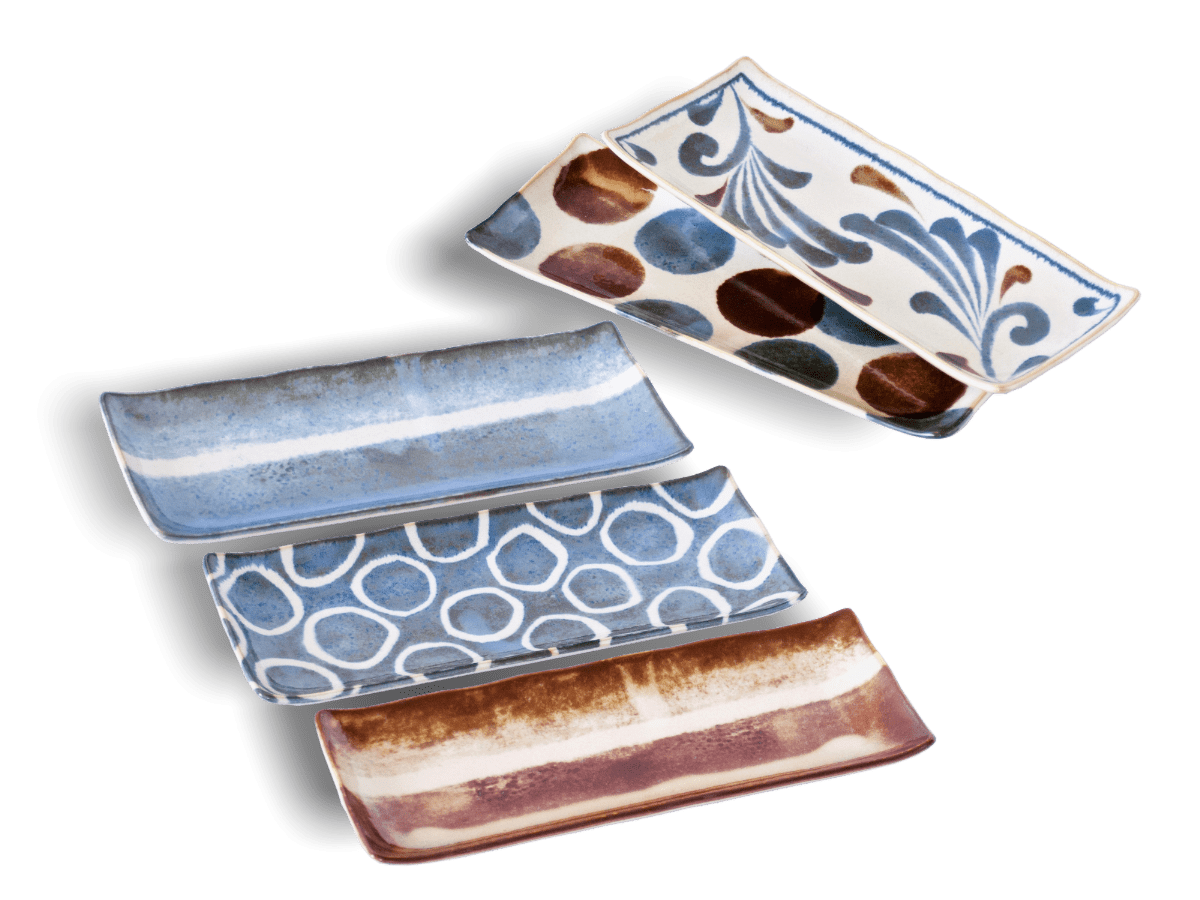
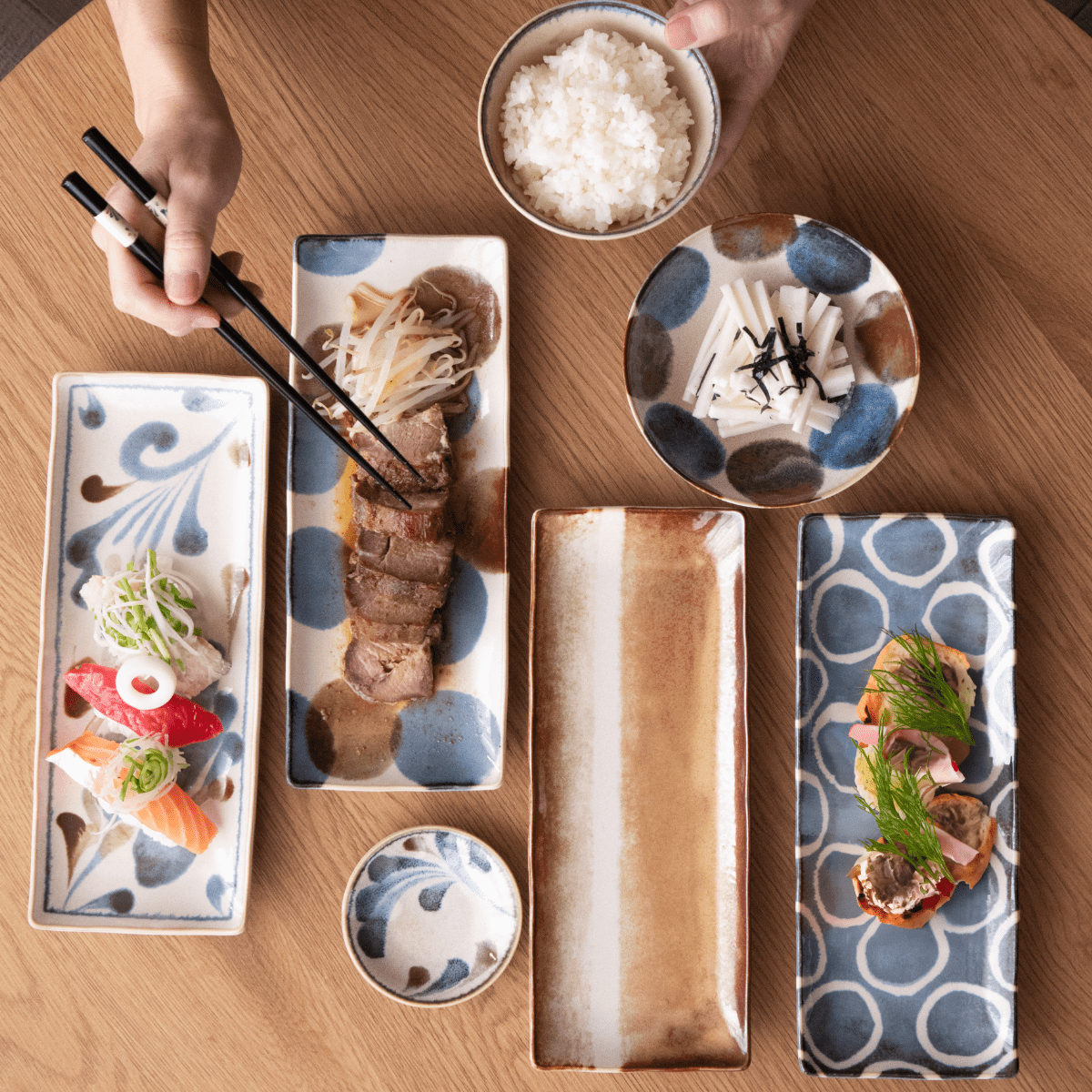
Build your setting around a shared colour, glaze or motif. Pair an oblong plate with small dipping dishes and bowls, or use it as a contrasting shape alongside round dinner plates. These versatile pieces can also serve vegetables, fruit or a selection of small desserts.
Practical answers to help you choose oblong and sushi plates for everyday meals and thoughtful presentation.
Use them for sushi, sashimi, grilled fish, vegetables or a selection of appetisers. They also work well for fruit and small desserts. Choose a plate with enough usable space for your serving and a raised rim if the food has sauces or juices.
Compare the listed length and width with a plate you already use. Allow room for the food, any garnish and a little space between pieces. For shared servings, check the usable centre rather than length alone: broad rims and tapered ends can reduce the serving area.
Oblong describes an elongated shape, while sushi plate describes a use. An oblong plate can be used for sushi and many other dishes, and a sushi plate does not have to be rectangular. Choose by the dimensions, serving surface and rim rather than the name alone.
Choose a shared colour, glaze or motif to connect your plates with bowls, dipping dishes and chopstick rests. An elongated plate can also add contrast to a setting of round dishes. Check each product description for what is included; pictured accessories may be sold separately.
Care requirements vary by material, glaze and decoration. Check the instructions on each product page before using a dishwasher or microwave. If suitability is not stated, ask us before use rather than assuming that every ceramic plate is suitable.