

Handmade Rokugama Small Plate Set
Secure, insured delivery from Japan
Complimentary over $199 · otherwise from $30. Shipping policy
$80 away from complimentary shipping
U.S. duties prepaid at checkout
Import duties and taxes are calculated and paid at checkout, so nothing is due on delivery. Learn more
Sourced in Japan, from the makers
Direct from Japanese workshops and their authorised channels.
Why You’ll Love It
Pairs well with
Handmade Rokugama Small Plate Set
Tradition in Every Dish – Handmade Mino Ware Small Plate Set by Award-Winning Artisan
The Handmade Rokugama Small Plate Set is not just tableware—it encapsulates the vibrant glazes of traditional Mino ware, crafted by the esteemed ceramicist Kazufumi Wada of Keizan Kiln. Awarded the Takuo Award for his innovations in Japanese pottery, Wada imprints each handcrafted piece with a unique character, seamlessly merging history and modern design.
Small Plates, Big Impression – Functional Art for Every Setting
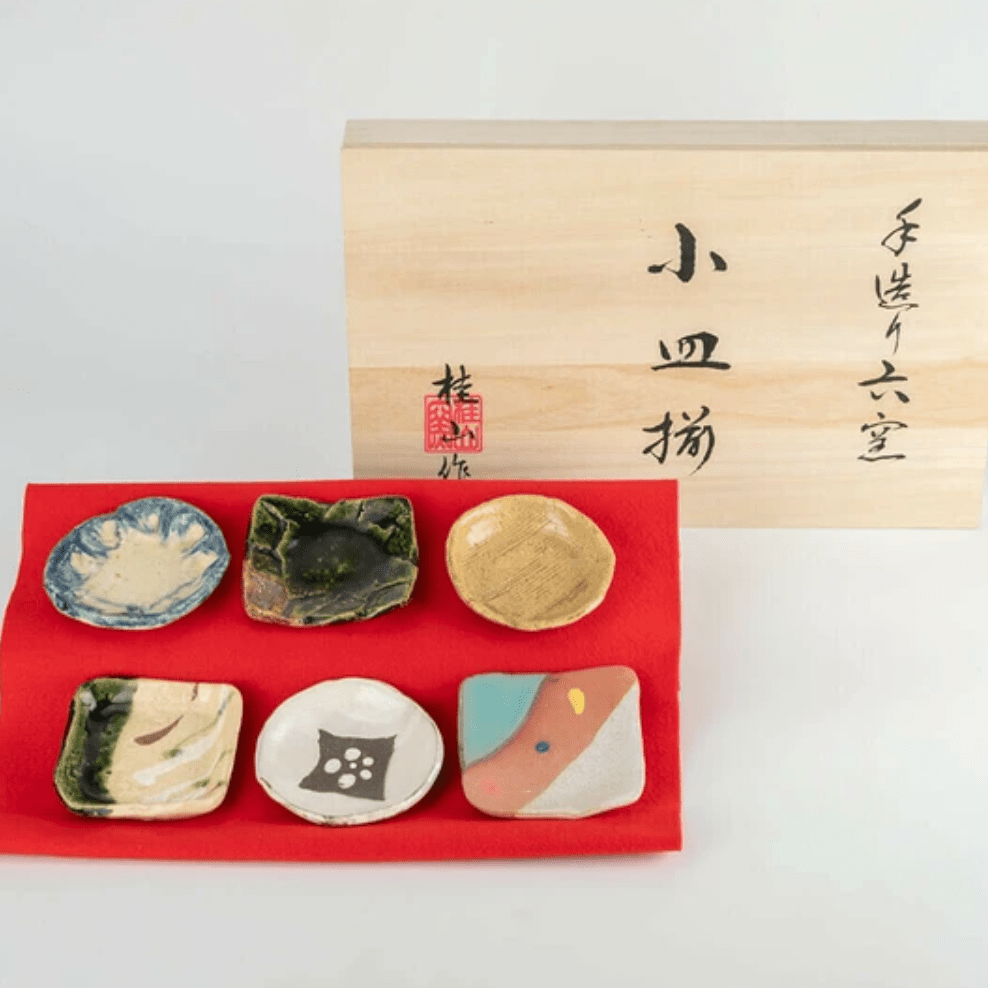
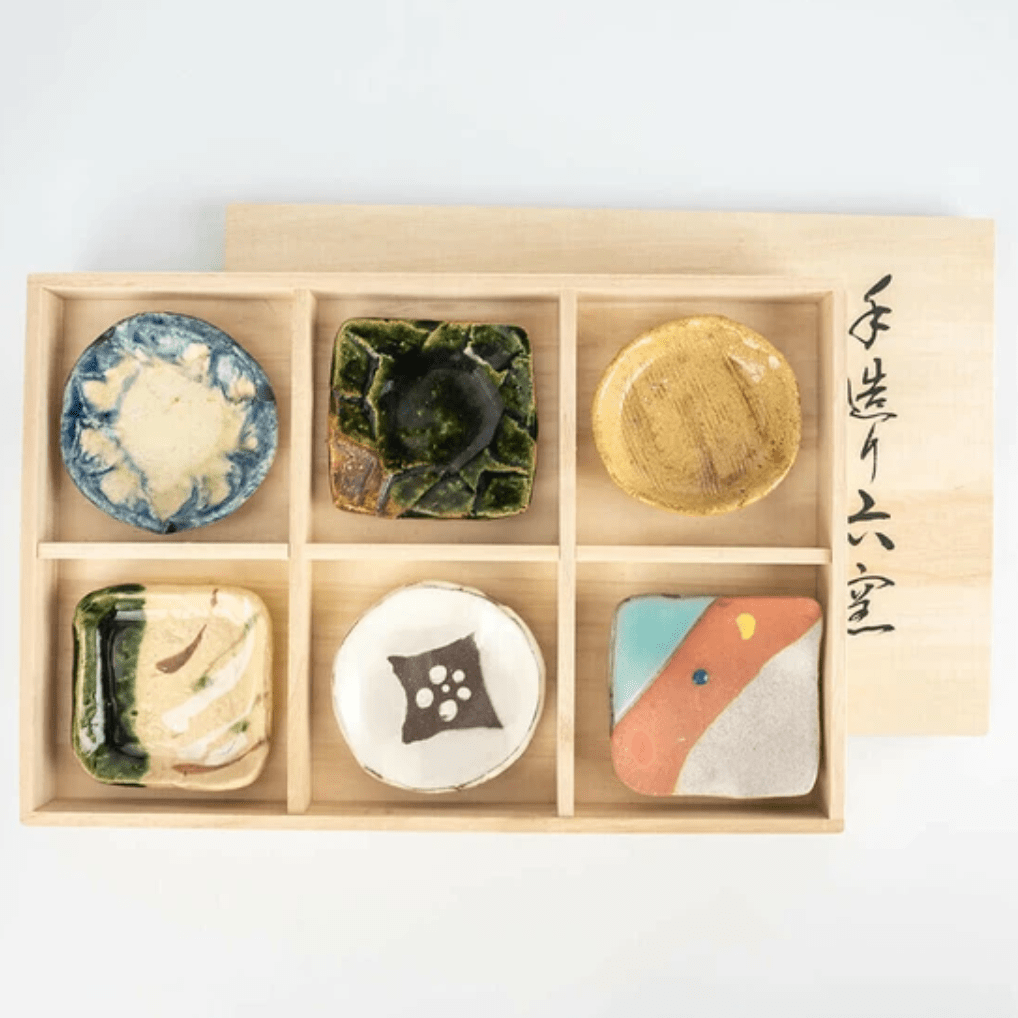
This set includes six handmade ceramic plates, each measuring approximately 4.5 inches in diameter, showcasing a remarkable variety of glazes that reflect Japanese aesthetics. The plates present unique designs: the deep cobalt blue marbling of Gosu Nagashi, the dynamic carvings of earthy green Oribe Engraved, the expressive combing of mellow yellow Kiseto Kushime, and the striking moss greens of Yashiro Oribe. The soft white clay of Kohiki Umemon features a plum blossom accent, while Akado Coloring captivates with vibrant abstract glazes and bold color blocks.
Each plate invites a tactile and visual experience, ideal for serving sushi, pickles, or desserts, while also adding an artistic flair to your table. These pieces transform any meal into a celebration of craftsmanship, demonstrating the centuries-old techniques of the Mino region in Japan.
This beautiful set is presented in a handcrafted wooden box with compartments, making it a thoughtful gift or a cherished addition to your collection. It’s not just tableware; it’s a means to share culinary stories for years to come.
Honor your table. Celebrate tradition. Share beauty in every bite.
Product Information
Care instructions
Notes

FAQs
All you need to know about Japanese Pottery.
What types of traditional pottery are made in Japan?
Japan is home to several renowned pottery styles, including Mino ware (Gifu), Bizen ware (Okayama), Arita and Imari ware (Saga), Shigaraki ware (Shiga), and Mashiko ware (Tochigi). Each region has its own distinct materials, glazes, and firing techniques that reflect local history and aesthetics. Toki City in Gifu Prefecture is particularly renowned as the heart of Mino ware (Minoyaki)—the most widely produced pottery style in Japan.
What materials are used in artisan Japanese pottery?
Most artisan pottery in Japan is made from locally sourced clay, often mixed and refined by hand. Natural minerals and ash are used in glazes, and many pieces are wood-fired or fired in traditional climbing kilns (noborigama), producing unique surface textures and natural variations.
Are artisan Japanese pottery pieces safe for food use?
Yes. Authentic artisan pottery is made with food-safe, lead-free glazes and is carefully fired at high temperatures to ensure durability and safety. However, it's important to follow care instructions, especially for unglazed or porous ceramics.
What makes Japanese pottery different from Western ceramics?
Japanese pottery often emphasizes wabi-sabi—the beauty of imperfection—resulting in organic shapes, subtle asymmetry, and natural glazes. Unlike Western ceramics, which may prioritize uniformity, Japanese pieces often celebrate the individuality of each item, reflecting the artist's hand and the firing process.
How should I care for artisan-made Japanese pottery?
Hand-wash pottery with mild soap and avoid extreme temperature changes (like placing hot items into cold water). Some unglazed pieces may absorb moisture, so allow them to fully dry before storing. Avoid microwaves or dishwashers unless the piece is specifically labeled as safe for such use.
Do I need to season my matcha bowls before using them?
In most cases, seasoning a matcha bowl is not necessary—especially if the bowl is fully glazed, as the glaze naturally seals the surface and makes it ready for use. However, if the bowl is unglazed or has a raw clay base, a simple seasoning process called medome can help prevent cracking or staining. To season, soak the bowl in warm water mixed with a spoonful of cooked rice or flour for about 30–60 minutes, then rinse and let it dry completely. This step helps fill tiny pores in the ceramic and adds durability over time.