This site uses cookies for better user experience and analytics.
ONI BIZEN Chrysanthemum Incense Burner
$199.00
No reviews
No reviews yet · Customers rate us 4.9/5 (48 reviews) · Read them
Bizen ware · Wood-fired clay · Ø10.5 × H10 cm (Ø4.1 × H3.9 in) · Made in Okayama, Japan
In stock
Ships within 4 business days
Secure, insured delivery from Japan
Complimentary over $199 · otherwise from $30. Shipping policy
✓ Qualifies for complimentary shipping
U.S. duties prepaid at checkout
Import duties and taxes are calculated and paid at checkout, so nothing is due on delivery. Learn more
Sourced in Japan, from the makers
Direct from Japanese workshops and their authorised channels.
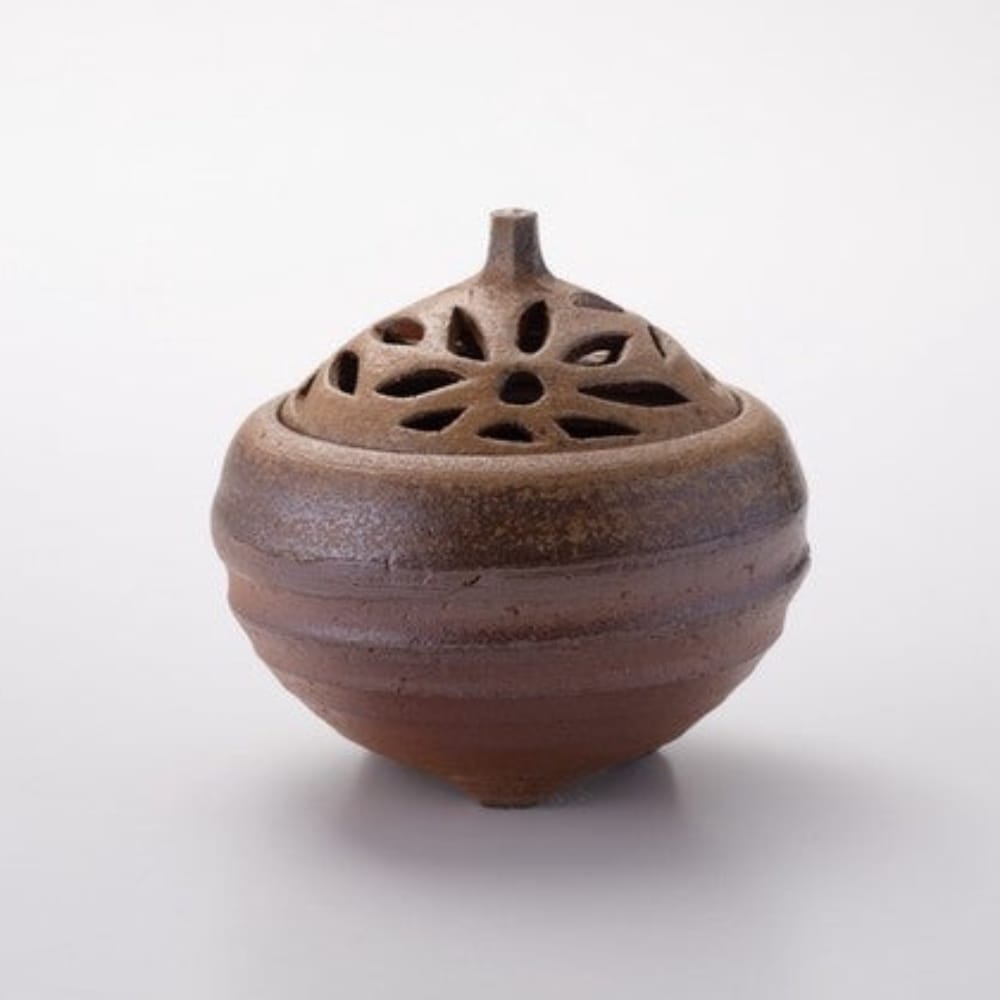
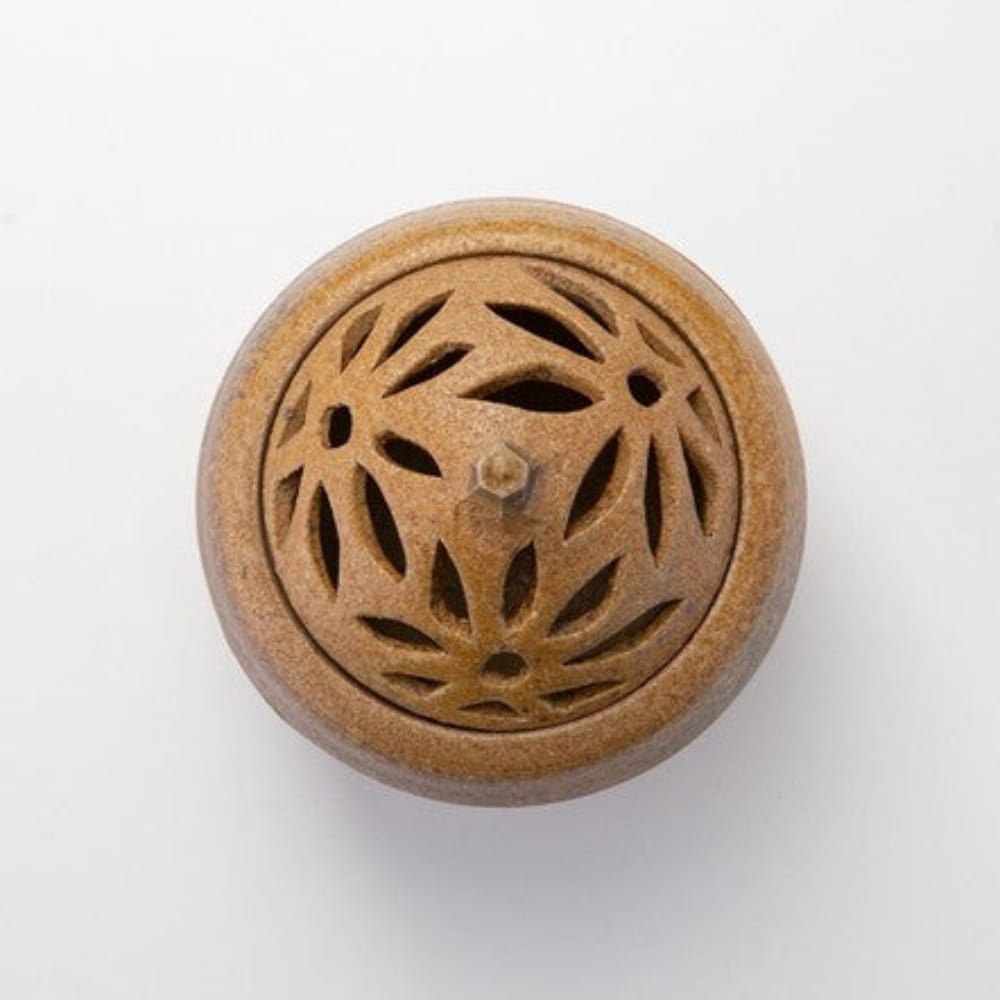
Hand-formed at Atobu-gama in Okayama, this Bizen ware incense burner pairs a rounded body with a chrysanthemum-inspired lid cut by hand. Petal-shaped openings bring a delicate rhythm to the earthy clay, while wood firing gives each piece its own tones and natural markings.
Why You’ll Love It
A lid cut by hand — Petal-shaped openings create the distinctive chrysanthemum design.
Expressive Bizen clay — Wood firing gives each piece its own colour and surface markings.
Made at Atobu-gama — From the Okayama kiln of potter Kenji Takeda, creator of ONI BIZEN.
Rounded proportions — Approximately 10.5 cm in diameter and 10 cm high, weighing 300 g.
The chrysanthemum lid is the detail that draws you closer. Its hand-cut, petal-shaped openings form a floral pattern above a rounded body, pairing delicate openwork with the earthy texture of Bizen clay. The low, full silhouette gives this Japanese incense burner a sculptural presence even between uses.
Hand-formed at Atobu-gama in Okayama, the burner is fired in a wood-burning climbing kiln. Its colour develops through the interaction of clay, flame and firing conditions, producing shifts in tone and natural surface markings. Small variations in the body and cut lid give each piece its own expression.
Product Information
Maker / brand: Atobu-gama / ONI BIZEN
Origin: Okayama Prefecture, Japan
Material: Bizen stoneware clay, without an applied decorative glaze
Dimensions: Approx. Ø10.5 × H10 cm (Ø4.1 × H3.9 in)
Weight: Approx. 300 g (10.6 oz)
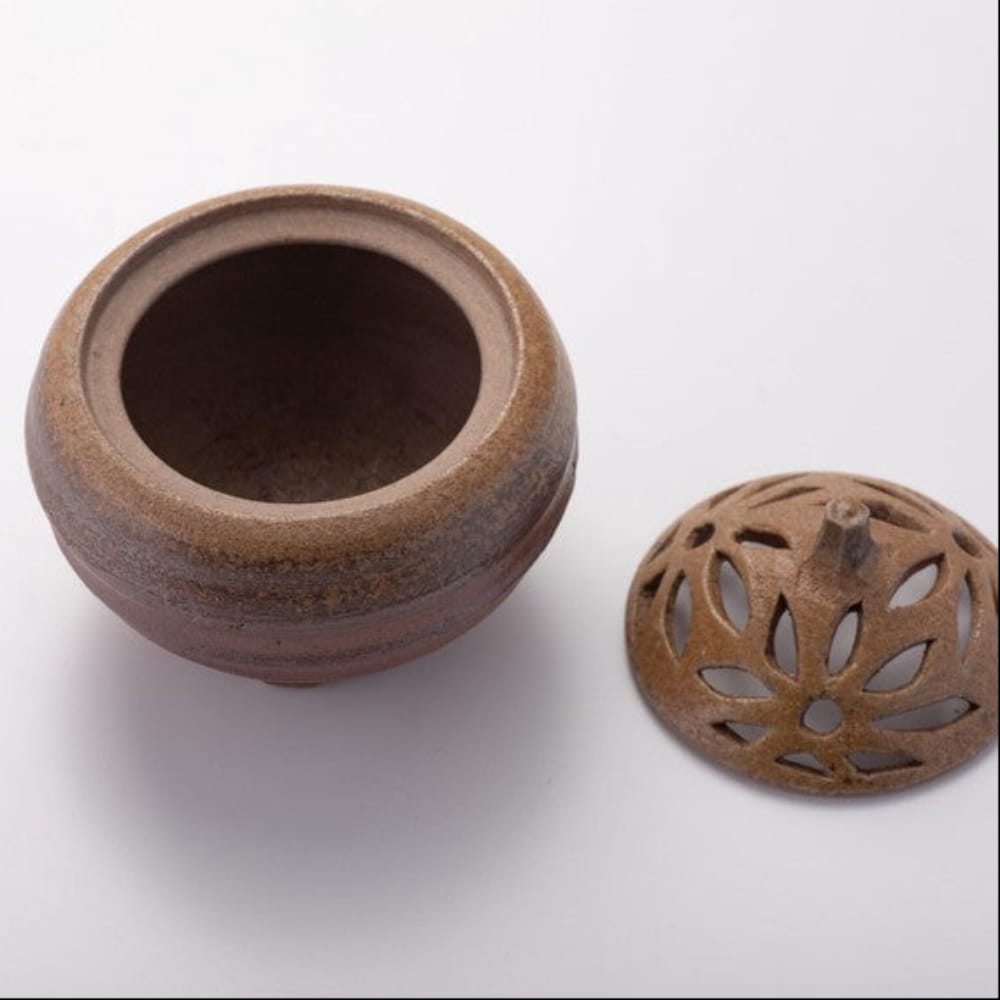
Contents: One incense burner with lid
Construction: Hand-formed body and handmade chrysanthemum lid with hand-cut openings
Firing: Wood-fired in a climbing kiln
Care instructions
Allow the burner and any ash to cool completely before handling or cleaning. Remove spent incense and ash gently. For gentle care of the openwork lid, wash by hand with a soft sponge and mild detergent, then dry thoroughly. The supplier also lists dishwasher compatibility. Do not use over a direct flame or on a gas hob.
Artisan & Craft
ONI BIZEN is the brand of Kenji Takeda, the potter behind Atobu-gama. He began building his own climbing kiln in 1989, completed it in 1995 and carried out its first firing in 1996. His work brings Bizen pottery’s expressive surfaces into objects intended for everyday life.
Note
Each piece is handmade. Colour, firing marks, surface texture and outline may vary from the photographs; dimensions and weight are approximate. These natural differences are part of the pottery’s individual character.
Questions About This Piece
What is normally used inside this type of incense burner?
Bowl-style Japanese incense burners are commonly used with purpose-made incense ash, which can support a stick and catch falling ash. A suitable separate holder is another common arrangement. Cones are also used in some ash-filled burners. This is general guidance: the supplier has not specified compatible incense formats, internal clearance or accessory contents for this model.
Should the lid stay on while incense burns?
A pierced lid does not automatically guarantee sufficient airflow or clearance. General incense guidance recommends burning with the lid off unless the setup allows the incense to smoulder properly without touching the lid. Follow the incense maker’s instructions and use a stable, heat-resistant surface. Never leave burning incense unattended.
Will my burner look exactly like the photographs?
Colour, natural firing marks and small details of the handmade form vary between pieces. The chrysanthemum lid design and approximate dimensions identify the model; its fired surface gives the individual piece its character.
How is the chrysanthemum lid made?
The lid is made entirely by hand, including the cutting that creates its petal-shaped openings. The floral openwork is formed in the clay itself, with small differences in the cut details giving each lid its own character.
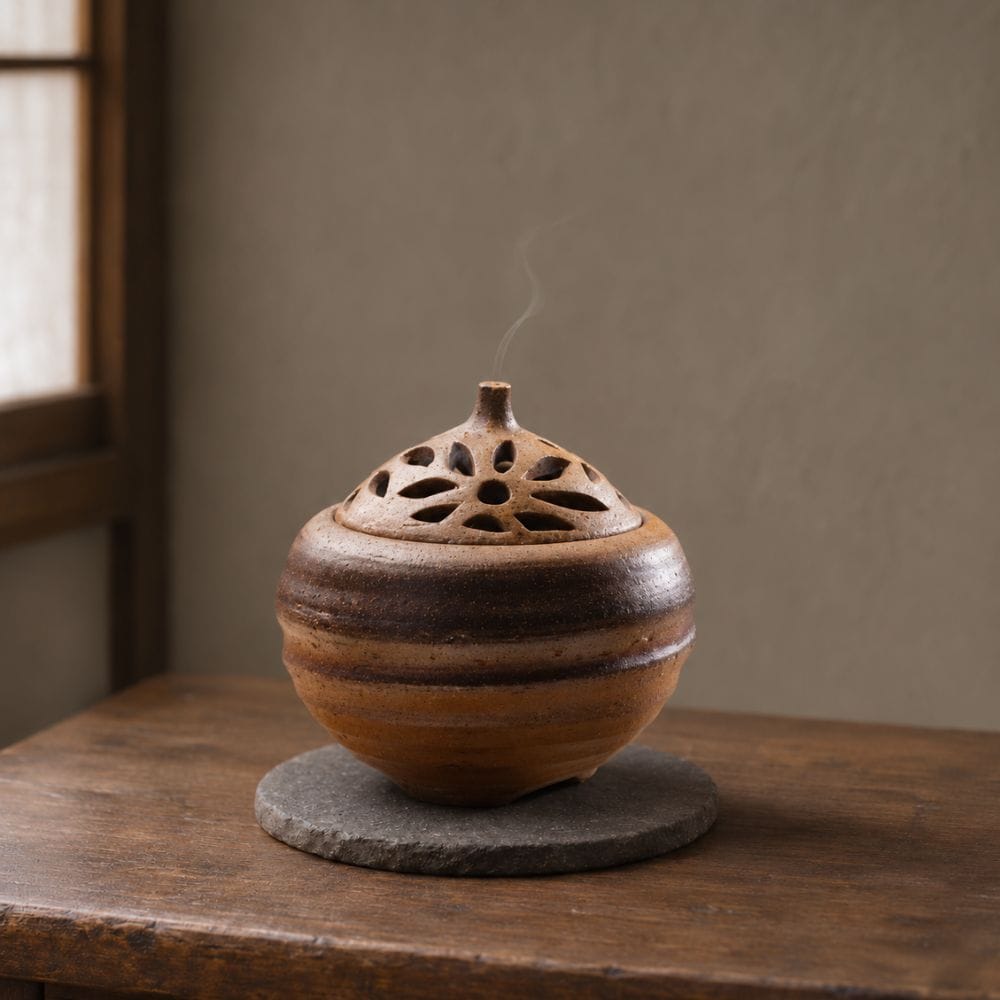
Illustrative composition inspired by Bizen pottery; see individual listings for the exact products.
MEET THE MAKER · OKAYAMA, JAPAN
ONI BIZEN Kenji Takeda’s art of everyday pottery
ONI BIZEN is the pottery brand of Kenji Takeda at Atobu-gama (亜登武窯), whose workshop is in Asakuchi, Okayama. Takeda studied at the Bizen Pottery Centre in 1988, began building his own climbing kiln in 1989 and completed it in 1995. Its first firing followed in 1996.
His background in product design, welding and carpentry informs a hands-on approach to making. The kiln’s unusually tall, shallow structure demanded years of experimentation with clay and firing. The resulting blend supports ONI BIZEN’s practical ambition: pottery made to be used, including a range developed for microwave and oven cooking.
The name draws on Ura, the oni figure in Okayama’s regional folklore. His aim is to connect that regional story with pottery for contemporary daily life. Takeda describes their varied colours and textures as keshiki, the “landscape” of the clay.
Hand-formed leaf dishes, softly rounded square plates and everyday cups show that approach at the table. Natural ash deposits and kiln effects give the surfaces depth, while the maker’s attention to shape and thickness keeps each piece grounded in use.
Kenji TakedaPotter behind ONI BIZEN
Self-built kilnCompleted in 1995
Atobu-gamaAsakuchi, Okayama
ONI BIZEN · 亜登武窯 · Okayama Prefecture · Japan
DISCOVER ONI BIZEN
The maker, the kiln and the pieces
Who makes ONI BIZEN pottery?
ONI BIZEN is created by potter Kenji Takeda at Atobu-gama in Okayama Prefecture. Born in Kurashiki, he brought experience in design and fabrication to pottery, building his own climbing kiln and developing the clay blend used for his heat-resistant ware.
What does the ONI BIZEN name mean?
The brand connects Bizen pottery with the Ura folklore of the historic Kibi region, both associated with present-day Okayama. Takeda imagines vessels that an oni, or powerful spirit, might have used, reworking that idea for contemporary daily life.
What makes the leaf dishes distinctive?
Takeda forms the leaf dishes individually by hand without moulds. Their natural outlines are paired with firing effects such as goma, the speckled deposits created by wood ash, and botamochi, circular marks produced during firing. Colour and surface details vary between pieces.
Can ONI BIZEN go in the microwave or oven?
The maker describes ONI BIZEN as a range developed for microwave and oven use through its clay blend and firing process. Check the instructions for the exact piece you buy, including temperature limits and handling. This does not establish stovetop, direct-flame or dishwasher suitability, and it should not be extended to other Bizen ware.
Choosing a selection results in a full page refresh.