Carefully sourced in Japan from artisan workshops and specialist retailers
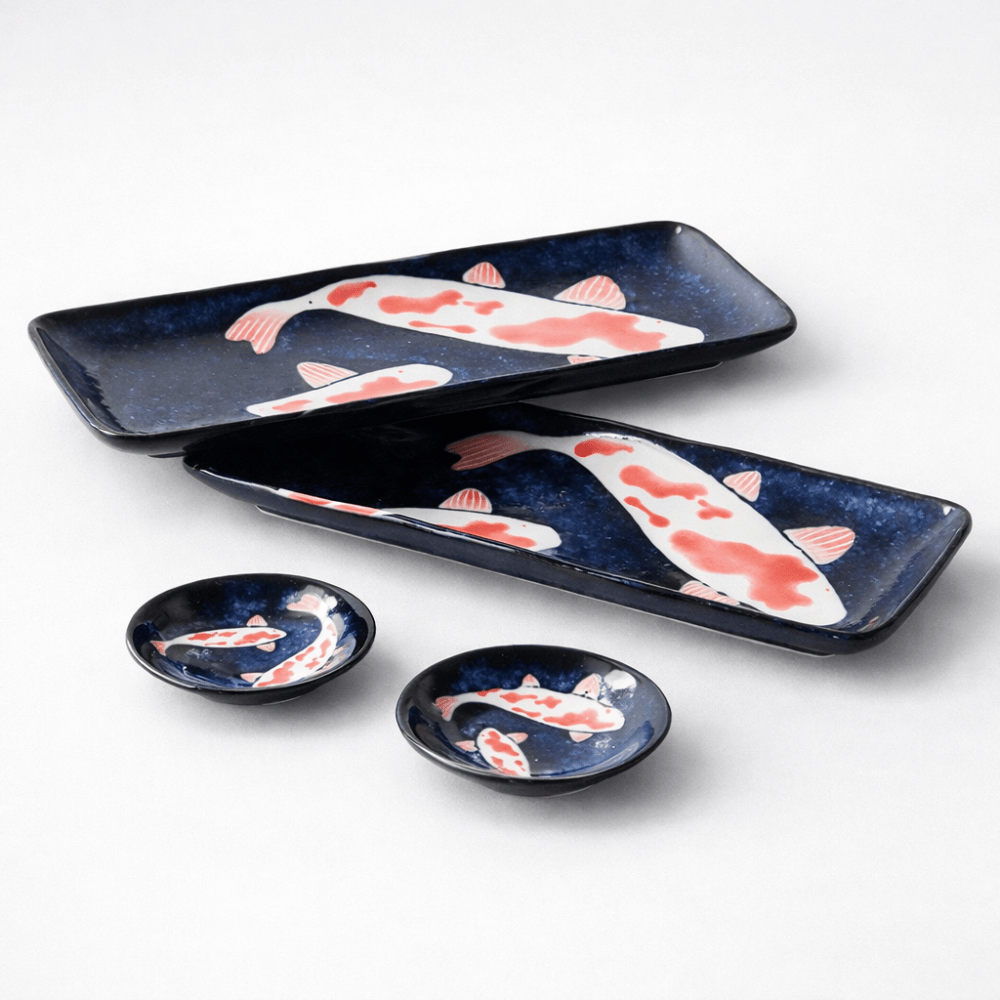
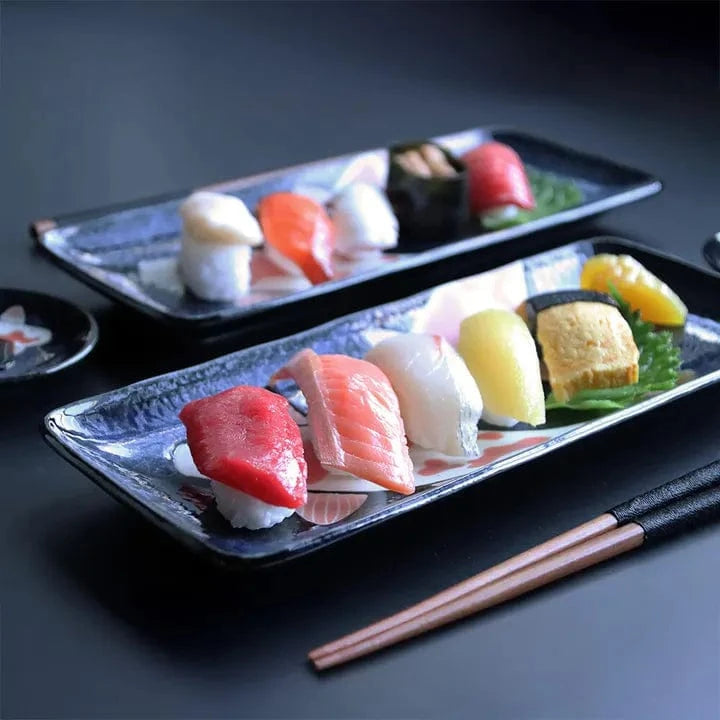
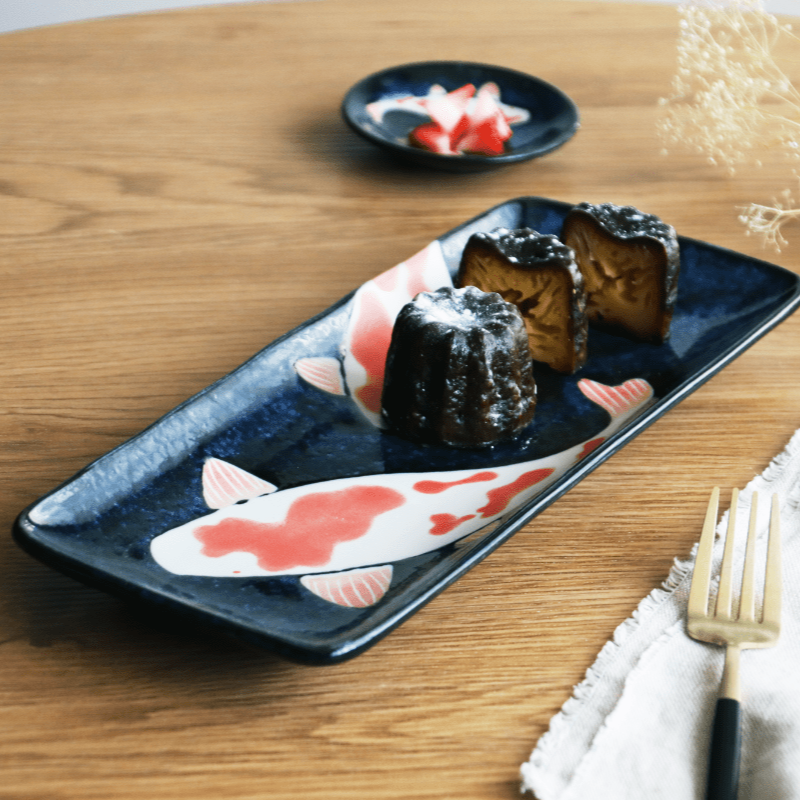
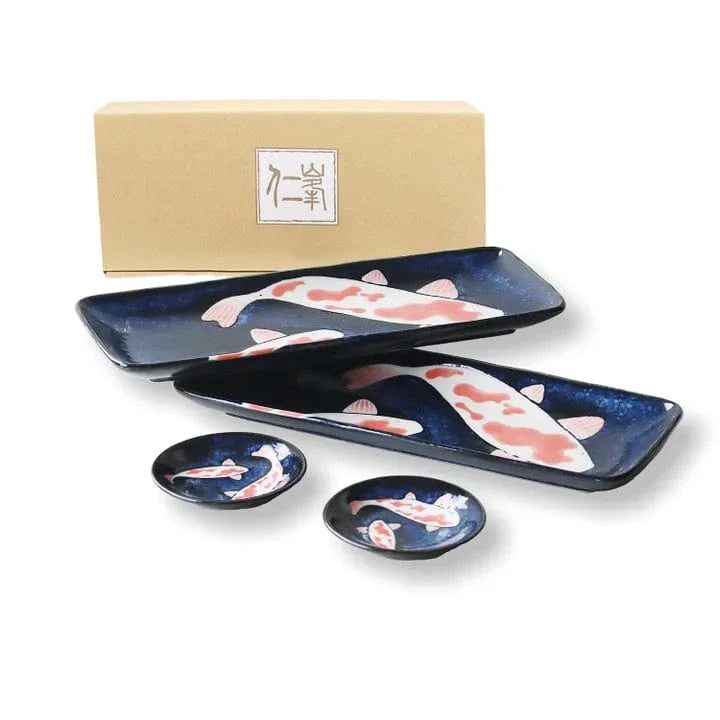
The Nishiki Goi Sushi Oblong Plate Set pairs two elongated plates with two matching mini plates for sushi, sashimi, soy sauce, or side items. At 11.6" (29.5 cm) long, each oblong plate gives nigiri and appetizers room to arrange, while the deep indigo glaze and vivid koi design bring a hand-glazed Japanese finish to the table.
Why You'll Love It?
Two 11.6" (29.5 cm) oblong plates provide room for sushi, sashimi, or appetizers.
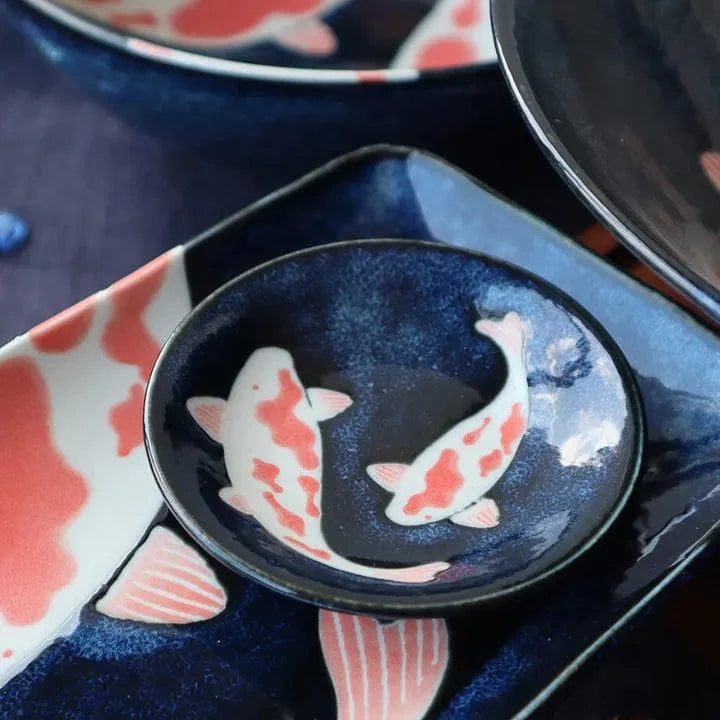
Two matching mini plates work for soy sauce or small side items.
Made in Japan by Jinpoh with a hand-glazed koi design.
Microwave and dishwasher safe; hand washing is recommended to preserve the glazed detail.
Inspired by the graceful movement of Nishiki-goi, or ornamental koi carp, the Nishiki Goi Sushi Oblong Plate Set combines a vivid koi design with a deep indigo glaze.
Handcrafted by Jinpoh in Japan, the set includes two oblong sushi plates measuring 11.6" × 4.9" × 1" (29.5 × 12.5 × 2.5 cm), along with two matching mini plates measuring 3.5" × 0.6" (9 × 1.5 cm). Use the elongated plates for sushi, sashimi, or appetizers, and the mini plates for soy sauce or side items.
The set is microwave and dishwasher safe. Hand washing is recommended to preserve the hand-glazed detail. Each set is presented in a premium die-cut gift box and is suitable for weddings, housewarmings, or other gifts.
Product Information
2 Oblong Sushi Plates: 11.6 × 4.9 × 1 in (29.5 x 12.5 x 2.5 cm)
2 Mini Plates: 3.5 × 0.6 in (9 × 1.5 cm)
Presented in: Premium die-cut box
Total Weight: 47 oz (1,320 g)
Made in Japan
Care instructions
- Microwave and dishwasher safe.
- Hand washing recommended to preserve the hand-glazed detail.
Artisan & Craft
Crafted by Jinpoh in Japan, this set combines Mino ware with a hand-glazed deep indigo finish and vivid koi design. The handcrafted surface gives each piece its individual character while keeping the focus on practical table use.
Note
Every piece crafted by our artisans tells a unique story.
Subtle marks, slight irregularities in shape, variations in glaze color and texture—these natural differences give each creation its own soul.
Over time, as you use your pieces, their character deepens, becoming part of your daily life and memories.
Questions & Answers
What can I serve on the oblong plates?
The 11.6" (29.5 cm) plates are suited to sushi and sashimi, and can also be used for beautifully arranged appetizers or other small dishes.
What are the mini plates used for?
The two matching mini plates can hold soy sauce or serve as rests for side items.
How should I care for the hand-glazed detail?
The set is microwave and dishwasher safe. Hand washing is recommended to help preserve the hand-glazed detail.
Is this set suitable as a gift?
Each set is presented in a premium die-cut gift box, making it suitable for occasions such as weddings and housewarmings.
Made by Jinpo
Rooted in Japanese Tradition, Crafted for Everyday Life
Jinpo is a thoughtfully designed tableware collection made for everyday use—where functionality meets artistry. Each piece is crafted from high-quality porcelain clay and individually hand-finished, giving every plate its own unique character.
Durable yet elegant, Jinpo brings beauty and intention to both casual meals and special occasions.
FAQs
All you need to know about Japanese Pottery.
What types of traditional pottery are made in Japan?
Japan is home to several renowned pottery styles, including Mino ware (Gifu), Bizen ware (Okayama), Arita and Imari ware (Saga), Shigaraki ware (Shiga), and Mashiko ware (Tochigi). Each region has its own distinct materials, glazes, and firing techniques that reflect local history and aesthetics. Toki City in Gifu Prefecture is particularly renowned as the heart of Mino ware (Minoyaki)—the most widely produced pottery style in Japan.
What materials are used in artisan Japanese pottery?
Most artisan pottery in Japan is made from locally sourced clay, often mixed and refined by hand. Natural minerals and ash are used in glazes, and many pieces are wood-fired or fired in traditional climbing kilns (noborigama), producing unique surface textures and natural variations.
Are artisan Japanese pottery pieces safe for food use?
Yes. Authentic artisan pottery is made with food-safe, lead-free glazes and is carefully fired at high temperatures to ensure durability and safety. However, it's important to follow care instructions, especially for unglazed or porous ceramics.
What makes Japanese pottery different from Western ceramics?
Japanese pottery often emphasizes wabi-sabi—the beauty of imperfection—resulting in organic shapes, subtle asymmetry, and natural glazes. Unlike Western ceramics, which may prioritize uniformity, Japanese pieces often celebrate the individuality of each item, reflecting the artist's hand and the firing process.
How should I care for artisan-made Japanese pottery?
Hand-wash pottery with mild soap and avoid extreme temperature changes (like placing hot items into cold water). Some unglazed pieces may absorb moisture, so allow them to fully dry before storing. Avoid microwaves or dishwashers unless the piece is specifically labeled as safe for such use.
Choosing a selection results in a full page refresh.