



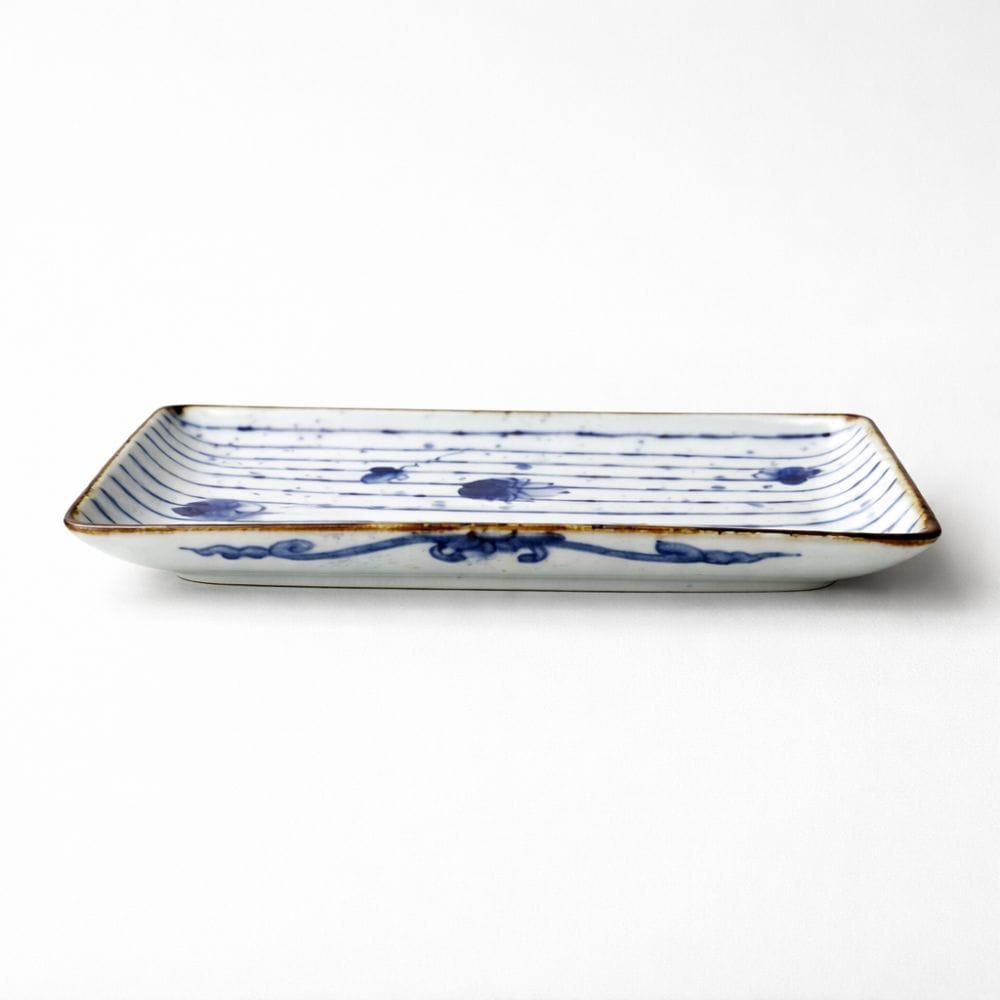
Arita Blue Tokusa Flower Oblong Plate
Secure, insured delivery from Japan
Complimentary over $199 · otherwise from $30. Shipping policy
$100 away from complimentary shipping
U.S. duties prepaid at checkout
Import duties and taxes are calculated and paid at checkout, so nothing is due on delivery. Learn more
Sourced in Japan, from the makers
Direct from Japanese workshops and their authorised channels.
Why You’ll Love It
Pairs well with
Arita Blue Tokusa Flower Oblong Plate
Transform your dining experience with the Arita Blue Tokusa Flower Oblong Plate, a piece that blends tradition with functionality. Handcrafted in Arita, Japan, this plate features intricate, hand-painted floral patterns in shades of blue that reflect the beauty of nature, offering a refined touch for your culinary presentations. The smooth porcelain surface invites a tactile connection, giving weight to the vibrant hues that enliven your table.
Measuring 9.4 x 4.7 x 1.1 inches (24.0 x 12.0 x 2.8 cm), this durable porcelain plate is crafted using unique dyeing methods at Fukuizumi Kiln, ensuring each plate is a one-of-a-kind piece. Its practical design is suitable for everyday use or special occasions, as it is both microwave and dishwasher-safe.
Imagine presenting an elegant sushi platter or a vibrant dessert on this beautifully shaped oblong plate. The distinctive floral motif not only enhances your dining experience but also complements a range of table settings, from minimalist to traditional. Packaged in a charming cosmetic box, it serves as a thoughtful gift for weddings, housewarmings, or other celebrations.
With each use, the Arita Blue Tokusa Flower Oblong Plate adds a warm, inviting element to your dining table. Please note that actual colors may vary slightly due to screen differences, making each addition unique to your collection. Order yours today to enjoy the beauty of Japanese craftsmanship in your home.
Product Information
Care instructions
Note

Arita porcelain · Saga, Japan
Arita: the birthplace of Japanese porcelain
Arita is where Japanese porcelain first flourished in the early 1600s. Known for its fine white body, refined decoration and generations of specialist craftsmanship, Arita ware remains one of Japan’s most enduring ceramic traditions.
Discover Arita
Learn more about Arita porcelain
What is Arita ware?
Arita ware is Japanese porcelain made in and around Arita, Saga Prefecture. The name covers a wide range of styles, from traditional blue-and-white designs to richly painted and contemporary pieces, united by the region's long porcelain-making tradition.
Why is Arita porcelain special?
Arita porcelain combines technical precision with a long tradition of decorative craftsmanship. Its fine, hard porcelain body allows for crisp forms and detailed decoration, while generations of specialist makers have developed distinctive glazing, painting and firing techniques.
Where is Arita ware made?
Arita ware is made in the town of Arita and the surrounding ceramic region of Saga Prefecture on Kyushu, in southern Japan. The area remains closely associated with porcelain production more than four centuries after the craft first developed there.
How is Arita porcelain different from other Japanese ceramics?
Arita ware is porcelain rather than stoneware or earthenware. Compared with many Japanese ceramic traditions, it tends to have a finer, lighter and more refined body, often with a bright white surface that provides an ideal base for detailed painted decoration.