This site uses cookies for better user experience and analytics.
Nishiki Goi Japanese Sushi Plate – Indigo Koi Porcelain
$19.90
No reviews
No reviews yet · Customers rate us 4.9/5 (44 reviews) · Read them
11.6 × 4.9 × 1.0 in (29.5 × 12.5 × 2.5 cm) • Porcelain • Indigo glaze • Made in Japan
In stock
Ships within 4 business days
Secure, insured delivery from Japan
Worldwide shipping from $30 · free over $150. Shipping policy
$19.90 of $150 with this item · $130.10 to go
U.S. duties prepaid
No extra import charges on delivery — the price you see is the price you pay. Learn more
Sourced in Japan, from the makers
Direct from Japanese workshops and their authorised channels.
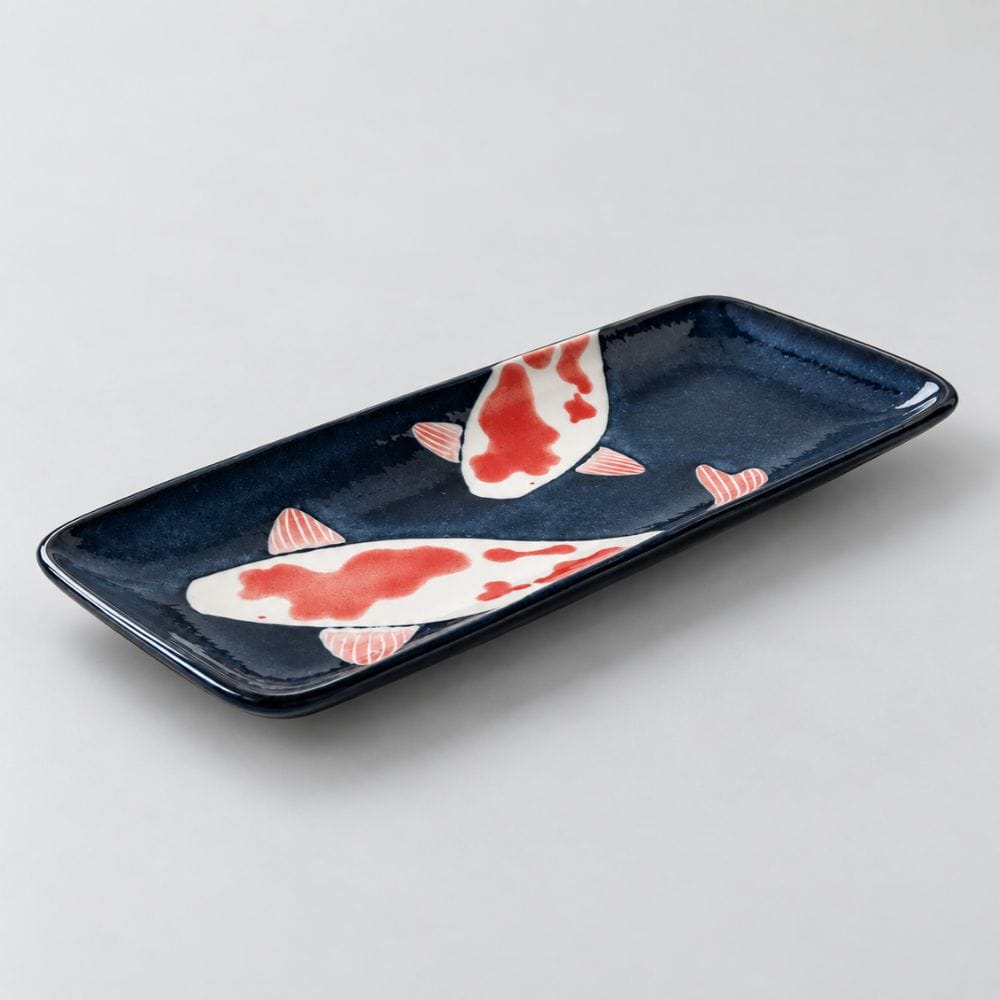
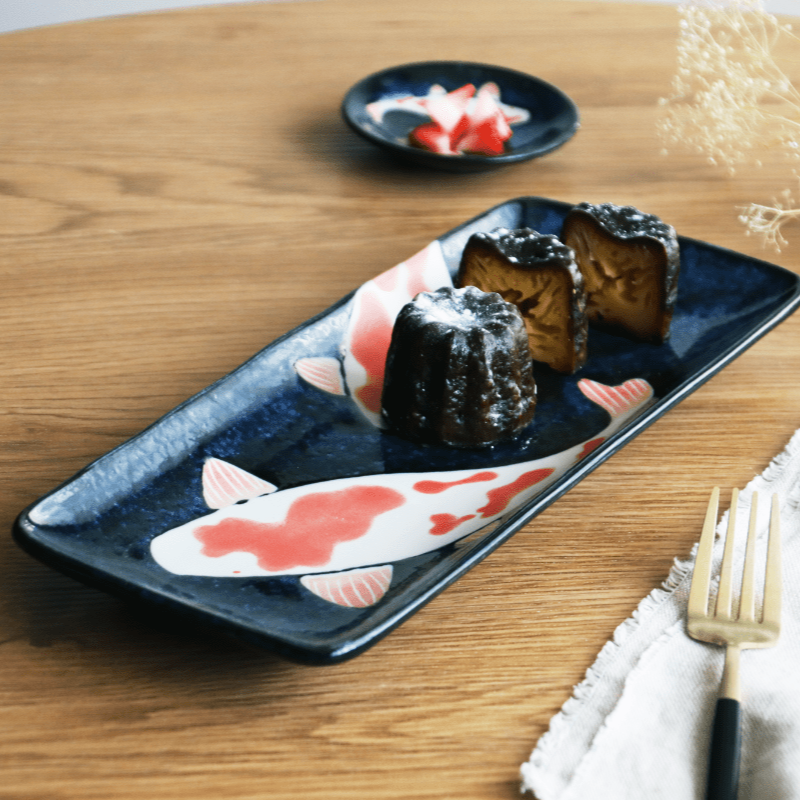
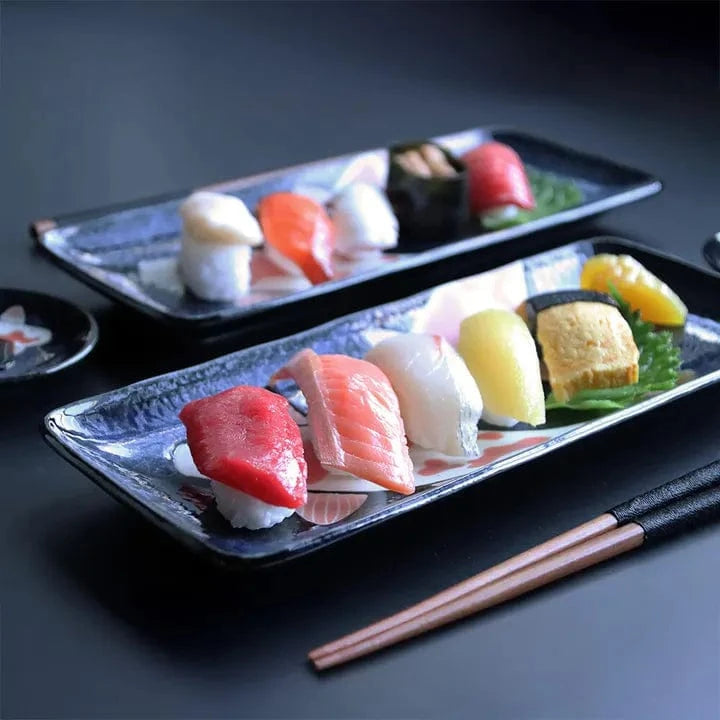
A Japanese porcelain sushi plate with a deep indigo glaze and red-and-white koi motif. Its long rectangular shape is designed for sushi, sashimi, appetizers, or small desserts, while the glossy finish gives the table a clean, graphic focal point. Made in Japan by Jinpoh.
Why You’ll Love It
Long rectangular shape ideal for sushi and sashimi
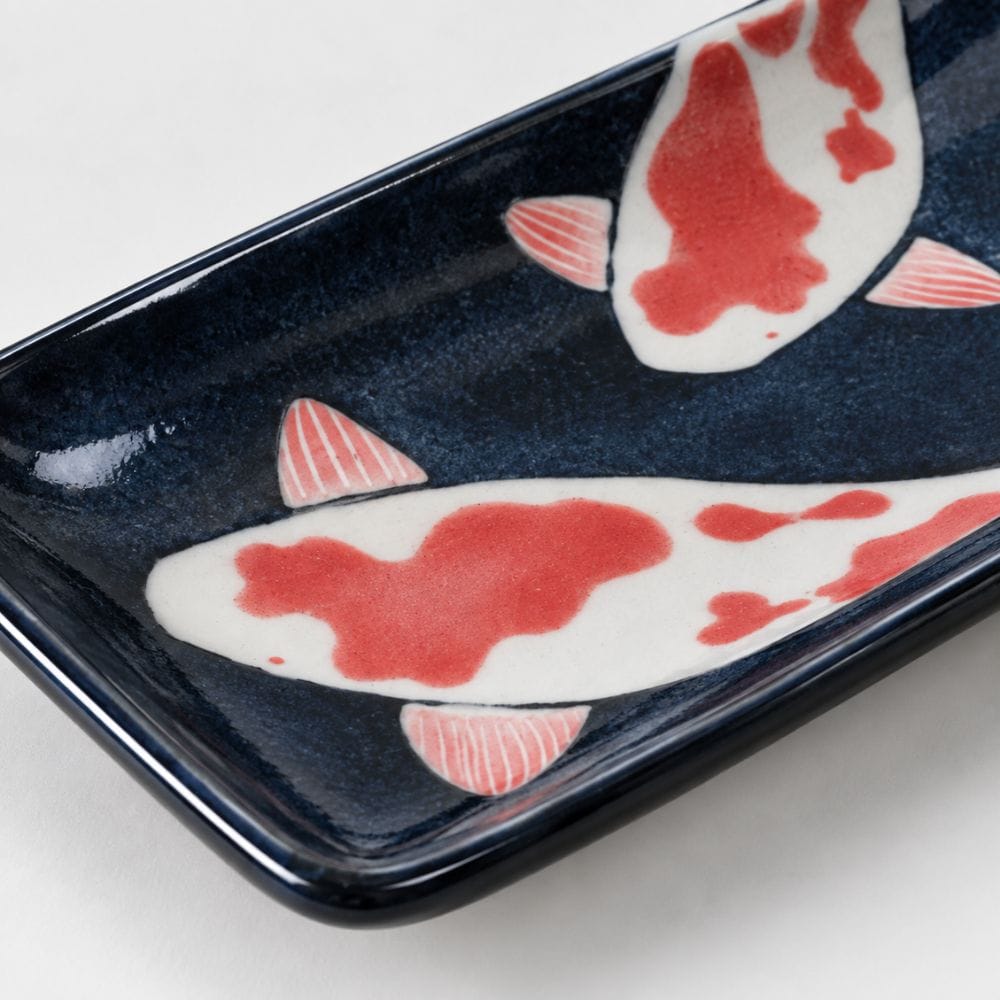
Deep indigo glaze with a striking red-and-white koi motif
Made in Japan by Jinpoh
Durable porcelain suitable for everyday table use
Distinctive design that works for both Japanese and Western serving styles
Nishiki Goi Japanese Sushi Plate – Indigo Koi Porcelain
$19.90
Japanese Porcelain for Sushi and Small Plates
Product Description
The Nishiki Goi Sushi Plate is a long rectangular porcelain plate designed for elegant presentation of sushi, sashimi, appetizers, desserts, and small shared dishes.
Its deep indigo glaze creates a strong contrast with the red-and-white koi motif, giving the piece a graphic character without overwhelming the food. The elongated shape provides enough space to arrange several pieces cleanly while keeping the table setting compact.
Made in Japan by Jinpoh, the plate combines decorative design with practical everyday use. Its porcelain body is dishwasher- and microwave-safe, making it suitable for both special occasions and regular meals.
At approximately 11.6 × 4.9 in (29.5 × 12.5 cm), it works especially well for sushi, sashimi, rolled appetizers, grilled items, and small desserts.
Hand washing is recommended to preserve the decorative finish over time
Use mild detergent and a soft sponge
Avoid abrasive cleaners and scouring pads
Microwave safe
Dry thoroughly before storing.
Artisan & Craft
Jinpoh produces Japanese tableware with a focus on functional porcelain and contemporary interpretations of traditional decorative motifs. The Nishiki Goi collection uses a deep indigo ground and koi imagery to create a bold, graphic look suited to modern dining while remaining rooted in Japanese visual culture.
Each koi motif is manually applied, giving the surface subtle variation from piece to piece. These small differences are part of the finishing process and contribute to the individual character of each plate.
Note
Because the decorative motif is manually applied, slight variation in placement, tone, and finish may occur. These differences are normal and part of the character of the piece.
Questions & Answers
What is this plate best used for?
It is ideal for sushi, sashimi, appetizers, grilled foods, small desserts, and other neatly arranged dishes.
What are the dimensions?
Approximately 11.6 × 4.9 × 1.0 in (29.5 × 12.5 × 2.5 cm).
Is it dishwasher safe?
Yes. It is dishwasher safe, although hand washing is recommended to preserve the decorative finish over time.
Is it microwave safe?
Yes. The porcelain plate is microwave safe for normal reheating.
What types of traditional pottery are made in Japan?
Japan is home to several renowned pottery styles, including Mino ware (Gifu), Bizen ware (Okayama), Arita and Imari ware (Saga), Shigaraki ware (Shiga), and Mashiko ware (Tochigi). Each region has its own distinct materials, glazes, and firing techniques that reflect local history and aesthetics. Toki City in Gifu Prefecture is particularly renowned as the heart of Mino ware (Minoyaki)—the most widely produced pottery style in Japan.
What materials are used in artisan Japanese pottery?
Most artisan pottery in Japan is made from locally sourced clay, often mixed and refined by hand. Natural minerals and ash are used in glazes, and many pieces are wood-fired or fired in traditional climbing kilns (noborigama), producing unique surface textures and natural variations.
Are artisan Japanese pottery pieces safe for food use?
Yes. Authentic artisan pottery is made with food-safe, lead-free glazes and is carefully fired at high temperatures to ensure durability and safety. However, it's important to follow care instructions, especially for unglazed or porous ceramics.
What makes Japanese pottery different from Western ceramics?
Japanese pottery often emphasizes wabi-sabi—the beauty of imperfection—resulting in organic shapes, subtle asymmetry, and natural glazes. Unlike Western ceramics, which may prioritize uniformity, Japanese pieces often celebrate the individuality of each item, reflecting the artist's hand and the firing process.
How should I care for artisan-made Japanese pottery?
Hand-wash pottery with mild soap and avoid extreme temperature changes (like placing hot items into cold water). Some unglazed pieces may absorb moisture, so allow them to fully dry before storing. Avoid microwaves or dishwashers unless the piece is specifically labeled as safe for such use.
Choosing a selection results in a full page refresh.