This site uses cookies for better user experience and analytics.
Shochiku Bai Sushi Plate
$89.00
No reviews
No reviews yet · Customers rate us 4.9/5 (44 reviews) · Read them
Porcelain Plate • 28 cm (11") x 15.5 cm (6.1") • Made in Japan • Hand-painted Shochiku Bai design
In stock
Ships within 4 business days
Secure, insured delivery from Japan
Worldwide shipping from $30 · free over $150. Shipping policy
$89 of $150 with this item · $61 to go
U.S. duties prepaid
No extra import charges on delivery — the price you see is the price you pay. Learn more
Sourced in Japan, from the makers
Direct from Japanese workshops and their authorised channels.
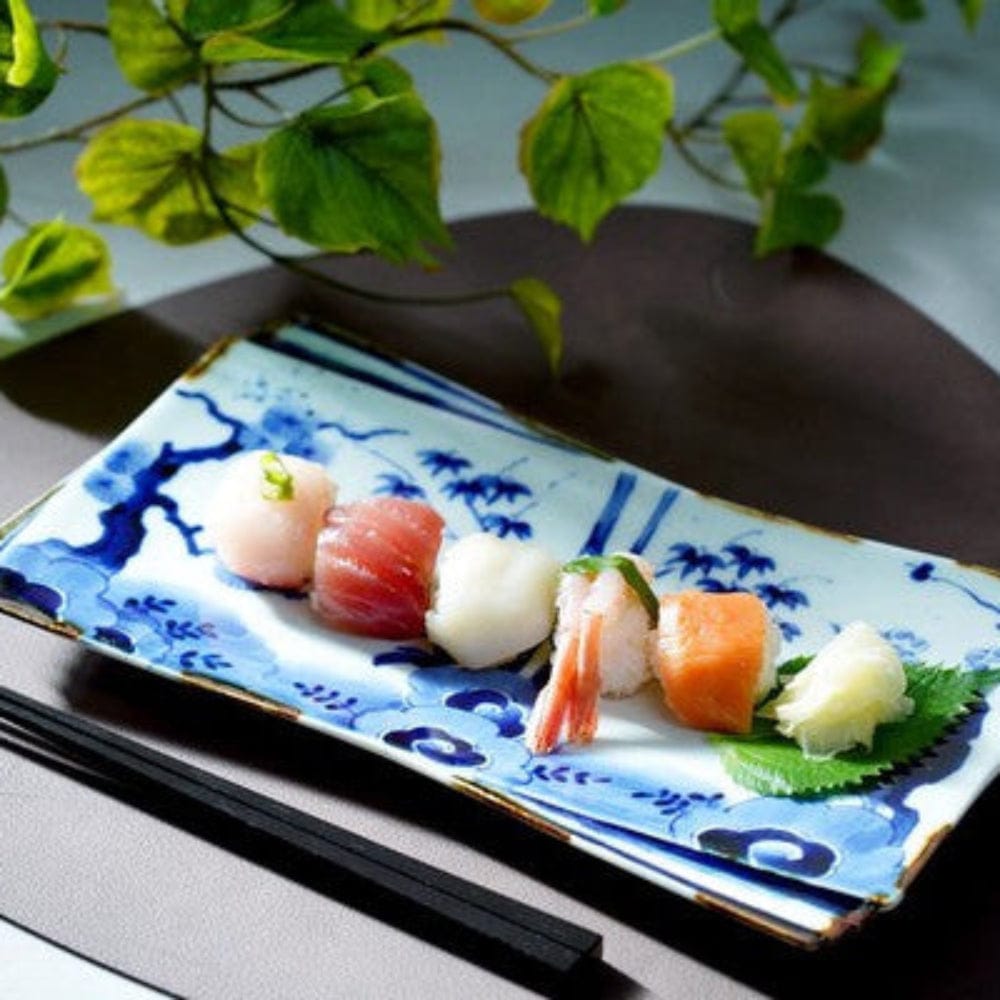
Hand-made in Japan with a classic Shochiku-Bai (pine, bamboo, plum) design, this ceramic sushi plate brings a quiet, seasonal touch to your table. Its thoughtful size and balanced shape make it great for sushi, appetizers, or shared small bites, helping everyday meals feel a little more intentional and connected to the season.
Why You’ll Love It
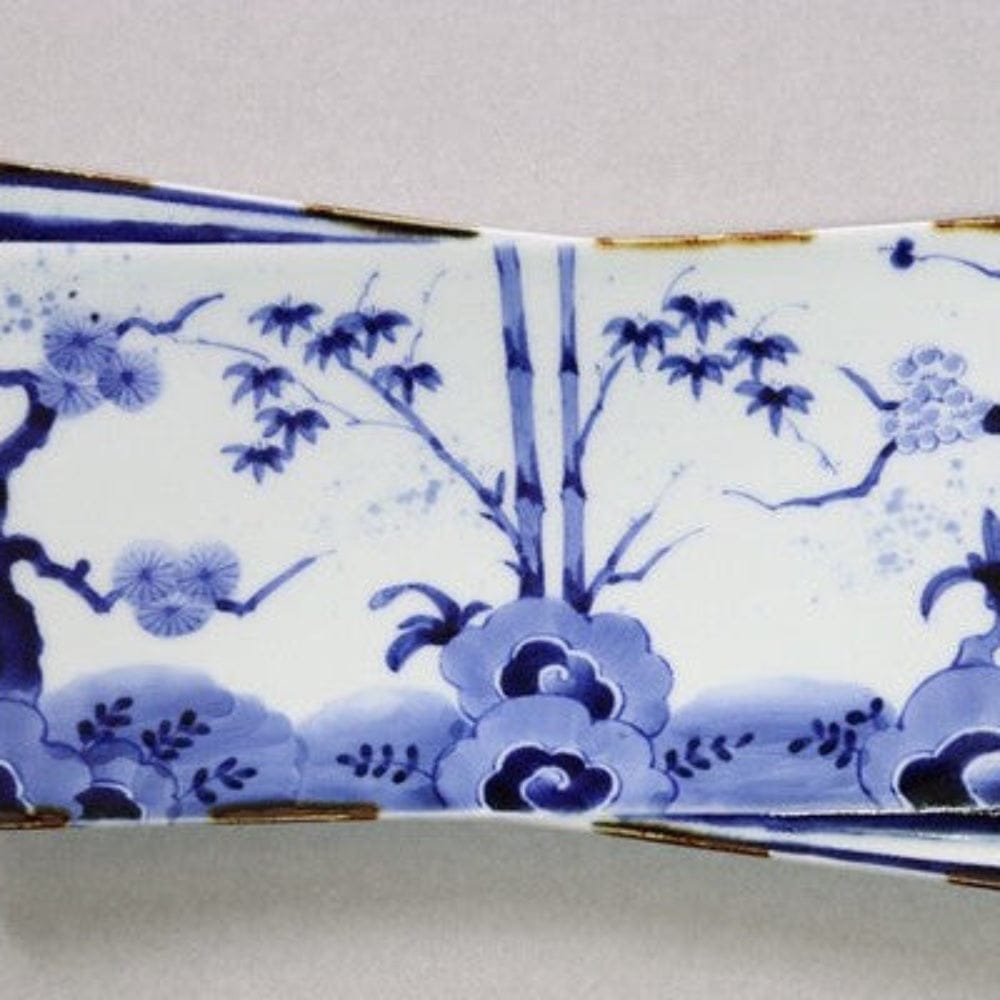
Porcelain plate made in Japan with a hand-painted Shochiku Bai motif of pine, bamboo, and plum
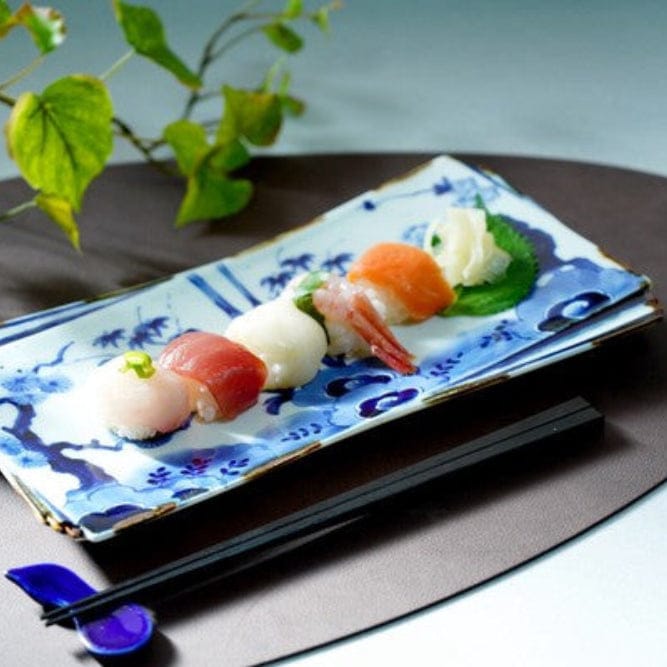
Rectangular 28 cm (11") shape gives you a neat surface for sushi, sashimi, and small shared dishes
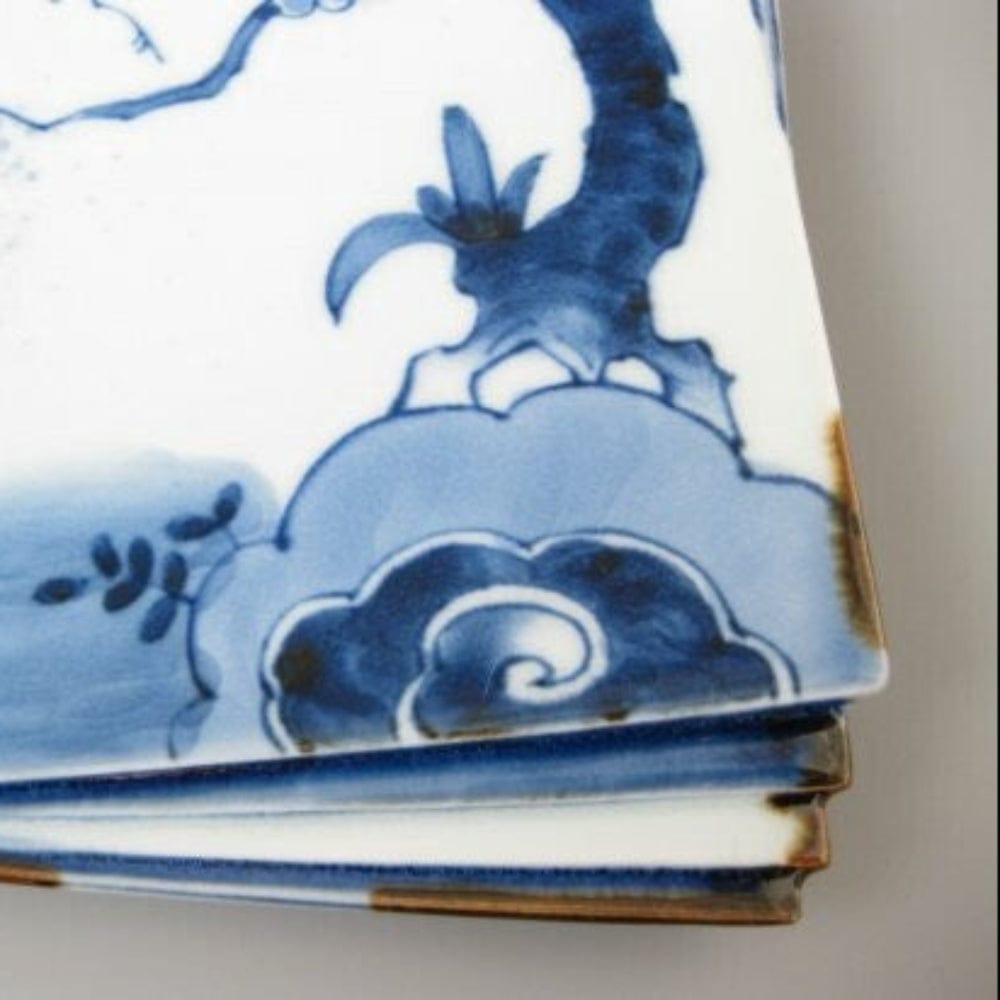
Each piece has subtle variation in the painted finish, so no two plates look exactly alike
Dishwasher-safe for everyday use, with a durable porcelain body that still feels special on the table
Works well for mukozuke service, appetizers, or grilled dishes when you want a clean presentation
The Shochiku Bai Sushi Plate is a rectangular porcelain plate made in Japan, finished with a hand-painted design of pine, bamboo, and plum blossoms. Its clean shape and measured size make it well suited to sushi, sashimi, grilled dishes, and other small servings.
Measuring approximately 11 x 6.1 x 0.8 inches (28 x 15.5 x 2 cm) and weighing around 1.3 lbs (570 g), it has a sturdy feel on the table. The hand-painted surface means each plate has slight variation in color and pattern, giving every piece its own character.
This plate also works well for mukozuke presentations or as a serving plate for shared appetizers. It is dishwasher safe for practical everyday use, and it should not be used in the oven.
Product Information
Dimensions: Approx. 11 in x 6.1 in x 0.8 in / 28 cm x 15.5 cm x 2 cm
Weight: Approx. 20.1 oz / 570 g
Material: Porcelain
Made in Japan
Care instructions
Wash gently with a soft sponge and mild detergent after use, then dry thoroughly. Safe for dishwasher and microwave. Do not use in the oven. Store in a dry place and avoid stacking heavy items on top to help prevent chipping.
Artisan & Craft
Made in Japan with a hand-painted Shochiku Bai design featuring pine, bamboo, and plum blossoms. The painted surface gives each plate slight natural variation in color and pattern.
Note
Each plate is hand-painted, so slight differences in color and pattern are part of its character.
Questions About This Piece
What kinds of dishes work best on this plate?
Its rectangular shape suits sushi, sashimi, grilled fish, appetizers, and mukozuke-style servings, especially when you want a neat linear presentation.
What makes each plate slightly different?
The hand-painted finish creates natural variation in color and pattern, so each plate has its own character.
How should I care for it?
Wash gently after use and dry thoroughly. It is dishwasher safe, and it should not be used in the oven.
Is this a good plate for everyday meals?
Yes. The porcelain body is practical for regular use, while the hand-painted design gives even a simple meal a more considered presentation.
Is this a good addition to a matching tableware set?
Yes. It pairs beautifully with the Shochiku-bai round and square plates, creating a cohesive yet dynamic table setting.
Arita porcelain · Saga, Japan
Arita: the birthplace of Japanese porcelain
Arita is where Japanese porcelain first flourished in the early 1600s.
Known for its fine white body, refined decoration and generations of
specialist craftsmanship, Arita ware remains one of Japan’s most
enduring ceramic traditions.
400+ yearsof porcelain tradition
Made in SagaArita, Japan
Fine porcelainlight, durable, refined
Arita · Saga Prefecture · Japan
Discover Arita
Learn more about Arita porcelain
What is Arita ware?
Arita ware is Japanese porcelain made in and around Arita, Saga Prefecture. The name covers a wide range of styles, from traditional blue-and-white designs to richly painted and contemporary pieces, united by the region's long porcelain-making tradition.
Why is Arita porcelain special?
Arita porcelain combines technical precision with a long tradition
of decorative craftsmanship. Its fine, hard porcelain body allows
for crisp forms and detailed decoration, while generations of
specialist makers have developed distinctive glazing, painting and
firing techniques.
Where is Arita ware made?
Arita ware is made in the town of Arita and the surrounding ceramic
region of Saga Prefecture on Kyushu, in southern Japan. The area
remains closely associated with porcelain production more than four
centuries after the craft first developed there.
How is Arita porcelain different from other Japanese ceramics?
Arita ware is porcelain rather than stoneware or earthenware.
Compared with many Japanese ceramic traditions, it tends to have a
finer, lighter and more refined body, often with a bright white
surface that provides an ideal base for detailed painted decoration.
Choosing a selection results in a full page refresh.