


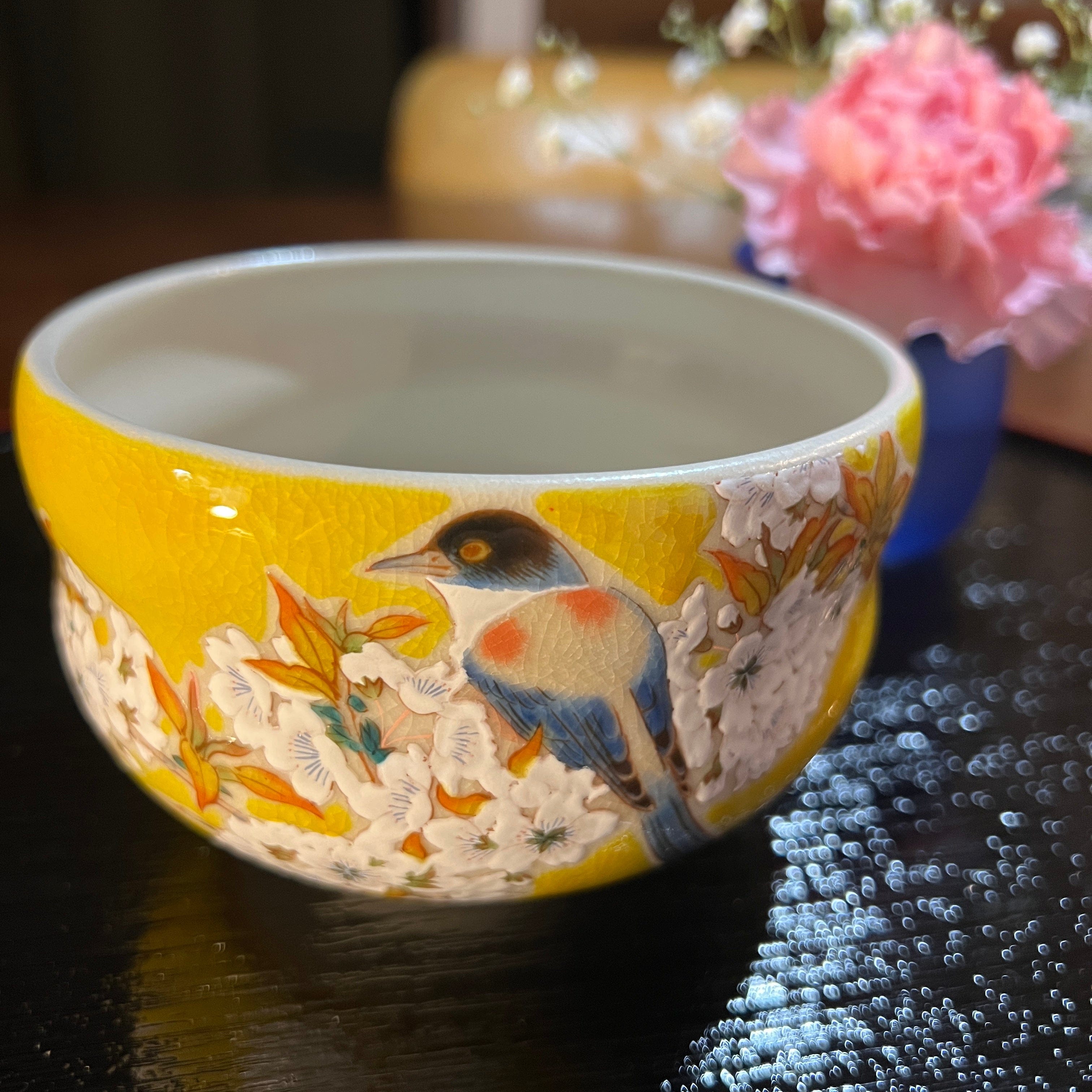
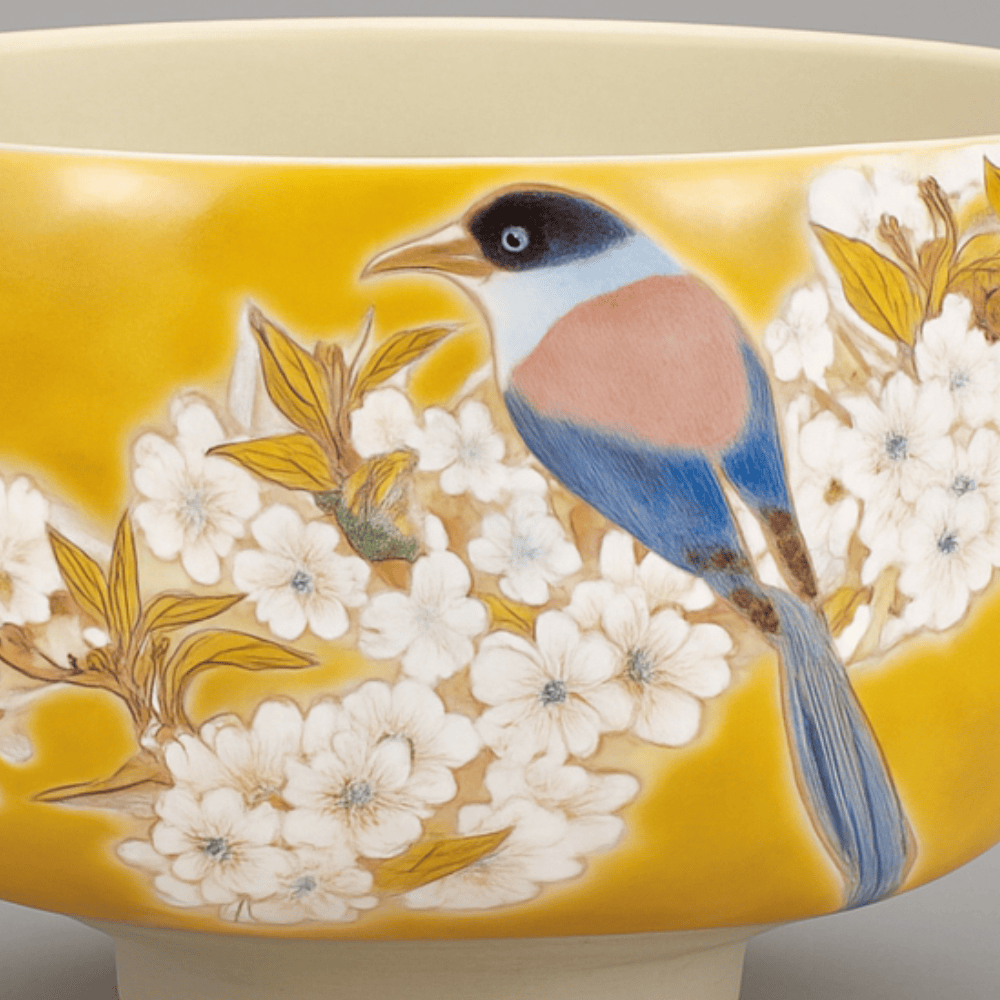
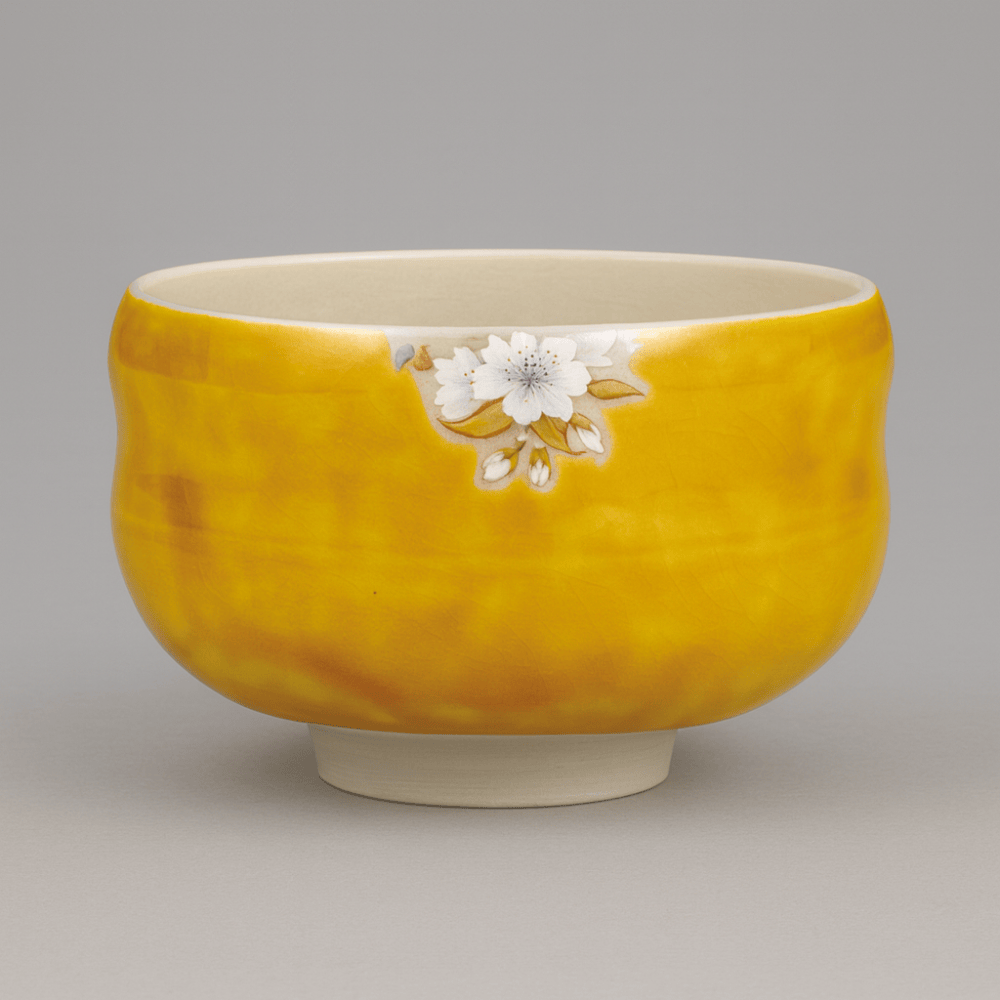
Yoshidaya Mountain Cherry and Bird Matcha Bowl
Secure, insured delivery from Japan
Worldwide shipping from $30 · free over $150. Shipping policy
$99 of $150 with this item · $51 to go
U.S. duties prepaid
No extra import charges on delivery — the price you see is the price you pay. Learn more
Sourced in Japan, from the makers
Direct from Japanese workshops and their authorised channels.
Why You’ll Love It
Pairs well with
Yoshidaya Mountain Cherry and Bird Matcha Bowl
Indulge in a sensory experience with the Yoshidaya Mountain Cherry and Bird Matcha Bowl, a beautiful piece of Kutani ware from Japan, famous for its vivid colors and detailed designs. This artisan-made chawan has a diameter of 4.7 inches (12 cm) and a height of 3.1 inches (8 cm), making it the ideal size for comfortably cradling in your hands as you savor each sip of your favorite matcha. The generous capacity is perfect for both traditional servings and personal enjoyment.
Symbolism and Aesthetics
This matcha bowl features a captivating depiction of a bird among delicate cherry blossoms against a striking yellow background, showcasing Japan's natural beauty. The intricate designs, lovingly applied by skilled craftsmen in the Kutani region, enhance its elegance and invite attention during tea rituals and gatherings, making it a delightful focal point in your home decor.
Enhancing Daily Life
Crafted from durable Kutani ceramic, the Yoshidaya Matcha Bowl is designed for both tea ceremonies and casual gatherings. Its quality ensures resilience, allowing you to enjoy your daily tea-drinking ritual without concern. The unique artistry and craftsmanship not only contribute to its visual appeal but also ensure its longevity, making it a standout addition to any collection.
Gift Ready
This exquisite piece arrives in a beautifully crafted wooden box, making it an exceptional gift for tea enthusiasts or collectors of Japanese ceramics. Please handle with care, as each bowl is fragile. The thoughtful packaging ensures it is ready for gifting, preserving its breathtaking beauty for that special recipient.
Whether you are a matcha lover or an admirer of fine craftsmanship, this bowl is a must-have for your collection or a thoughtful gift. Don’t miss the chance to own this piece of Japanese artistry that seamlessly merges functionality with design.
Product Information
Care instructions
Note

Kutani ware · Ishikawa, Japan
Kutani: Japan’s art of brilliant color
Kutani ware emerged in Ishikawa in the 17th century and became celebrated for bold overglaze painting and an unmistakably rich use of color. Its decorative language ranges from expressive nature motifs to highly detailed compositions, giving Kutani porcelain a vivid character unlike almost any other Japanese ceramic tradition.
Discover Kutani
Learn more about Kutani ware
What is Kutani ware?
Kutani ware is a tradition of Japanese porcelain associated with Ishikawa Prefecture. It first developed in the 17th century and is especially known for richly colored overglaze decoration, bold compositions and a wide range of styles that evolved over several centuries.
What are the five colors of Kutani ware?
The traditional Kutani palette is often referred to as Kutani Gosai, or the five Kutani colors: red, yellow, green, purple and dark blue. These vivid overglaze enamels are used in different combinations, from dense decorative painting to more restrained contemporary work.
Where is Kutani ware made?
Kutani ware is associated with Ishikawa Prefecture in Japan’s Hokuriku region, particularly the areas around Kaga, Komatsu and Kanazawa. The original Kutani production began near present-day Kaga in the mid-1600s.
Why does Kutani ware look so different from other Japanese porcelain?
Kutani is distinguished by its emphasis on decoration after the porcelain body has been fired. Layers of colored enamel are applied over the glaze, allowing artists to create saturated color, strong outlines and highly expressive imagery. This gives Kutani ware a more painterly and often more dramatic appearance than many other Japanese porcelain traditions.