

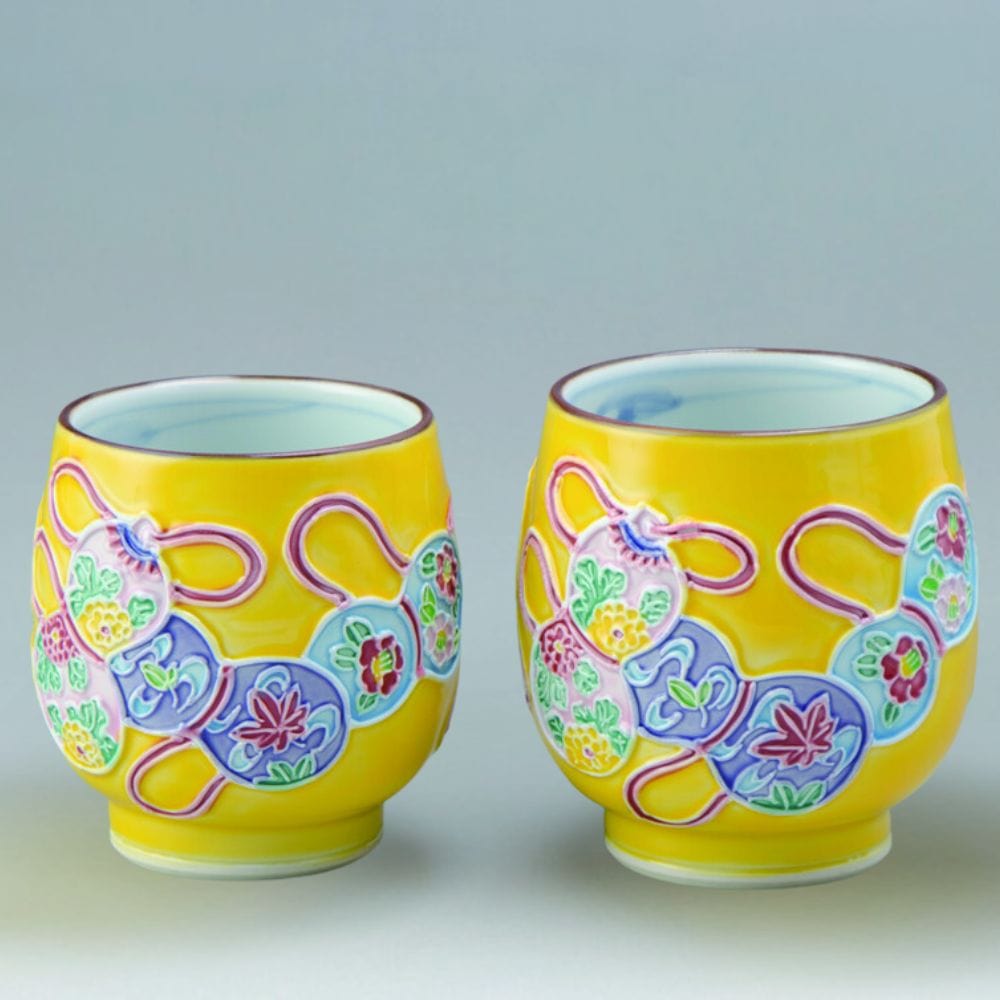
Six Gourds Tea Cups Set
Why You'll Love It?
Directly sourced from artisan workshops in Japan
No US customs fees or surprise import charges — we take care of everything
Learn moreSecure, insured delivery from Japan
Shipping policyA quiet piece of Japan, brought to your home.
Pairs well with
Six Gourds Tea Cups Set
Handcrafted Six Gourds Tea Cups for Joyful Moments
Celebrate tea time with the Six Gourds Tea Cup Set, a porcelain set made in Japan and presented in a wooden gift box. It includes one large cup and one small cup, giving you a simple, versatile pair for everyday use or gifting.
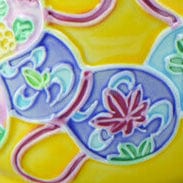
The design features six gourds intertwined with seasonal flowers on a cheerful yellow background. The cups measure 3.1" x 3.1" (8 cm x 8 cm) for the large cup and 2.95" x 2.95" (7.5 cm x 7.5 cm) for the small cup.
For care, hand wash gently with a soft sponge and mild detergent. Do not microwave or use in the dishwasher to help preserve the glaze and colors.
Product Information
Care instructions
Note
Questions & Answers
What comes in the set?
How should I care for these cups?
Is this set suitable for gifting?
What kind of tea is this set suited for?


Kumagai Satoshi Shoten – Preserving Kyoto’s Heritage
Founded in 1935, Kumagai Satoshi Shoten Co., Ltd. has spent generations devoted to the legacy of Kyoto ware and Kiyomizu ware.
Its wide-ranging collection includes everyday tableware, tea utensils, incense burners, and interior décor, each crafted to reflect the elegance and depth of Kyoto’s ceramic tradition.
In addition to curating a diverse range of pieces, Kumagai Satoshi Shoten Co., Ltd. also collaborates on custom projects—creating unique accessories, ceremonial tools, and lifestyle items that carry forward the spirit of Japanese artistry. With every item it brings to life, Kumagai remains committed to sharing the beauty, warmth, and cultural richness of Kyoto ware with people across Japan and around the world.
FAQs
All you need to know about Kyoto Ware
What makes Kyoto ware different from other Japanese ceramics?
Kyoto ware, also known as Kyo-yaki or Kiyomizu-yaki, is renowned for its refined elegance, delicate forms, and artistic diversity. Unlike other regional styles that often focus on functionality or rustic textures, Kyoto ware reflects the cultural sophistication of Kyoto—blending tradition with artistic expression in every piece.
Is each Kyoto ware item handmade?
Yes! Every piece of Kyoto ware is individually crafted by skilled artisans, often using techniques passed down through generations. This results in subtle variations in shape, glaze, and texture—making each item one-of-a-kind and rich in character.
Can I use Kyoto ware for everyday meals?
Absolutely. While Kyoto ware is often seen as collectible or ceremonial, many pieces—like plates, bowls, and teacups—are designed for everyday use. They bring a sense of calm beauty and intentionality to even the simplest meals.
Is Kyoto ware dishwasher or microwave safe?
Because Kyoto ware is handmade and often uses traditional glazes, we recommend hand washing only. Most pieces are not suitable for dishwashers, microwaves, or direct heat, as these may damage the glaze or structure over time.
Why is Kyoto ware considered a luxury craft?
Kyoto ware reflects centuries of ceramic mastery, often requiring weeks of detailed shaping, glazing, and firing. Its aesthetic precision, cultural roots, and artisanal quality make it highly valued—not just as tableware, but as functional art steeped in heritage.