No reviews yet · Customers rate us 4.9/5 (47 reviews) · Read them
Ceramic • 3.15" diameter × 4.33" height (8 cm × 11 cm) • Kutani ware • Made in Japan
In stock
Ships within 4 business days
Secure, insured delivery from Japan
Complimentary over $199 · otherwise from $30. Shipping policy
$100 away from complimentary shipping
U.S. duties prepaid at checkout
Import duties and taxes are calculated and paid at checkout, so nothing is due on delivery. Learn more
Sourced in Japan, from the makers
Direct from Japanese workshops and their authorised channels.
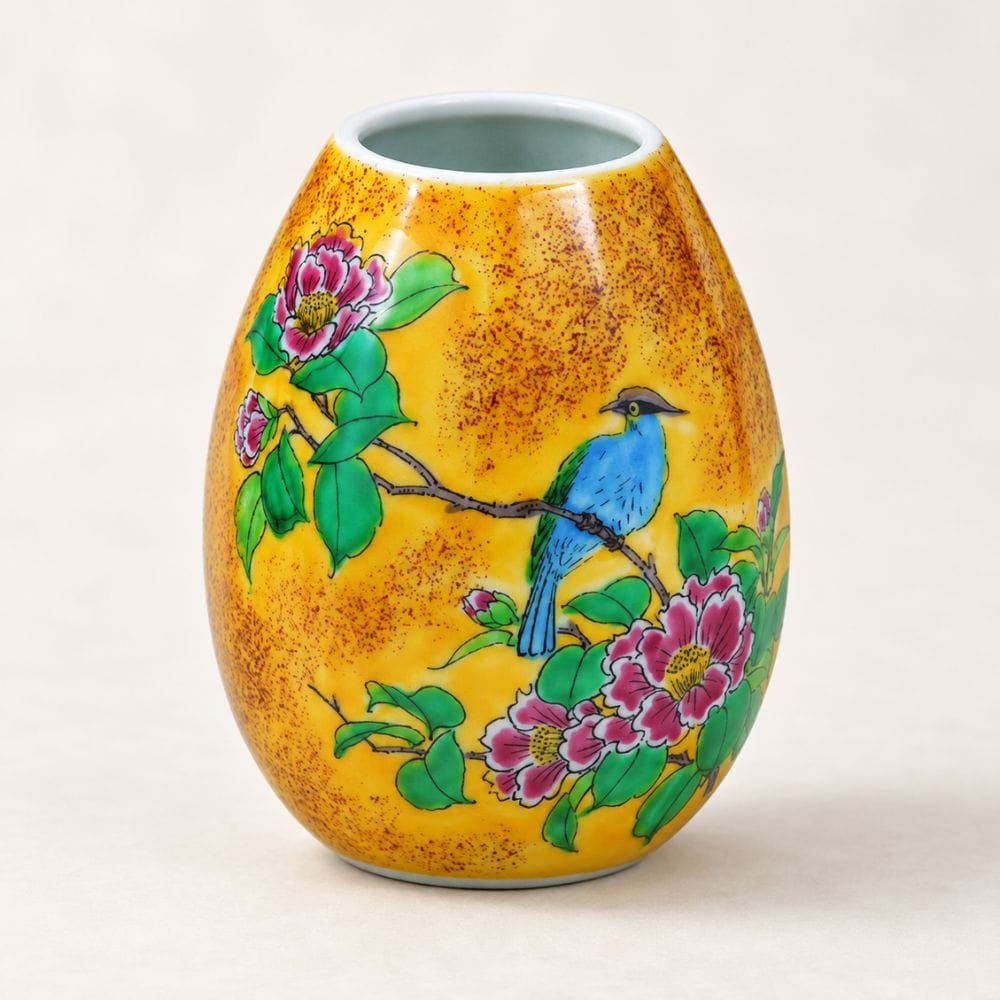
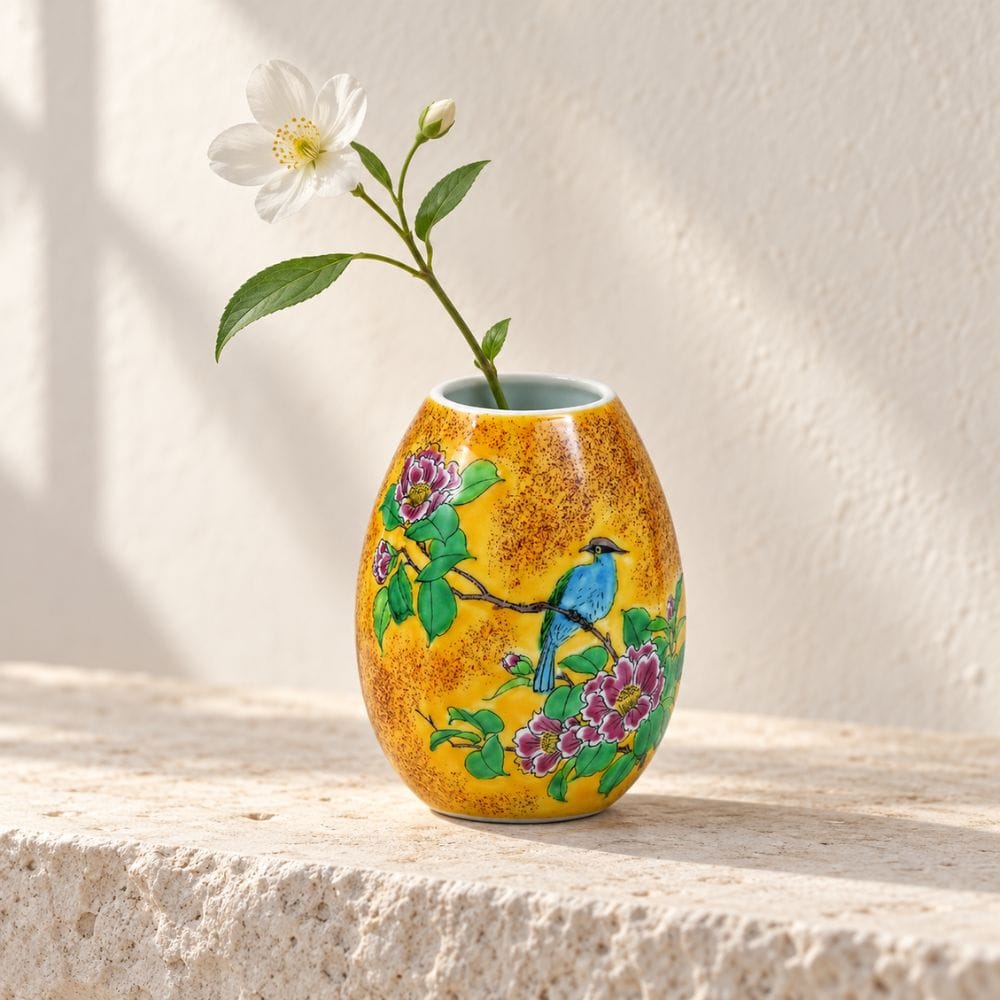
Set one fresh stem into the Single-Flower Vase: its 3.1" diameter × 4.3" high (8 cm × 11 cm) ceramic form keeps a single bloom neatly contained on a shelf or table. Made in Japan, it carries Kutani’s vivid five-color palette. This Japanese ceramic piece comes in a presentation box from Miyama Kiln, a Kutani-yaki kiln. Choose it now for a restrained, colorful single-stem display.
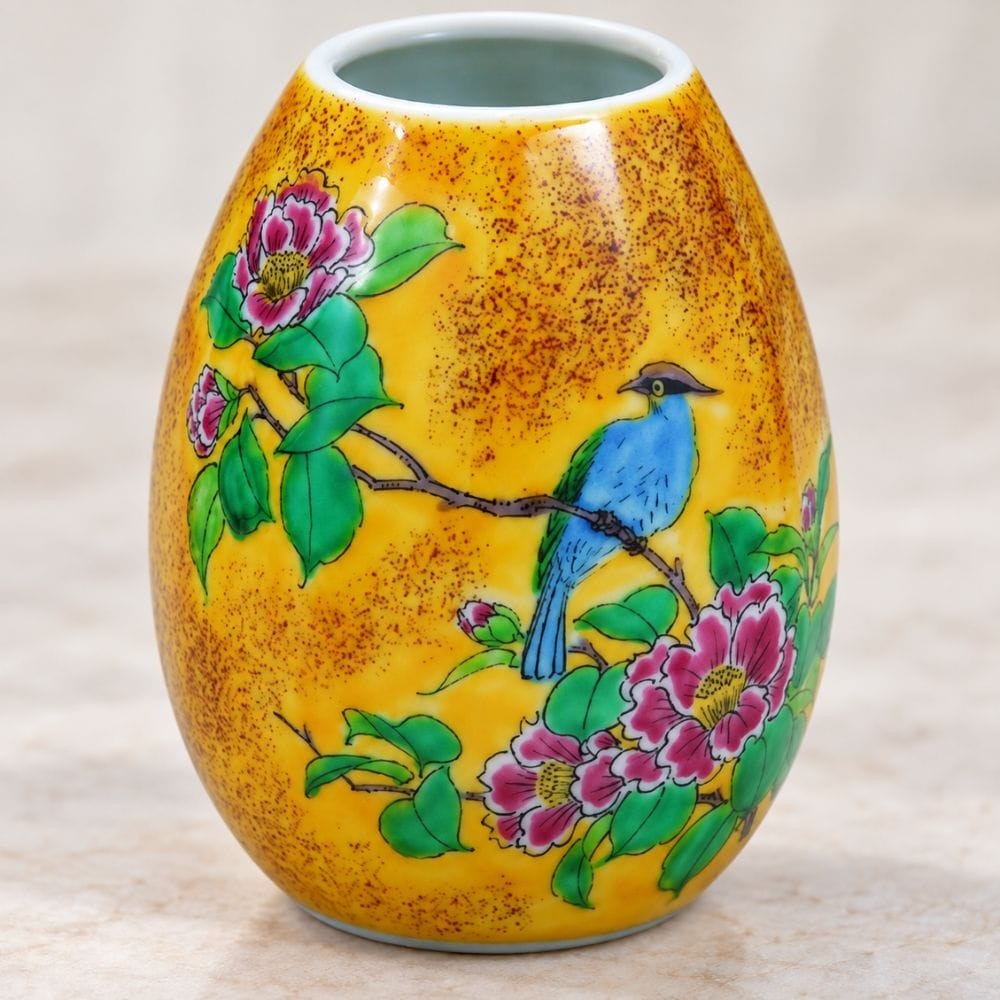
A blue bird perches on a fine branch, surrounded by purple blossoms and bright green leaves. Behind it, a warm yellow ground is scattered with delicate speckling, giving the colours depth without overpowering the scene. This small Kutani vase brings a vivid note to a quiet corner of the home.
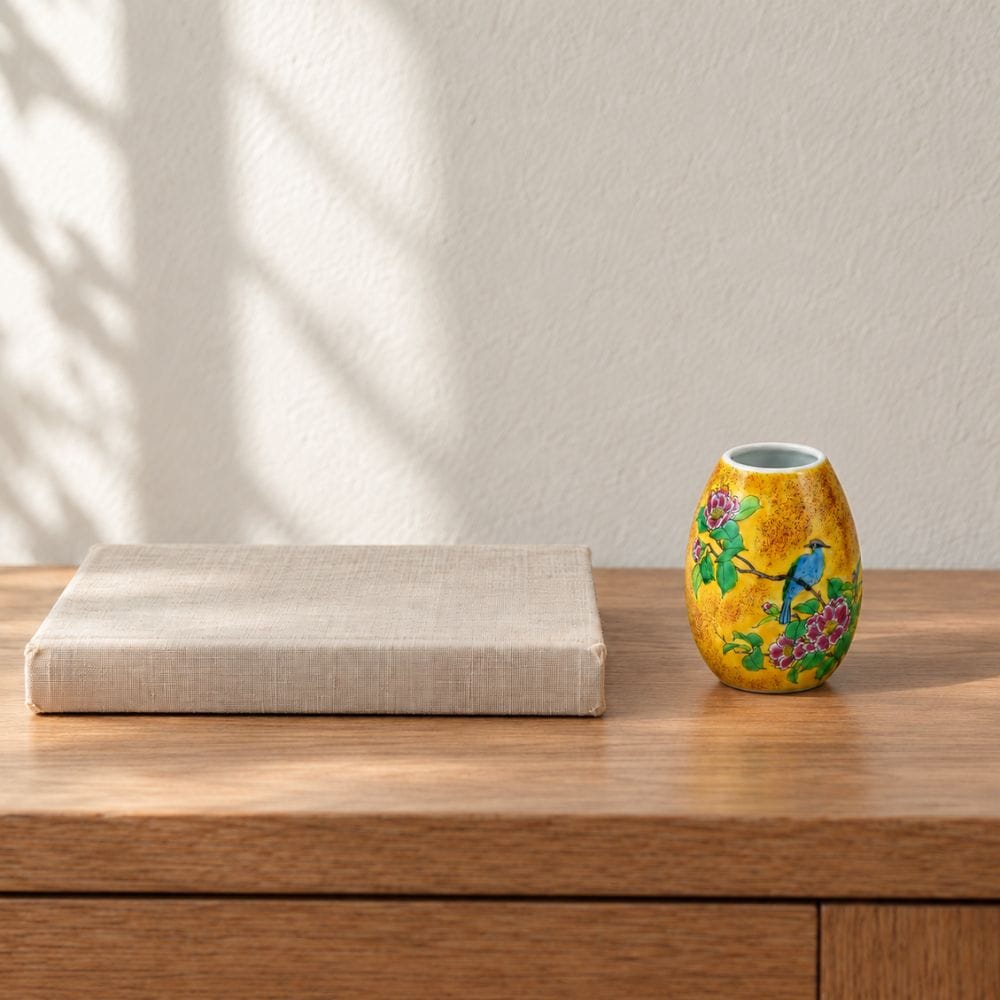
The gently tapering, subtly faceted body offers a different play of light as you move around it. Measuring 8 cm in diameter × 11 cm high (3.1 × 4.3 in), it sits comfortably on a bedside table, desk, or narrow shelf. A single flower is enough: a white bloom lets the decoration shine, while a sprig of greenery echoes the leaves on the ceramic.
Made in Japan by Bizan Kiln (美山窯), the vase features Yoshidaya flowers and bird decoration. This Kutani style is recognised for its yellow, green, purple, and blue palette. The combination gives the piece a lively character, equally enjoyable with a fresh stem or as a small decorative object between arrangements.
Supplied in a presentation box, it is a thoughtful gift for a flower lover or someone beginning a collection of Japanese ceramics. Its modest scale makes it easy to find a place for, while the detailed scene rewards a closer look.
Product Information
Type: Single-flower vase
Material: Ceramic
Size: 3.1" diameter × 4.3" high (8 cm diameter × 11 cm high)
Origin: Made in Japan
Maker: Miyama Kiln, a Kutani ware overglaze-decorating kiln established in Ishikawa during the late Meiji period
Design: Colorful Kutani ware decoration featuring the vivid colors associated with the five Kutani colors
Package: Decorative box
Care: Fragile; handle with care.
Care instructions
Handle with care, as this ceramic vase is fragile. Hand wash gently and avoid impacts or drops.
Artisan & Craft
A compact ceramic form gives this single-flower vase a quiet presence, its surface enlivened by vivid Kutani overglaze decoration and the celebrated palette known as the five Kutani colors. Made by Miyama Kiln in Ishikawa’s Nomi area, a Kutani overglaze-decorating kiln established during the late Meiji period, it brings a long regional tradition into a focused modern vessel measuring 3.1" × 4.3" (8 cm × 11 cm).
Note
This is a single ceramic vase for one flower stem, measuring 3.1" in diameter × 4.3" high (8 cm × 11 cm). It is fragile, so handle gently and avoid impacts or drops.
Questions About This Piece
Is this vase suitable for displaying a single flower or stem?
Yes. Its single-flower vase design is intended to showcase one flower or stem as a focused decorative accent.
What gives this vase its distinctive Japanese character?
It is a Kutani ware piece from Miyama Kiln, a Kutani overglaze-decorating kiln established in Ishikawa in the late Meiji period. Its traditional style is paired with contemporary design sensibility and Kutani’s vivid five-color palette.
Would this be appropriate as a gift?
Yes. The vase comes in a presentation box, making it suitable for gifting to someone who appreciates Japanese ceramics or colorful traditional design.
How should I handle and care for the vase?
Because it is a fragile ceramic item, handle it carefully to help prevent breakage.
Kutani ware · Ishikawa, Japan
Kutani: Japan’s art of brilliant color
Kutani ware emerged in Ishikawa in the 17th century and became
celebrated for bold overglaze painting and an unmistakably rich use
of color. Its decorative language ranges from expressive nature motifs
to highly detailed compositions, giving Kutani porcelain a vivid
character unlike almost any other Japanese ceramic tradition.
17th-century rootsborn in Ishikawa
Kutani Gosaifive signature colors
Overglaze paintingbold, layered, expressive
Ishikawa · Hokuriku · Japan
Discover Kutani
Learn more about Kutani ware
What is Kutani ware?
Kutani ware is a tradition of Japanese porcelain associated with
Ishikawa Prefecture. It first developed in the 17th century and is
especially known for richly colored overglaze decoration, bold
compositions and a wide range of styles that evolved over several
centuries.
What are the five colors of Kutani ware?
The traditional Kutani palette is often referred to as Kutani Gosai,
or the five Kutani colors: red, yellow, green, purple and dark blue.
These vivid overglaze enamels are used in different combinations,
from dense decorative painting to more restrained contemporary work.
Where is Kutani ware made?
Kutani ware is associated with Ishikawa Prefecture in Japan’s
Hokuriku region, particularly the areas around Kaga, Komatsu and
Kanazawa. The original Kutani production began near present-day
Kaga in the mid-1600s.
Why does Kutani ware look so different from other Japanese porcelain?
Kutani is distinguished by its emphasis on decoration after the
porcelain body has been fired. Layers of colored enamel are applied
over the glaze, allowing artists to create saturated color, strong
outlines and highly expressive imagery. This gives Kutani ware a
more painterly and often more dramatic appearance than many other
Japanese porcelain traditions.
Choosing a selection results in a full page refresh.