This site uses cookies for better user experience and analytics.
Kurohana Ramen Bowl
$59.00
No reviews yet · Customers rate us 4.9/5 (47 reviews) · Read them
Single bowl • Porcelain • 16.5cm (6.5") diameter • Made in Japan
In stock
Ships within 4 business days
Secure, insured delivery from Japan
Complimentary over $199 · otherwise from $30. Shipping policy
$140 away from complimentary shipping
U.S. duties prepaid at checkout
Import duties and taxes are calculated and paid at checkout, so nothing is due on delivery. Learn more
Sourced in Japan, from the makers
Direct from Japanese workshops and their authorised channels.
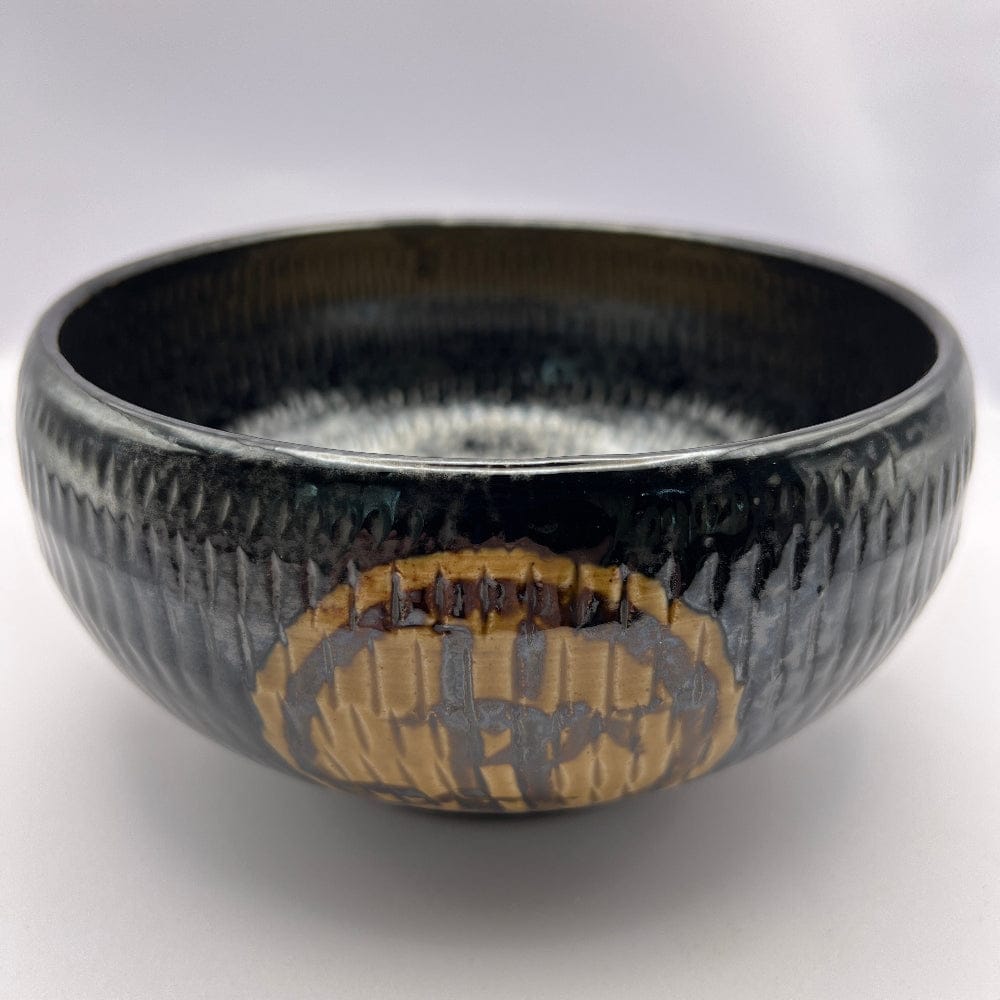
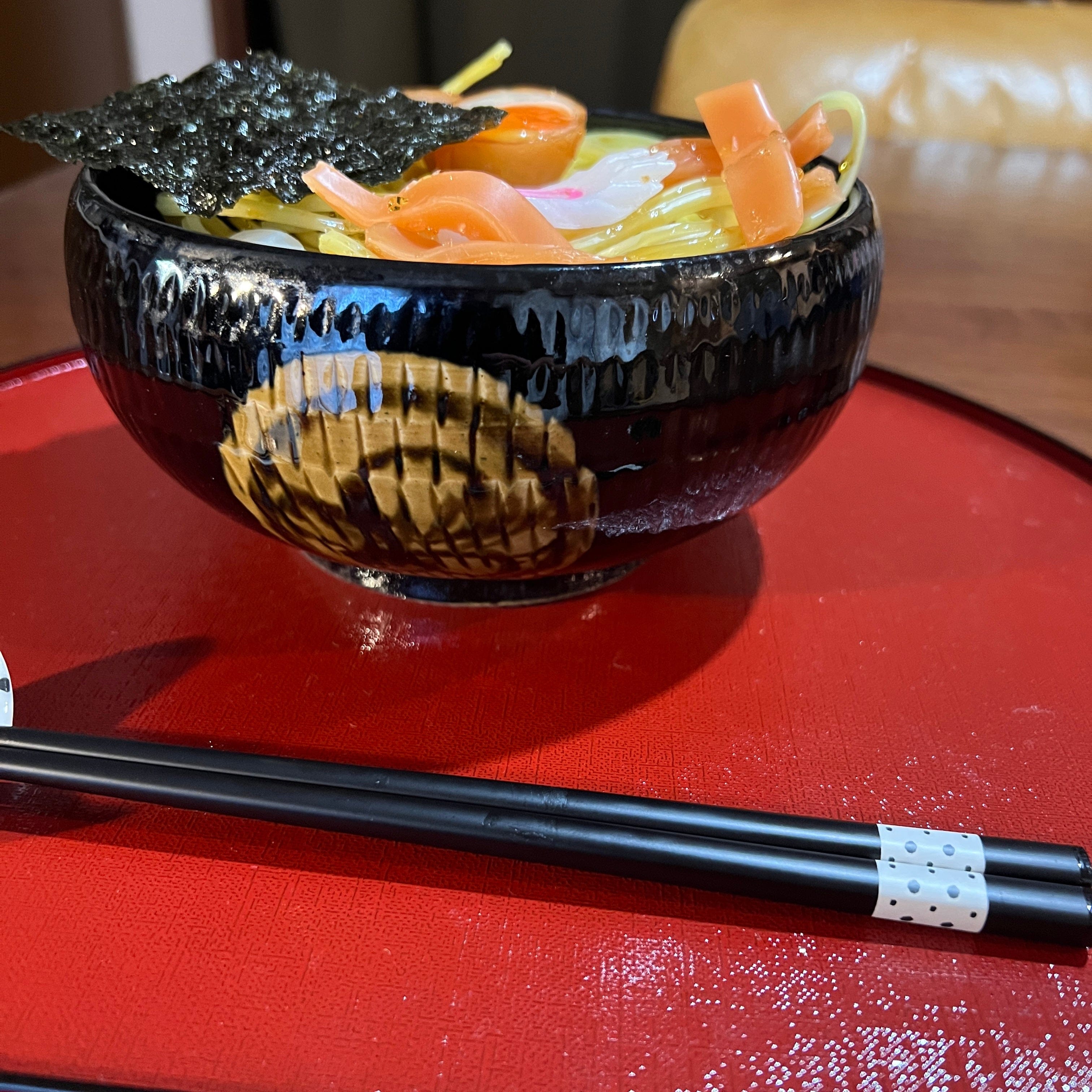
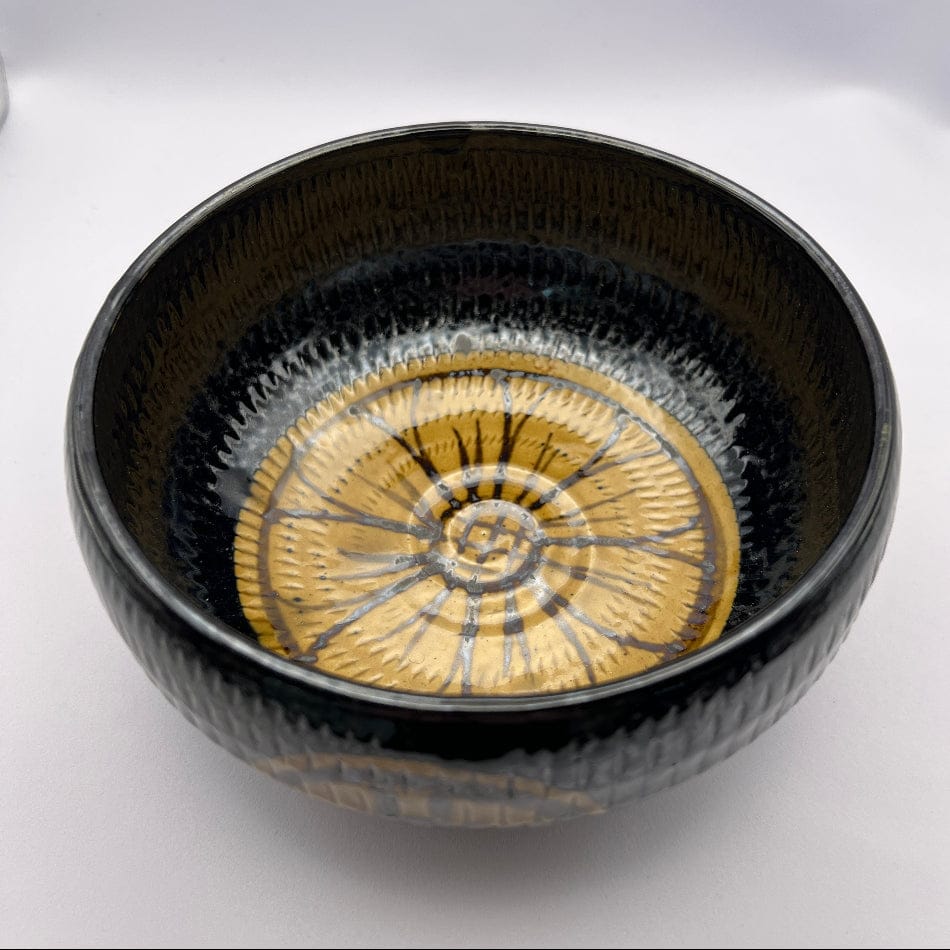
Serve ramen, miso soup, stews, or salads in the Kurohana Ramen Bowl. Made in Gifu Prefecture from porcelain, it draws on Oribe-yaki inspiration with a deep black iron glaze, warm amber accents, and a hand-applied brush mark. The ridged surface and thick walls give it a grounded, practical feel at the table.
Why You’ll Love It
Sized for ramen, rice, noodles, stews, or salads.
Made in Gifu Prefecture from porcelain.
Oribe-yaki inspiration gives the bowl a bold black glaze with warm amber accents.
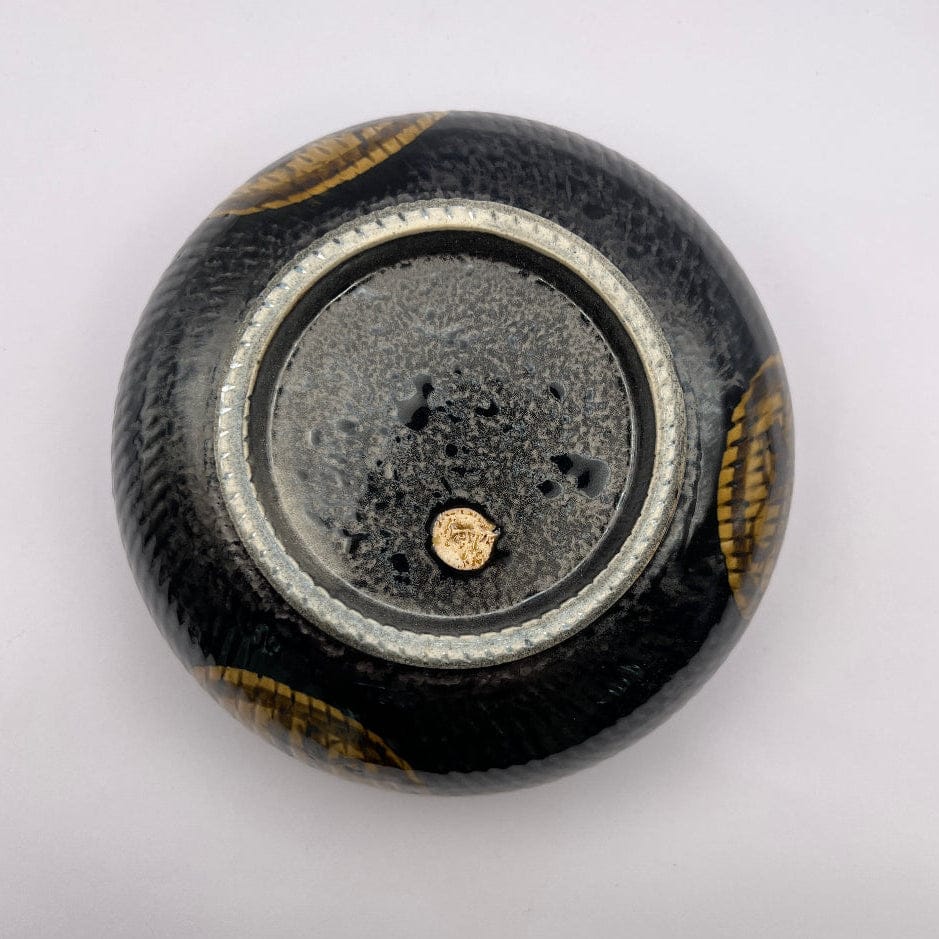
The ridged texture and hand-applied brush mark add visible character.
Thick walls help the bowl hold heat while you eat.
The Kurohana Ramen Bowl is a porcelain bowl made in Gifu Prefecture, Japan, with inspiration from Oribe-yaki. Its deep black iron glaze, warm amber motif, ridged texture, and hand-applied brush mark give each piece a distinct look at the table.
Measuring 6.5" (16.5 cm) in diameter and 3.4" (8.5 cm) high, it is suitable for rice, noodles, and salads, as well as ramen, stews, and miso soup. The thick walls help the bowl hold heat, while the curved shape sits comfortably in your hands.
Because of firing and finish variation, each bowl has its own subtle character. It arrives as one bowl, made in Japan, and is well suited to everyday use or as a thoughtful gift.
- Hand wash with mild detergent and a soft sponge.
- Avoid abrasive pads that could mark the glazed surface.
- Allow the bowl to air dry completely before storing.
- Avoid sudden temperature changes and direct heat sources.
- Handle gently to help preserve the porcelain and glaze finish.
Artisan & Craft
Made in Gifu Prefecture, the Kurohana Ramen Bowl reflects Minoyaki pottery and takes inspiration from Oribe-yaki. Its black iron glaze, amber accents, ridged surface, and hand-applied brush mark show the craft details that give each bowl its character.
Note
Slight differences in glaze, sheen, and color are part of the bowl's fired finish.
Questions About This Piece
What can I serve in this bowl?
It works well for ramen, miso soup, rice, stews, and salads. The 16.5 cm diameter gives it a generous everyday serving size without feeling oversized at the table.
How does the glaze finish look in person?
The bowl has a deep black iron glaze with warm amber accents and a hand-applied brush mark. Because it is fired more than once, slight variations in sheen and color are part of the piece's character.
Is this bowl comfortable to hold?
Yes. The curved shape and thick walls give it a substantial feel in the hand, which makes it comfortable for lifting and carrying to the table.
How should I care for it?
Hand wash gently with mild detergent and a soft sponge, then let it air dry completely. Avoid abrasive pads and sudden temperature changes to help preserve the porcelain.
Mino ware · Gifu, Japan
Mino ware: 1,300 years of ceramic innovation
Mino ware comes from the Tono region of Gifu Prefecture, one of Japan's most important ceramic-producing areas. Over centuries, kilns in the region developed a remarkable range of styles, from restrained Shino and Oribe pieces tied to tea culture to everyday tableware for modern Japanese homes. Rather than being defined by a single look, Mino ware is known for that diversity. A ceramic tradition that has continued to evolve with the way people actually live and eat.
Mino ware, or Minoyaki, is the broad ceramic
tradition associated with the Mino region of
present-day Gifu Prefecture. Rather than describing
one fixed aesthetic, the name encompasses ceramics
with a wide range of forms, glazes and decorative
approaches developed across the region over more
than 1,300 years.
Why is Mino ware so diverse?
Mino developed as a large ceramic-producing region
rather than around one narrowly defined style.
Generations of potters experimented with different
clays, firing methods, shapes and glazes, creating
a tradition in which rustic tea wares, expressive
glazes and practical everyday tableware can all
belong to the same ceramic family.
What are Shino and Oribe?
Shino and Oribe are two of the best-known ceramic
traditions associated with Mino. Shino is celebrated
for its soft white glaze, subtle texture and often
understated decoration, while Oribe is known for
expressive forms and distinctive green, black and
painted surfaces. Together with Kiseto and Setoguro,
they are closely associated with the celebrated
Momoyama-period tea ceramics of the Mino region.
Where is Mino ware made?
Mino ware is produced primarily in the Tōnō area
of eastern Gifu Prefecture, including major ceramic
centres such as Tajimi, Toki and Mizunami.
The region remains one of Japan's most important
centres of ceramic and tableware production today.
Choosing a selection results in a full page refresh.