This site uses cookies for better user experience and analytics.
Karu Mino Ware Matcha Bowl by Jinpoh – White / Silver
$44.00
No reviews yet · Customers rate us 4.9/5 (47 reviews) · Read them
Mino Ware Porcelain • 16.9 fl oz / 500 ml • 7.4 oz / 210 g • White / Silver Crystal • Wooden Box
In stock
Ships within 4 business days
Secure, insured delivery from Japan
Complimentary over $199 · otherwise from $30. Shipping policy
$155 away from complimentary shipping
U.S. duties prepaid at checkout
Import duties and taxes are calculated and paid at checkout, so nothing is due on delivery. Learn more
Sourced in Japan, from the makers
Direct from Japanese workshops and their authorised channels.
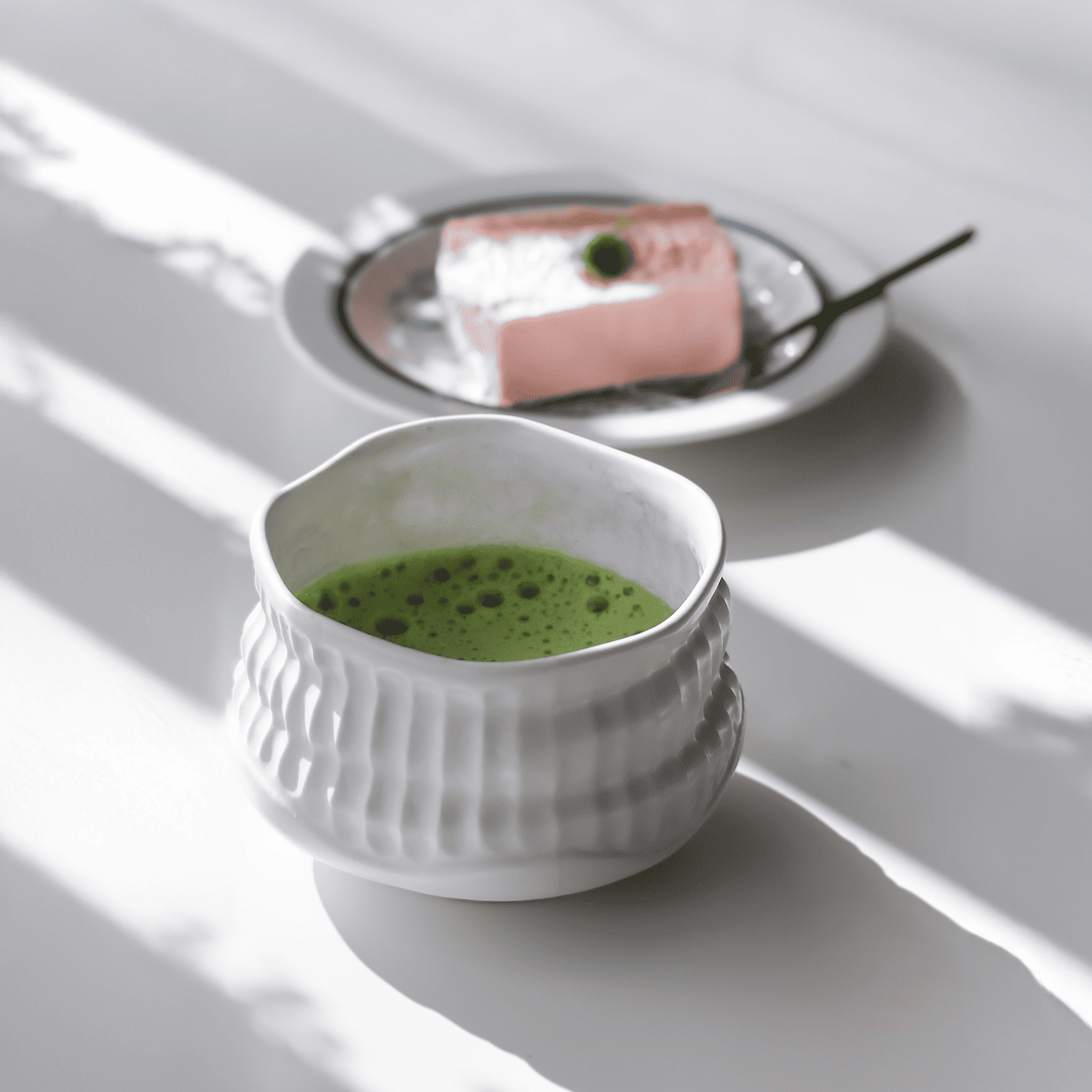
The Karu Mino Ware Matcha Bowl combines a compact 3.9 × 3.0 in (10 × 7.5 cm) form with an unusually light 7.4 oz (210 g) weight. Its 16.9 fl oz (500 ml) full capacity leaves useful space for whisking, while the carved-wood-inspired Kobokubori texture gives the porcelain a secure, tactile feel in the hands. Made in Japan by Jinpoh and presented in a wooden box.
Why You’ll Love It
Lightweight at approximately 7.4 oz / 210 g despite its 16.9 fl oz / 500 ml full capacity.
Compact 3.9 × 3.0 in / 10 × 7.5 cm proportions designed as a matcha chawan.
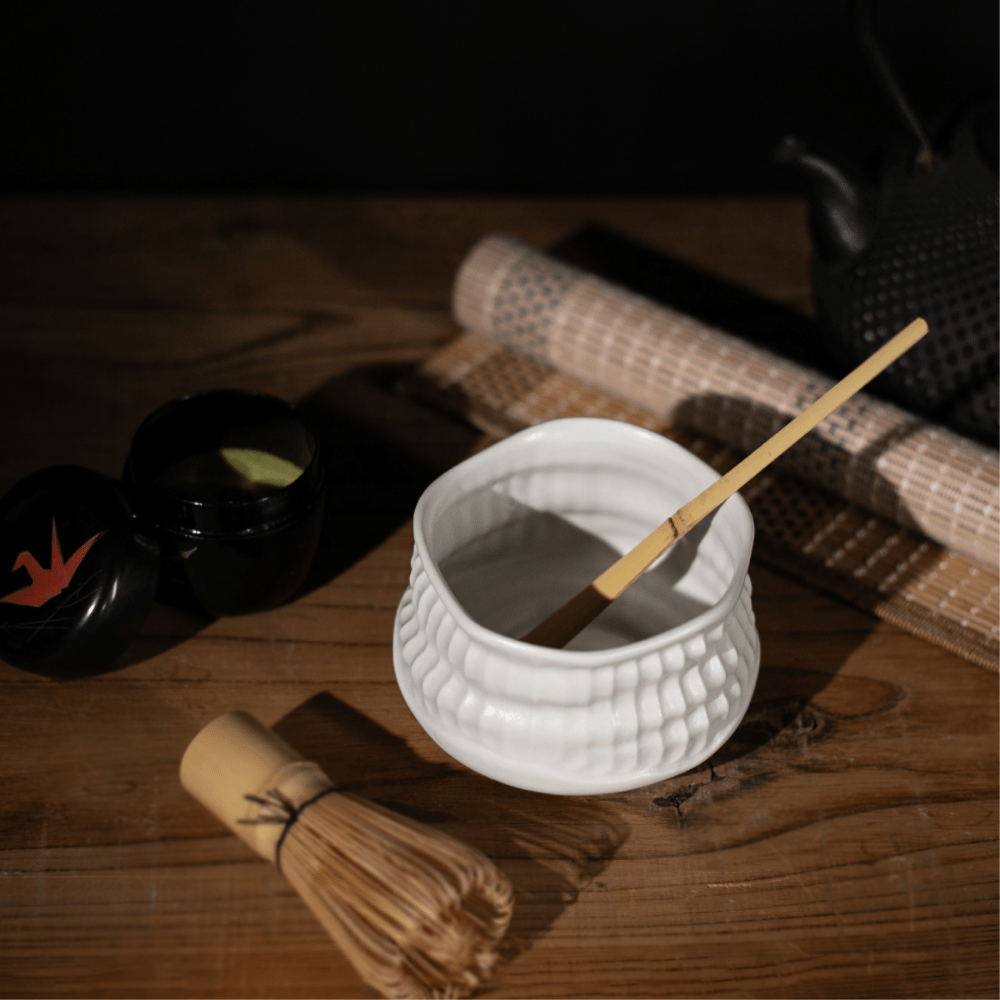
Kobokubori vertical texture gives the porcelain a tactile, easy-to-hold surface.
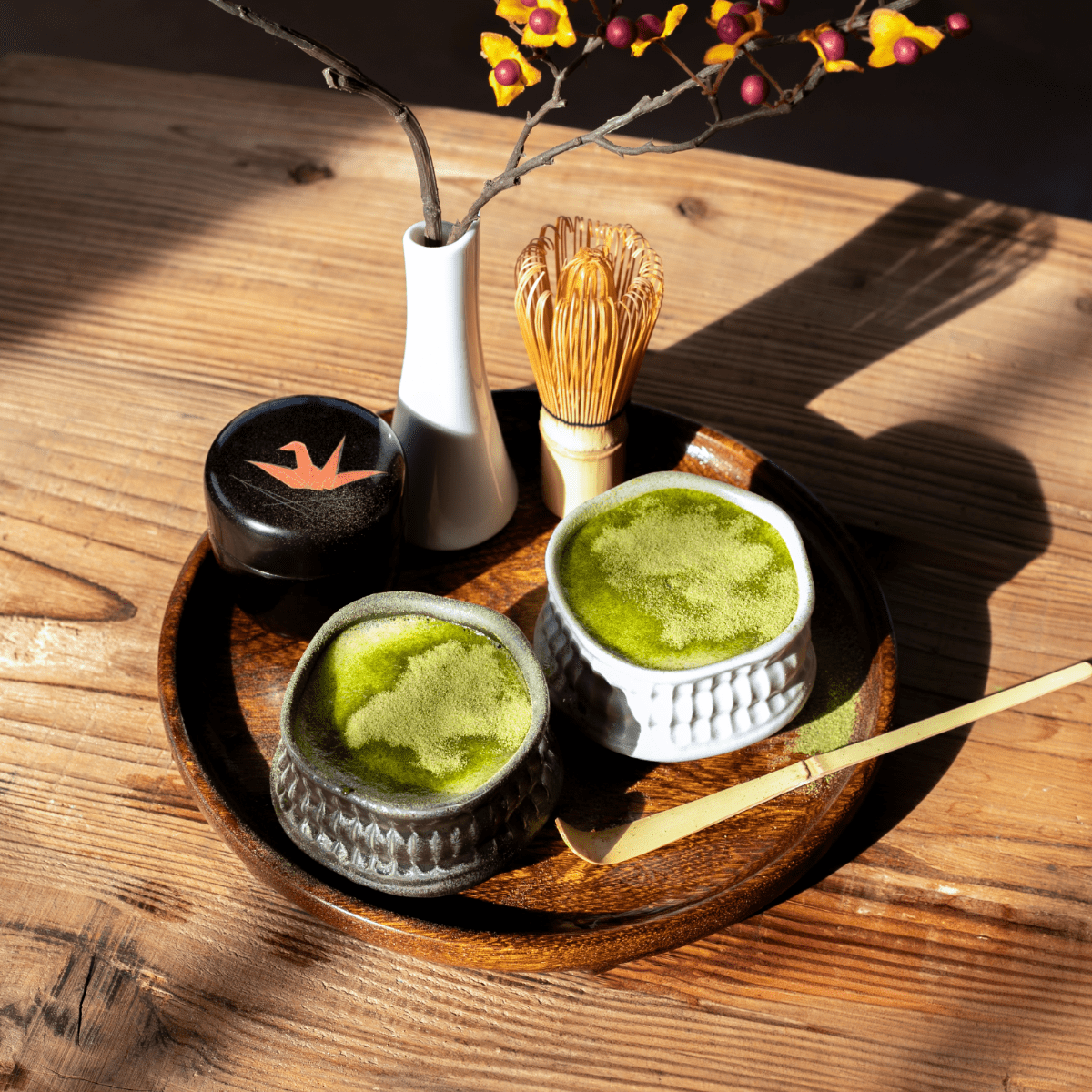
Choose White for a quiet, bright finish or Silver Crystal for a more mineral, reflective look.
Made in Japan by Jinpoh and presented in a wooden box for storage or gifting.
Karu Mino Ware Matcha Bowl by Jinpoh – White / Silver
White
$44.00
Lightweight Mino porcelain, made for matcha
Product Description
The Karu Matcha Bowl is a lightweight Mino ware porcelain chawan from Jinpoh. Its compact 3.9 in (10 cm) diameter and 3.0 in (7.5 cm) height give it an easy-to-hold profile, while the full capacity is approximately 16.9 fl oz (500 ml).
What distinguishes the bowl is its weight. At approximately 7.4 oz (210 g), it is notably light for its size. The manufacturer attributes this to a special casting technique developed to create a thin, comfortable form, with each piece then finished individually by hand.
The exterior carries the Kobokubori texture, a carved-wood-inspired vertical pattern that gives the porcelain a tactile surface and makes the bowl easier to hold. Two finishes are available: White, which keeps the form quiet and bright, and Silver Crystal, which adds a more mineral, reflective character.
Made in Japan as part of the Mino ware tradition of Gifu Prefecture, the bowl is designed for preparing and drinking matcha at home. The 500 ml figure refers to the bowl’s full capacity rather than a typical serving size, leaving useful room for whisking while keeping the overall form compact.
Each bowl is presented in a wooden box, making it suitable both for everyday use and as a Japanese tea gift.
Looking for another shape or glaze? Explore our full collection of Japanese matcha bowls.
Product Information
Product: Karu Matcha Bowl
Ware: Mino Ware
Maker / Brand: Jinpoh by Awasaka
Dimensions: Ø3.9 × 3.0 in H / Ø10 × 7.5 cm H
Full Capacity: Approx. 16.9 fl oz / 500 ml
Weight: Approx. 7.4 oz / 210 g
Material: Porcelain
Finishes: Kobokubori White / Kobokubori Silver Crystal
Packaging: Wooden box, approx. 6.1 × 6.1 × 3.9 in / 15.5 × 15.5 × 10 cm
Origin: Gifu Prefecture, Japan
Material
Porcelain
Care instructions
Wash with mild dish detergent and a soft sponge.
Avoid abrasive cleaners or hard scouring pads, particularly on the Silver Crystal finish.
Dry thoroughly before storing the bowl in its wooden box.
Artisan & Craft
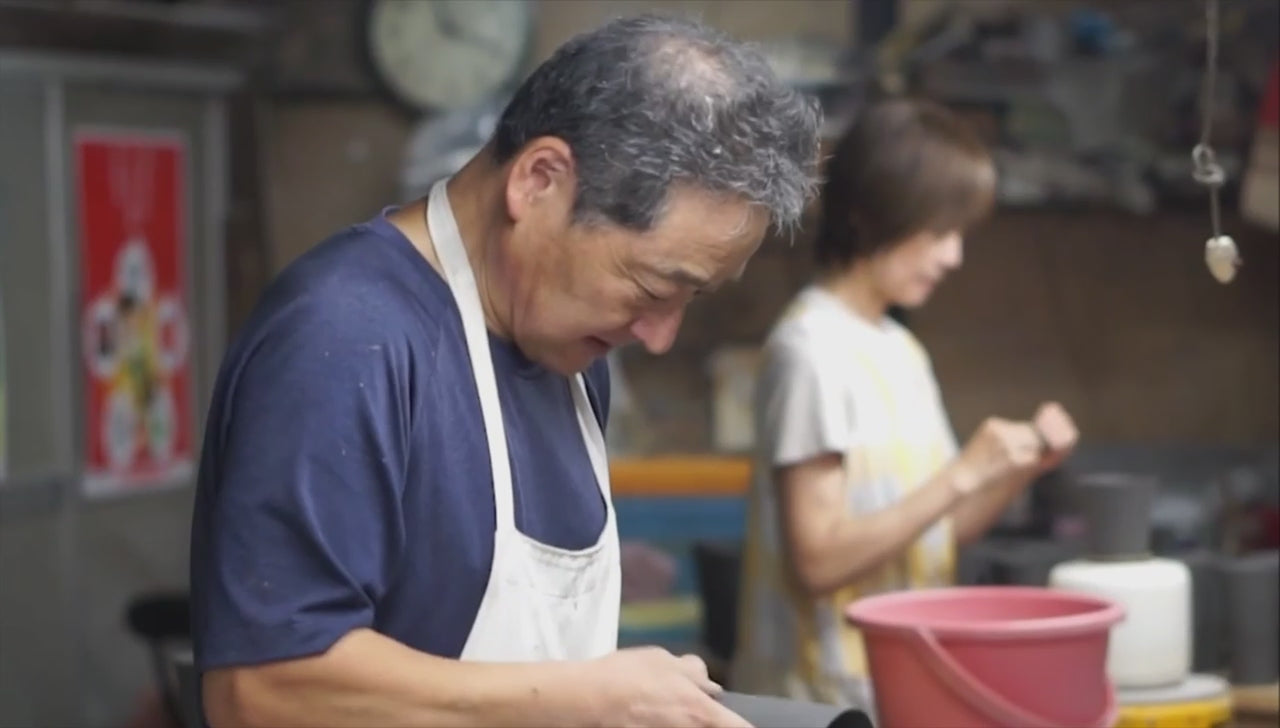
Jinpoh is a tableware line by Awasaka, a Gifu-based company working primarily with Mino ware. Jinpoh focuses mainly on porcelain designed for regular use, combining practical forms with a range of surface and decorative techniques. For the Karu Matcha Bowl, a special casting method is used to achieve a notably light form, followed by individual hand finishing. The result is a compact chawan that feels lighter than its 500 ml full capacity suggests, while the Kobokubori surface gives the bowl its distinctive carved-wood-inspired texture.
Note
Because the bowls are individually finished and fired, slight variations in glaze tone, texture, dimensions, and weight may occur. These differences are natural to the ceramic production process and are not considered defects.
Toki 土岐 - The Heart of Minoyaki 美濃焼
Toki City, nestled in Gifu Prefecture, stands as a beacon of Japan's rich ceramic heritage, particularly renowned for its Mino ware (Minoyaki).
With a history spanning over 1,300 years, this region has cultivated a profound tradition of pottery. During the Azuchi-Momoyama period (1568–1614), Toki became a sanctuary for potters fleeing conflicts in neighboring areas, leading to the establishment of kilns that produced distinctive styles like Oribe, Shino, and Setoguro ware, each celebrated for their unique glazes and forms.
Today, Toki City remains a vibrant hub for ceramic artistry, housing numerous kilns and studios that blend time-honored techniques with contemporary designs.
Made by Seifu - A Japanese Artisan Brand
Seifu is a brand crafted by artisans who carry forward the rich tradition and refined techniques of Mino ware, a ceramic heritage that spans over 1,400 years.
Each piece is thoughtfully handmade, allowing you to experience the natural warmth, subtle textures, and quiet elegance that only true craftsmanship can offer.
With Seifu, every item is more than tableware—it’s a connection to centuries of Japanese ceramic artistry.
FAQs
All you need to know about Japanese Pottery.
What types of traditional pottery are made in Japan?
Japan is home to several renowned pottery styles, including Mino ware (Gifu), Bizen ware (Okayama), Arita and Imari ware (Saga), Shigaraki ware (Shiga), and Mashiko ware (Tochigi). Each region has its own distinct materials, glazes, and firing techniques that reflect local history and aesthetics. Toki City in Gifu Prefecture is particularly renowned as the heart of Mino ware (Minoyaki)—the most widely produced pottery style in Japan.
What materials are used in artisan Japanese pottery?
Most artisan pottery in Japan is made from locally sourced clay, often mixed and refined by hand. Natural minerals and ash are used in glazes, and many pieces are wood-fired or fired in traditional climbing kilns (noborigama), producing unique surface textures and natural variations.
Are artisan Japanese pottery pieces safe for food use?
Yes. Authentic artisan pottery is made with food-safe, lead-free glazes and is carefully fired at high temperatures to ensure durability and safety. However, it's important to follow care instructions, especially for unglazed or porous ceramics.
What makes Japanese pottery different from Western ceramics?
Japanese pottery often emphasizes wabi-sabi—the beauty of imperfection—resulting in organic shapes, subtle asymmetry, and natural glazes. Unlike Western ceramics, which may prioritize uniformity, Japanese pieces often celebrate the individuality of each item, reflecting the artist's hand and the firing process.
How should I care for artisan-made Japanese pottery?
Hand-wash pottery with mild soap and avoid extreme temperature changes (like placing hot items into cold water). Some unglazed pieces may absorb moisture, so allow them to fully dry before storing. Avoid microwaves or dishwashers unless the piece is specifically labeled as safe for such use.
What are the benefits of Mino Wave Ceramic Mugs?
Mino ware ceramic beer mugs offer a bar-quality experience right at home. The countless tiny pores in the ceramic create a creamy, fluffy foam as soon as the beer is poured—just like a bartender's perfect pour. These natural pores also help retain the beer’s chill longer than glass, thanks to microscopic air pockets within the material that act as invisible insulators. Paired with a generously sized handle that fits comfortably in the hand, this mug delivers both exceptional function and a satisfying, refreshing drinking experience.
Choosing a selection results in a full page refresh.