

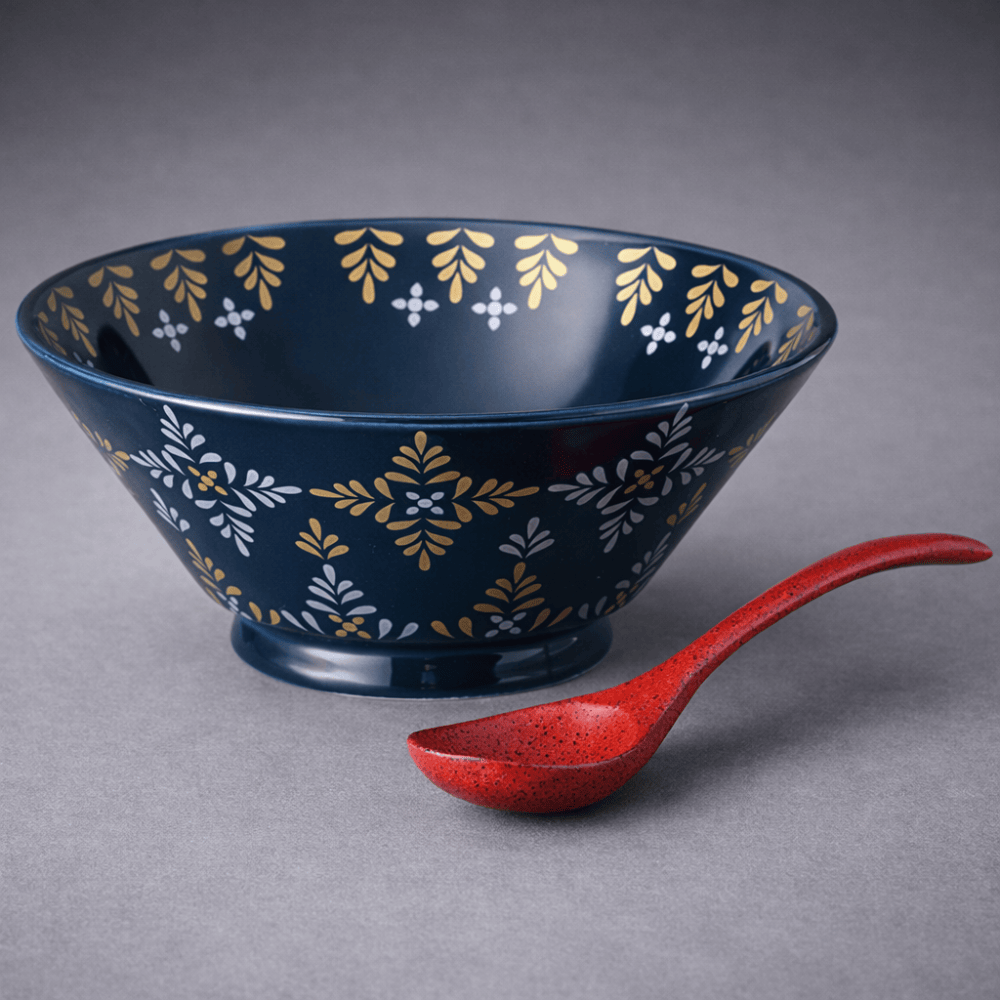

Kinsai Hanabi Noodle Bowl Navy Blue with Wooden Spoon
Secure, insured delivery from Japan
Complimentary over $199 · otherwise from $30. Shipping policy
$150 away from complimentary shipping
U.S. duties prepaid at checkout
Import duties and taxes are calculated and paid at checkout, so nothing is due on delivery. Learn more
Sourced in Japan, from the makers
Direct from Japanese workshops and their authorised channels.
Why You’ll Love It
Pairs well with
Kinsai Hanabi Noodle Bowl Navy Blue with Wooden Spoon
Art in Every Bite – Kinsai Hanabi Noodle Bowl & Wooden Spoon Set
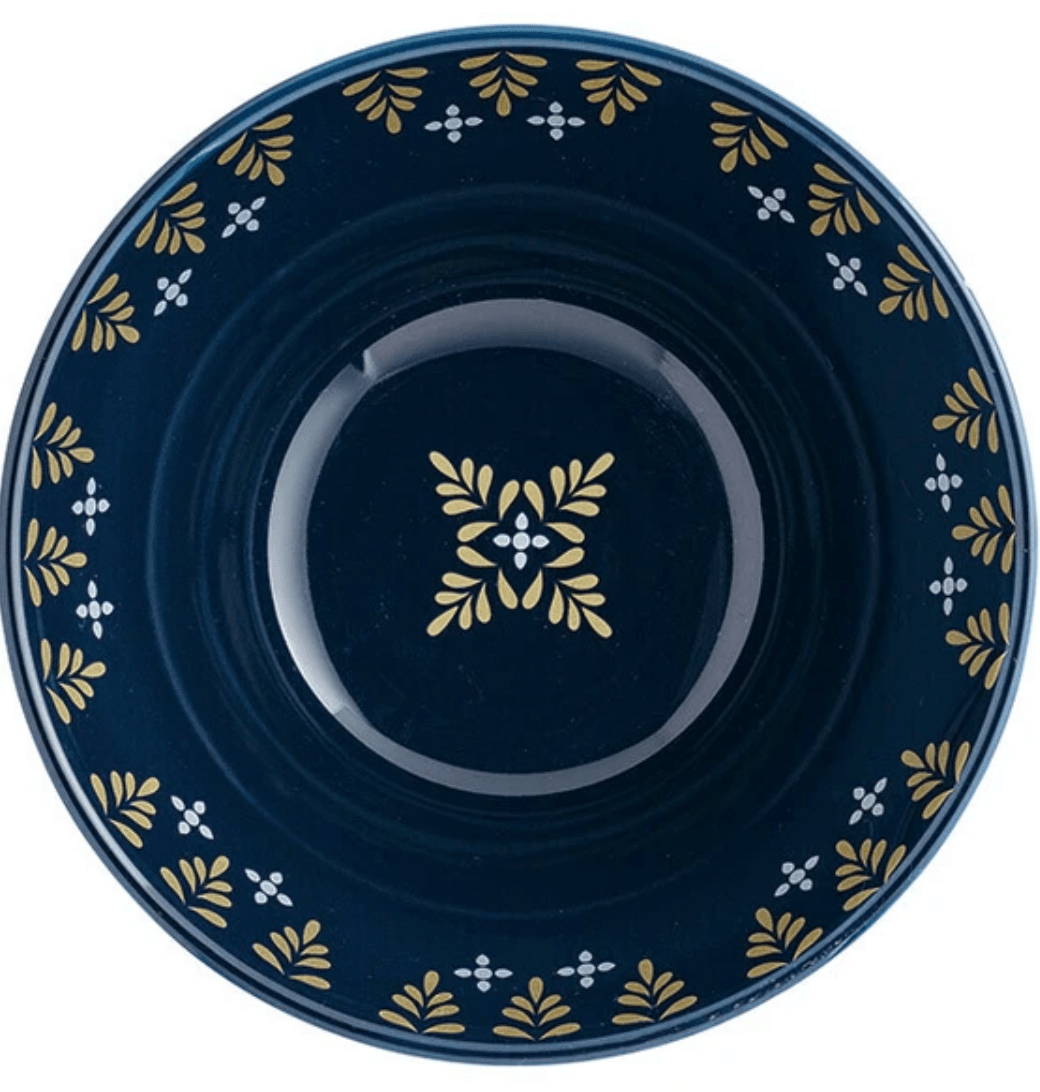
Let every meal feel like a celebration with the Kinsai Hanabi Noodle Bowl in Navy Blue, featuring a wooden spoon. Handcrafted in Japan's Mino ware tradition, this elegant porcelain bowl is adorned with gold-and-white floral motifs resembling bursts of fireworks—hanabi—against a rich navy background. The intricate designs invite the eye, while the smooth porcelain offers a luxurious tactile experience as you savor your favorite dishes.
With a generous 950cc (32.1 fl oz) capacity, the bowl is ideal for steaming ramen, udon, rice bowls, or hearty soups. Its slightly flared shape and weighty base provide balance and comfort during use, making it perfect for creating a cozy dining atmosphere. Accompanying the bowl is a gracefully curved red wooden spoon, finished with a warm lacquer that enhances grip and offers a soft contrast to the bowl’s bold palette. The spoon, designed for easy scooping and stirring, enhances its beauty. To care for your set, hand wash with mild soap and avoid abrasive materials to maintain the vibrancy of the beautiful designs.
This set is more than just tableware—it’s an expression of harmony between texture, color, and function, crafted in Japan’s Gifu Prefecture, renowned for its exceptional porcelain art. The Kinsai Hanabi set arrives in a sleek individual gift box, ensuring your present leaves a charming impression. The packaging adds an element of sophistication, aligning perfectly with its intended purpose and making it a thoughtful gift for oneself or loved ones. Whether you’re enhancing your everyday meals or giving a special gift, this bowl and spoon set delights the senses at every turn.
Explore more patterns and designs in our collection of Japanese ramen bowls.
Product Information
Care instructions
Note
Mino ware · Gifu, Japan
Mino ware: 1,300 years of ceramic innovation
Mino ware comes from the Tono region of Gifu Prefecture, one of Japan's most important ceramic-producing areas. Over centuries, kilns in the region developed a remarkable range of styles, from restrained Shino and Oribe pieces tied to tea culture to everyday tableware for modern Japanese homes. Rather than being defined by a single look, Mino ware is known for that diversity. A ceramic tradition that has continued to evolve with the way people actually live and eat.
Discover Mino
Learn more about Mino ware
What is Mino ware?
Mino ware, or Minoyaki, is the broad ceramic tradition associated with the Mino region of present-day Gifu Prefecture. Rather than describing one fixed aesthetic, the name encompasses ceramics with a wide range of forms, glazes and decorative approaches developed across the region over more than 1,300 years.
Why is Mino ware so diverse?
Mino developed as a large ceramic-producing region rather than around one narrowly defined style. Generations of potters experimented with different clays, firing methods, shapes and glazes, creating a tradition in which rustic tea wares, expressive glazes and practical everyday tableware can all belong to the same ceramic family.
What are Shino and Oribe?
Shino and Oribe are two of the best-known ceramic traditions associated with Mino. Shino is celebrated for its soft white glaze, subtle texture and often understated decoration, while Oribe is known for expressive forms and distinctive green, black and painted surfaces. Together with Kiseto and Setoguro, they are closely associated with the celebrated Momoyama-period tea ceramics of the Mino region.
Where is Mino ware made?
Mino ware is produced primarily in the Tōnō area of eastern Gifu Prefecture, including major ceramic centres such as Tajimi, Toki and Mizunami. The region remains one of Japan's most important centres of ceramic and tableware production today.