This site uses cookies for better user experience and analytics.
Kagayaki Pure Copper Beer Tumbler – 14.88 fl oz (440 ml)
$149.00
No reviews
No reviews yet · Customers rate us 4.9/5 (47 reviews) · Read them
In stock
Ships within 4 business days
Secure, insured delivery from Japan
Complimentary over $199 · otherwise from $30. Shipping policy
$50 away from complimentary shipping
U.S. duties prepaid at checkout
Import duties and taxes are calculated and paid at checkout, so nothing is due on delivery. Learn more
Sourced in Japan, from the makers
Direct from Japanese workshops and their authorised channels.
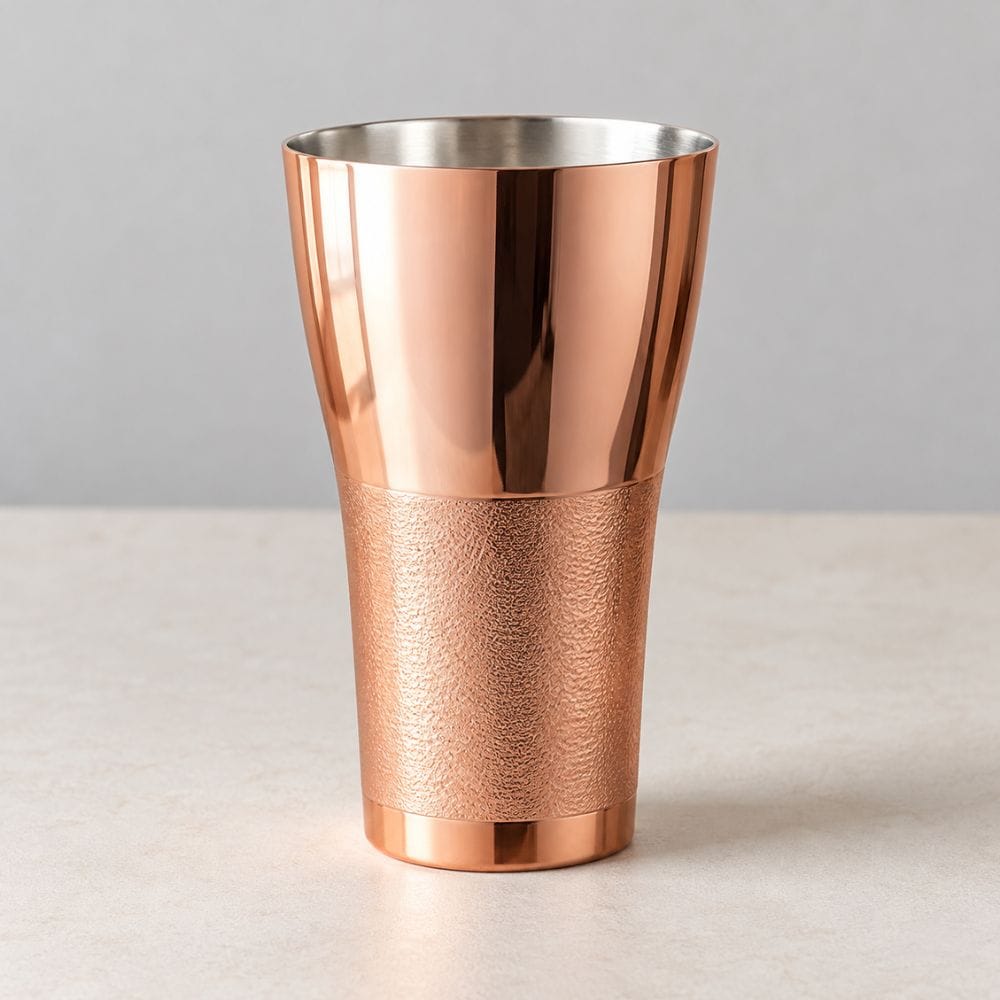
Warm copper, a tactile surface and the cool feel of a chilled pour. Made in Tsubame, this 440 ml tumbler pairs a pure copper body with a tin-plated interior and arrives in a paulownia wood box.
Why You’ll Love It
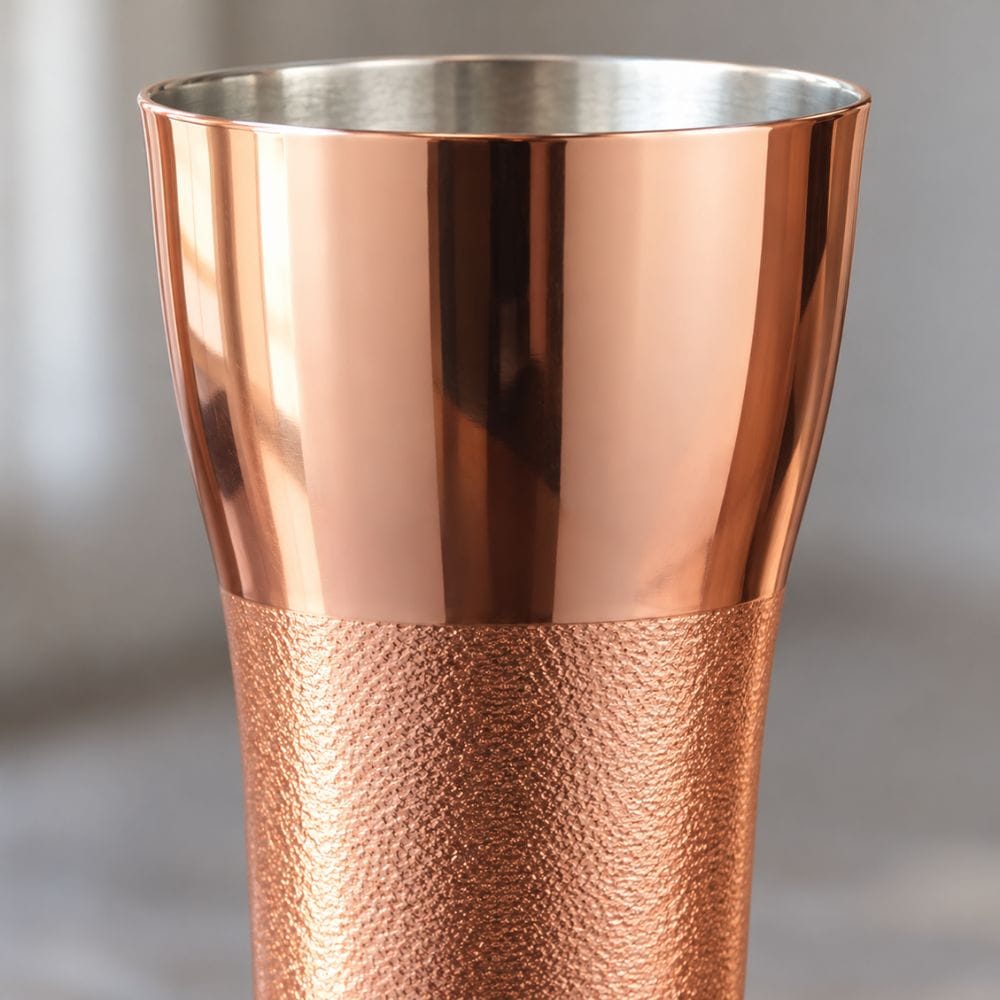
Textured copper catches the light across the gently tapered form
Copper quickly takes on the coolness of a chilled drink
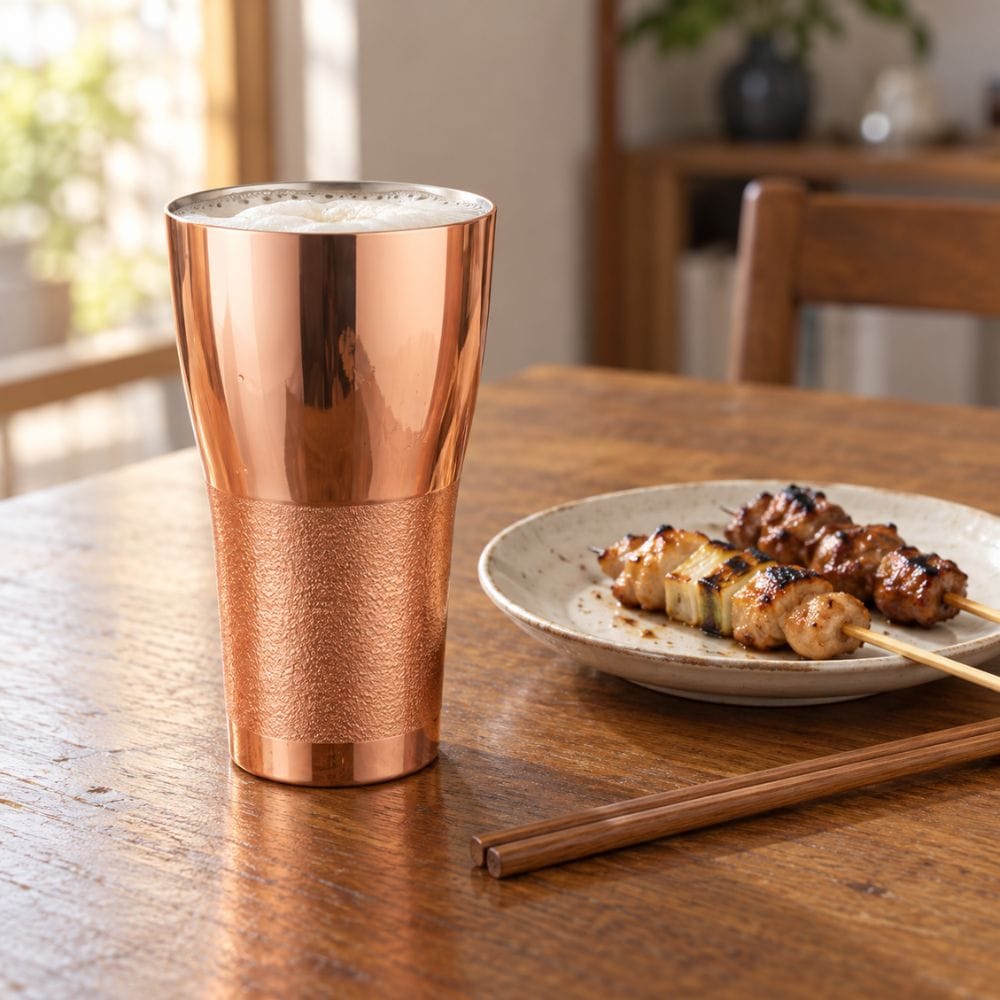
440 ml capacity leaves room for a smaller beer pour and its head
Made in TSUBAME certified, with a tin-plated interior
Kagayaki Pure Copper Beer Tumbler – 14.88 fl oz (440 ml)
$149.00
Warm Copper. A Cool Pour.
Product Description
Warm copper tones and a finely textured surface give the Kagayaki beer tumbler its distinctive presence. The tall, gently tapered form catches the light across small facets, bringing depth and character to a simple evening drink.
Made in Tsubame, Niigata, the tumbler pairs a pure copper body with a tin-plated interior. Copper readily takes on the temperature of its contents, so a chilled pour brings a cool sensation to the vessel. It is designed for cold drinks only; its appeal is the immediate feel of the metal, rather than a promise of prolonged insulation.
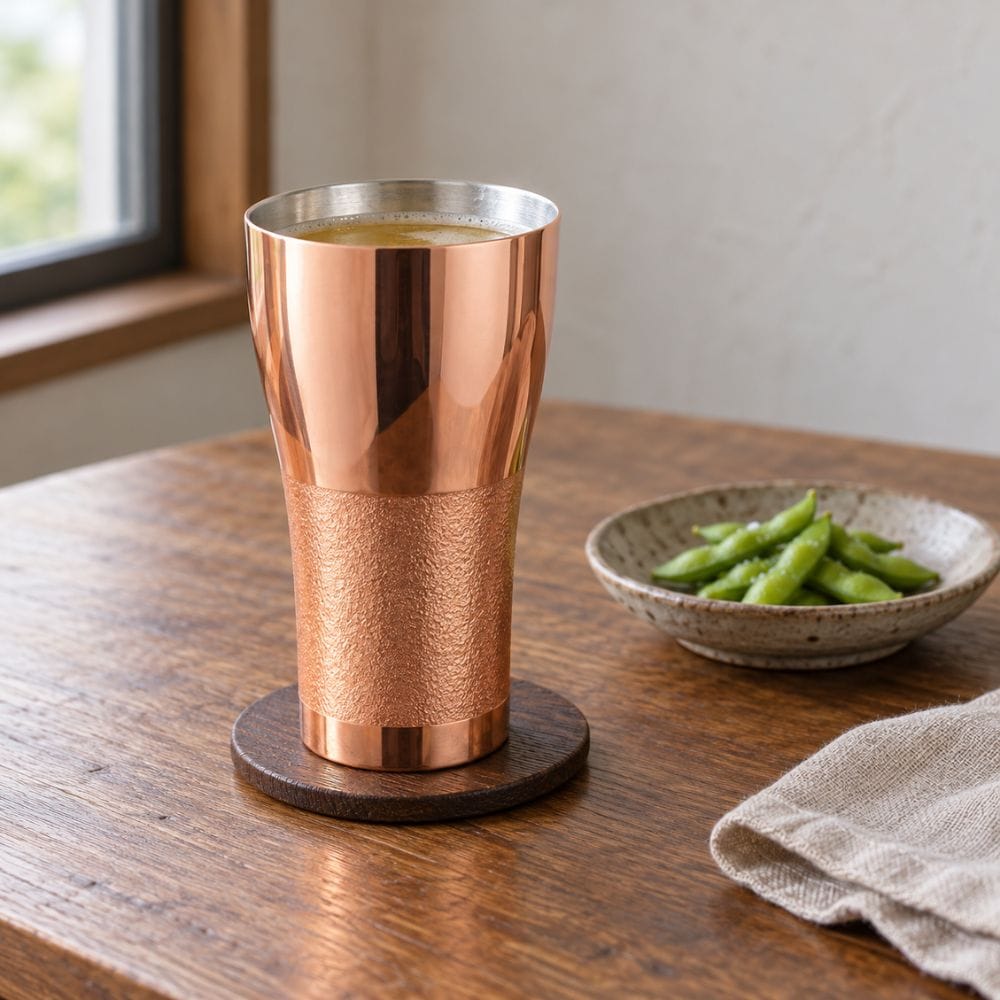
With a 440 ml capacity (14.9 US fl oz), it offers room for a smaller pour of beer with space for the head. At approximately 7.7 cm across and 13.7 cm high, and weighing 188 g, it has a slender profile with a textured surface to appreciate in the hand. Set it beside understated ceramics or on a wooden tray to let the copper colour stand out.
The tumbler carries Made in TSUBAME certification, identifying its certified production origin in Japan’s metalworking city. Supplied by Tamahashi and presented in a paulownia wood box, it makes a considered gift for a beer enthusiast or someone who enjoys Japanese tableware. One tumbler is included.
Product Information
Contents: One tumbler and a paulownia wood presentation box
Origin: Tsubame, Niigata, Japan
Certification: Made in TSUBAME
Body: Pure copper
Interior: Tin plated
Capacity: 440 ml / approximately 14.9 US fl oz
Dimensions: Approximately 7.7 cm diameter × 13.7 cm high / 3.0 × 5.4 in
Weight: Approximately 188 g / 6.6 oz
Use: Cold drinks only
Care instructions
Hand wash gently with a soft sponge and mild dish soap, then rinse and dry thoroughly. Avoid abrasive pads and polishing the tin-plated interior. Follow any additional care instructions supplied with the tumbler.
Use for cold drinks only. Do not use for hot beverages or heat in a microwave.
Artisan & Craft
Tamahashi (タマハシ) is a tableware and kitchenware supplier based in Tsubame, Niigata. Founded in 1963, the company develops and supplies products rooted in everyday use. Kagayaki is part of its metal drinkware offering.
This tumbler carries Made in TSUBAME certification, identifying its certified production origin in Tsubame. The city is known for its metal utensils and copperware. Here, that connection is expressed through a textured copper body and tin-plated interior.
Note
For cold drinks only. The stated 440 ml capacity is not a suggested beer serving size; allow space for foam. Copper’s quick temperature response should not be confused with vacuum insulation.
Questions About This Piece
Can I use this tumbler for hot drinks?
No. This model is designed for cold drinks only. Copper quickly takes on the temperature of its contents, so hot liquids can make the vessel uncomfortable to hold.
A glimpse into Japanese metalworking. Techniques vary by maker and piece.
Japanese metalwork · Material, form & finish
The art of metal. The pleasure of everyday use.
In Japan, metalworking has long brought together practical
purpose and an eye for beauty. From copper shaped with
hammers in Tsubame to vessels cast in Takaoka, regional
traditions have given everyday objects a distinctive character.
A tumbler brings that story close: in the curve of its body,
the feel of its surface and the way its finish catches the
light. Different metals and techniques create different
experiences, making the details of each piece worth discovering.
MaterialThe metal beneath the finish
FormBalance, proportions and feel
FinishTexture, colour and reflected light
Many regions. Distinct traditions.
The maker, origin and construction of this tumbler are
listed in its product details.
Discover Japanese metal drinkware
A closer look. A more considered choice.
Understand the craft, choose for the way you drink,
and enjoy the details every day.
What makes Japanese metal drinkware distinctive?
Japan’s metalworking regions bring different skills to the
table. Tsubame is known for metal utensils and copperware;
Takaoka has a long casting tradition. Shaping, casting,
polishing and surface finishing each contribute to a
vessel’s character.
The appeal is in the details: the proportions, the rim,
the texture and the finish. The techniques used vary by
maker and product, so the story of the individual piece
matters as much as its place of origin.
What is the difference between the metal and the finish?
The body is the base metal; the finish is its surface treatment.
A copper tumbler, for example, may have a tin-plated
interior or a gold- or silver-plated finish. A gold-coloured
vessel is not necessarily solid gold, and a silver-coloured
vessel is not necessarily solid silver.
Read the body material, interior lining and exterior
finish together. This gives you a clearer picture of
what you are choosing and how to care for it.
Is every tumbler made by hand?
Methods differ. Some vessels are shaped by repeated
hammering; others are cast in moulds or formed with
machinery, sometimes followed by hand finishing.
A textured surface alone does not establish that a
tumbler is hand-hammered.
Look for the specific technique in the product description.
Each method offers its own possibilities for shape,
precision and surface character.
Will it keep my drink cold, and can I use it for hot drinks?
Construction matters as much as the metal.
A single-wall metal tumbler can quickly feel cool when
filled with a chilled drink, but this is different from
the temperature retention of a vacuum-insulated vessel.
Double-wall construction does not automatically mean
vacuum insulation.
Use the temperature guidance for the individual product.
A tumbler marked for cold drinks only should not be used
for hot drinks. Check any restrictions on acidic drinks
or prolonged storage too, as these depend on the lining
and finish.
How do I choose the right size and feel?
Start with your usual drink and serving size, allowing
space for ice or foam. Then compare the height, diameter
and weight: two tumblers with the same capacity can feel
quite different in the hand.
Consider the rim and surface as well. A slender form,
a wider opening and a textured finish each offer a
different experience. Use the dimensions and close-up
photographs to find a piece that suits your daily ritual.
How should I care for the surface and finish?
Follow the maker’s instructions for the exact metal and
finish. Gentle hand washing with a soft sponge and mild
detergent, followed by careful drying, is a sensible
starting point when permitted by those instructions.
Use a dishwasher only when the product is explicitly
described as dishwasher-safe.
Some surfaces change in tone with use; others have a
coating or deliberately aged finish. Avoid abrasive pads
and metal polish unless the maker recommends them, as
they can alter plating or remove an intentional surface
treatment.
Choosing for yourself or as a gift?
We can help clarify the material, dimensions or
presentation of a piece.