

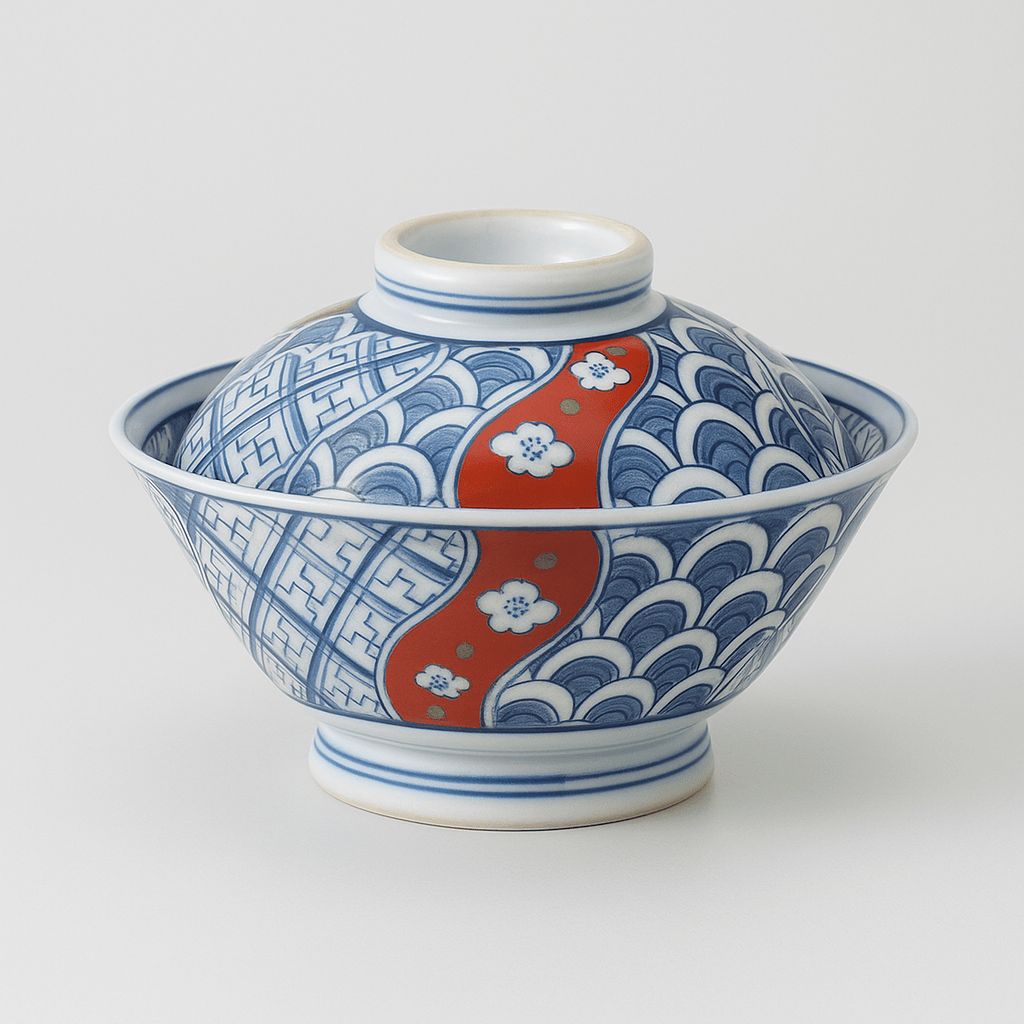
Imari Plum Ribbon Donburi Bowl with Lid
Secure, insured delivery from Japan
Worldwide shipping from $30 · free over $150. Shipping policy
$49 of $150 with this item · $101 to go
U.S. duties prepaid
No extra import charges on delivery — the price you see is the price you pay. Learn more
Sourced in Japan, from the makers
Direct from Japanese workshops and their authorised channels.
Why You’ll Love It
Pairs well with
Imari Plum Ribbon Donburi Bowl with Lid
Elevate your dining experience with the exquisite Imari Plum Ribbon Donburi Bowl, a beautiful example of Japanese artistry and craftsmanship. This donburi bowl transforms everyday meals into a celebration of culture and tradition. With graceful curves and vibrant designs, each bowl is designed not just for serving but to enrich your culinary presentation.
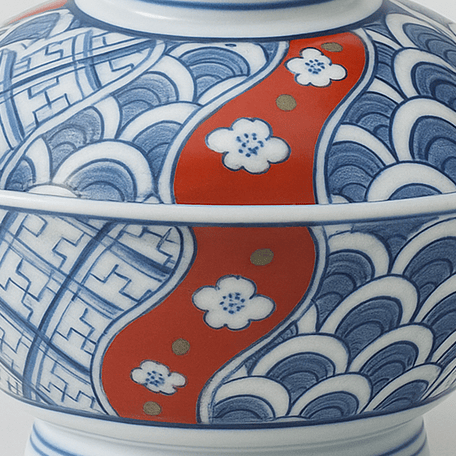
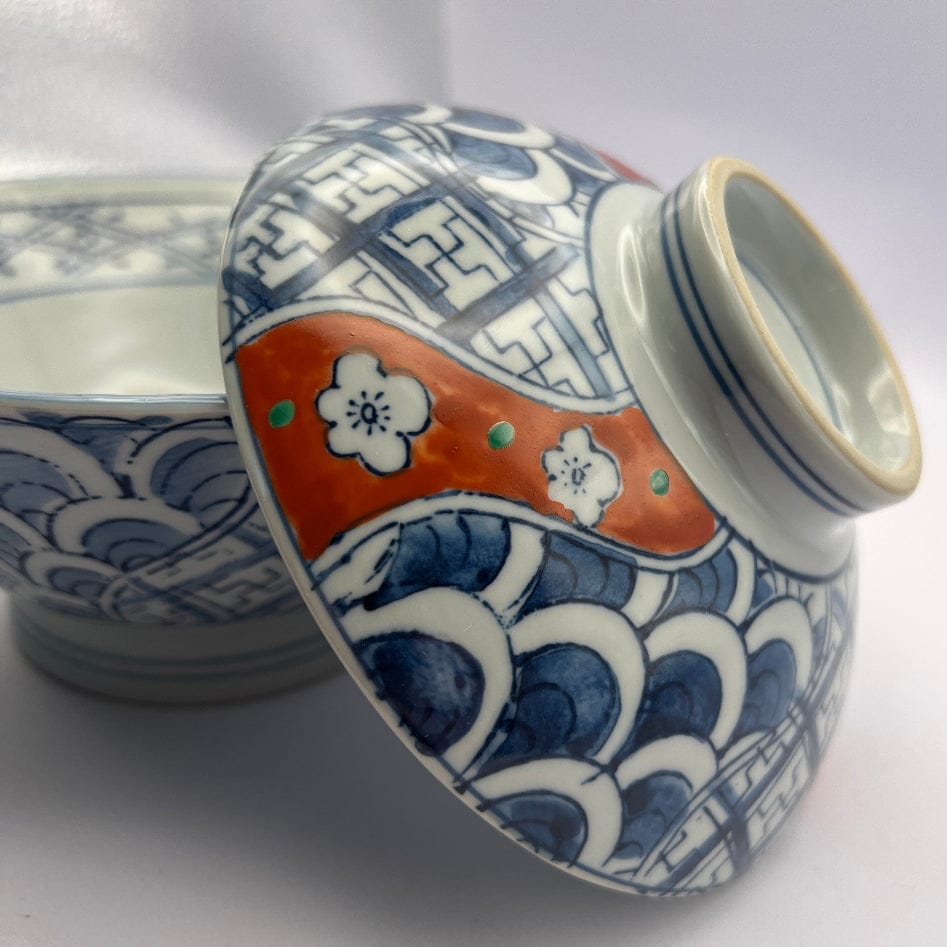
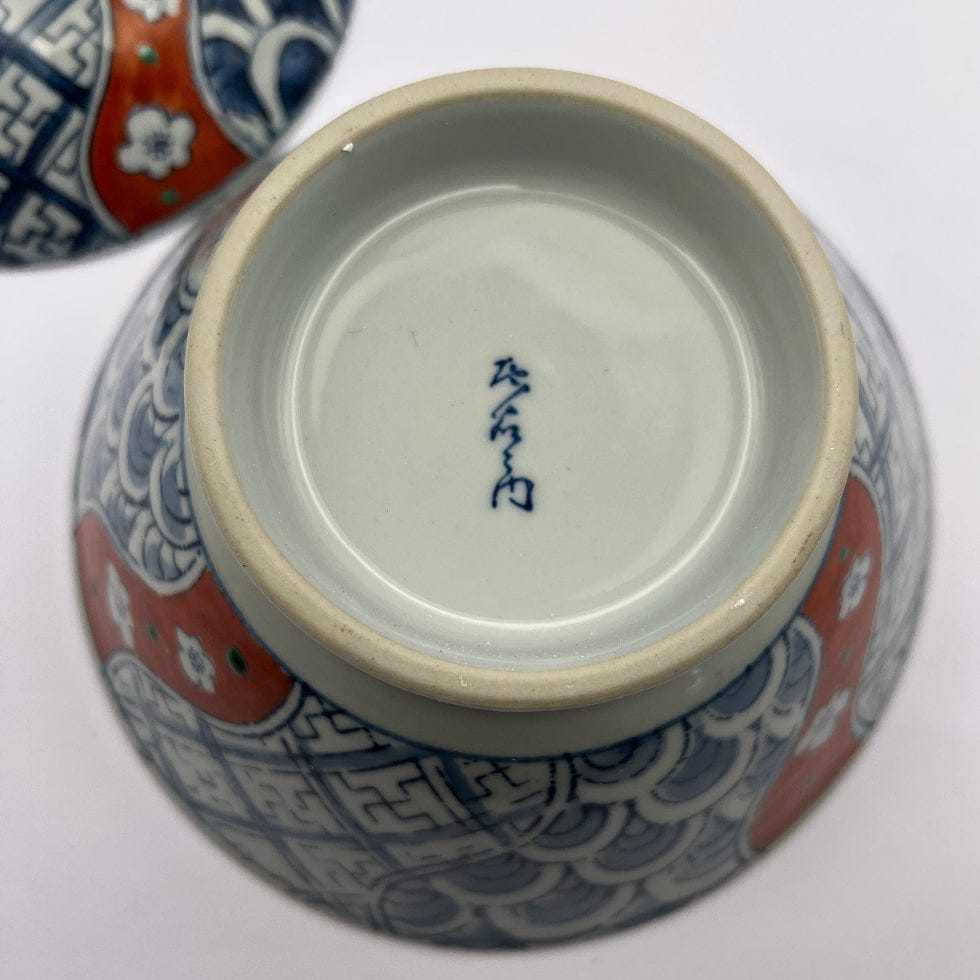
Artistry and CraftsmanshipHandcrafted in Arita, Japan, this donburi bowl features a captivating Seigaiha (青海波) wave pattern, known for symbolizing peace and good fortune. The serene deep indigo blue underglaze serves as a backdrop, while the vivid vermillion-red ribbon dances across the surface, embellished with delicate white plum blossoms. Each design element is carefully hand-painted, reflecting the respected techniques of Imari ware (伊万里焼, Imari-yaki), celebrated for its vibrant colors and intricate artistry. You'll see the intricate brushstrokes and slight variations in each bowl, a testament to its handmade nature.
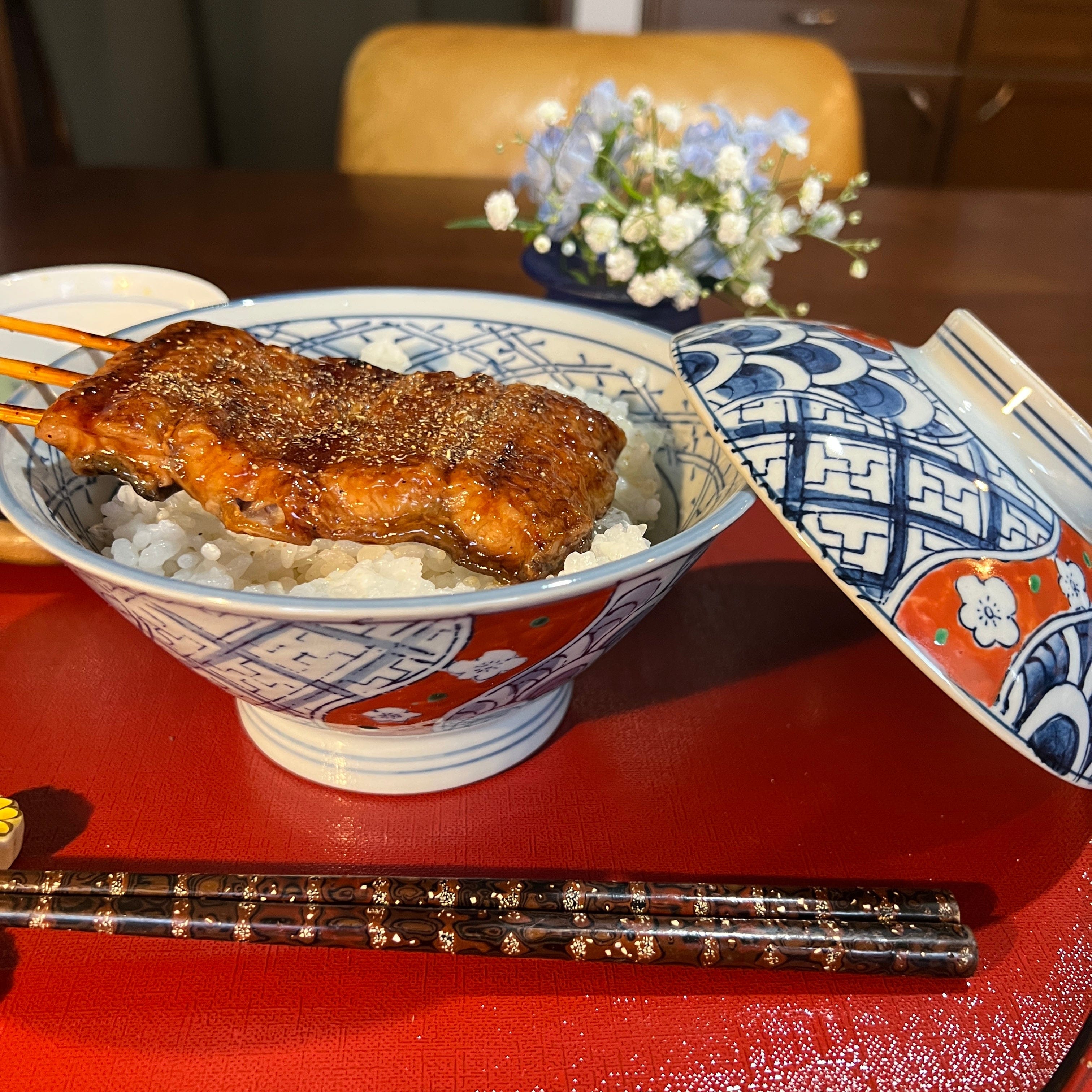
Measuring 6.6 x 4.4 inches (16.7 x 11.3 cm), this bowl is ideally suited for serving rice, donburi, soups, or nimono (simmered dishes). The accompanying porcelain lid preserves heat, making it perfect for enjoying warm meals while adding an elegant touch to your table setting—ideal for both casual and formal dining experiences. Imagine presenting a steaming bowl of ramen or an exquisite rice dish adorned atop your table.
Enhancing Your Dining ExperienceInvesting in the Imari Plum Ribbon Donburi means embracing a unique piece of culinary artistry that enhances your daily life. Its refined design and practical functionality make it a versatile addition to your kitchen. This bowl seamlessly merges beauty with utility. Each Imari Plum Ribbon Donburi is carefully inspected before shipping to ensure you receive a product that reflects our standards of excellence. Please note that minor imperfections such as glaze drips or uneven coloring may occur, enhancing the authenticity of this handcrafted piece.
Product Information
Care instructions
Questions About This Piece
What’s the story behind the plum ribbon design?
What makes Imari ware feel different from other bowls?
What do people usually serve in this bowl?
Is this more of a display piece or an everyday bowl?
Who is this bowl a good fit for?

Arita porcelain · Saga, Japan
Arita: the birthplace of Japanese porcelain
Arita is where Japanese porcelain first flourished in the early 1600s. Known for its fine white body, refined decoration and generations of specialist craftsmanship, Arita ware remains one of Japan’s most enduring ceramic traditions.
Discover Arita
Learn more about Arita porcelain
What is Arita ware?
Arita ware is Japanese porcelain made in and around Arita, Saga Prefecture. The name covers a wide range of styles, from traditional blue-and-white designs to richly painted and contemporary pieces, united by the region's long porcelain-making tradition.
Why is Arita porcelain special?
Arita porcelain combines technical precision with a long tradition of decorative craftsmanship. Its fine, hard porcelain body allows for crisp forms and detailed decoration, while generations of specialist makers have developed distinctive glazing, painting and firing techniques.
Where is Arita ware made?
Arita ware is made in the town of Arita and the surrounding ceramic region of Saga Prefecture on Kyushu, in southern Japan. The area remains closely associated with porcelain production more than four centuries after the craft first developed there.
How is Arita porcelain different from other Japanese ceramics?
Arita ware is porcelain rather than stoneware or earthenware. Compared with many Japanese ceramic traditions, it tends to have a finer, lighter and more refined body, often with a bright white surface that provides an ideal base for detailed painted decoration.