


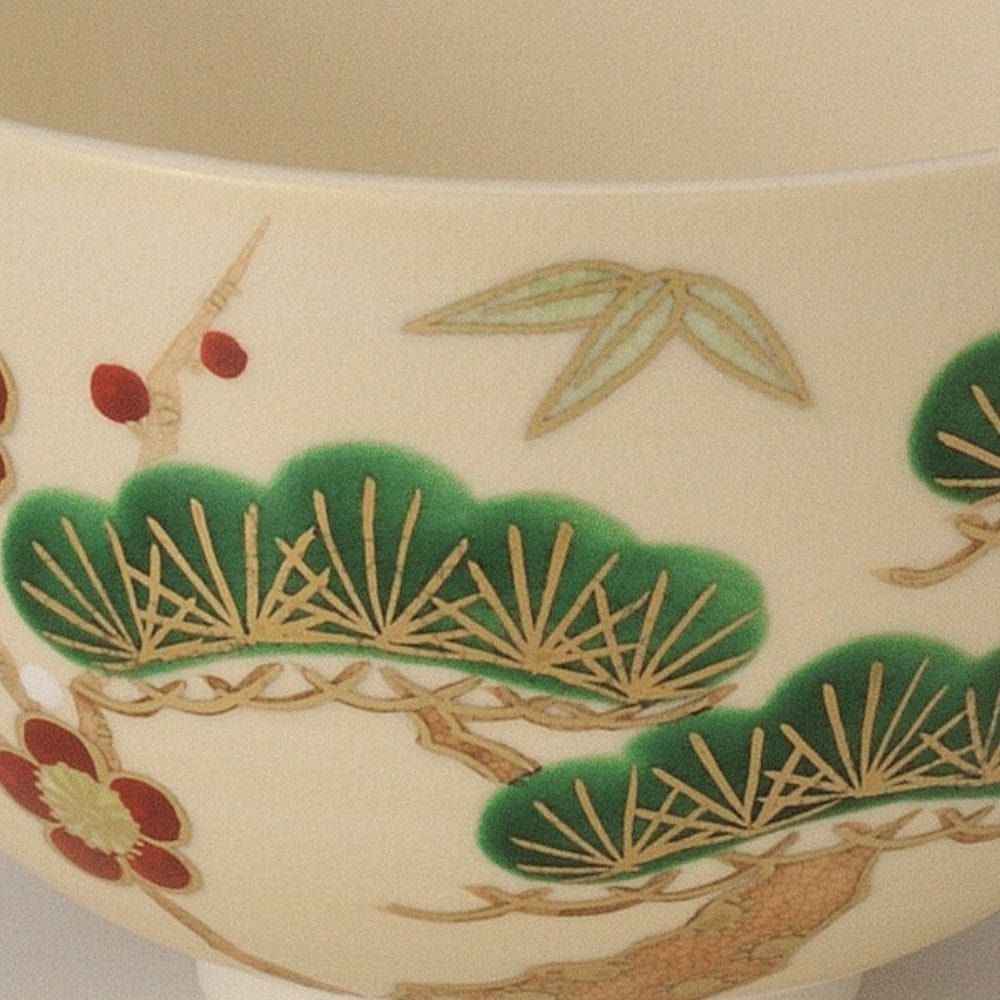
Gold-painted Pine Matcha Bowl
Why You'll Love It?
Directly sourced from artisan workshops in Japan
No US customs fees or surprise import charges — we take care of everything
Learn moreSecure, insured delivery from Japan
Shipping policyA quiet piece of Japan, brought to your home.
Pairs well with
Gold-painted Pine Matcha Bowl
Symbol of Longevity – Gold-Painted Pine Matcha Bowl from Kyoto’s Kiyomizu Kilns
Celebrate the elegance of Japanese symbolism with the Gold-Painted Pine Matcha Bowl, a beautifully crafted piece of Kiyomizu ware from Kyoto. Made from durable porcelain, this bowl reflects the rich heritage of Japan's cultural capital. It measures approximately 4.5 inches in diameter and 3 inches in height, comfortably holding up to 10 ounces of matcha, making it ideal for both daily use and special ceremonies.
Adorned with graceful pine tree motifs painted in vibrant green and delicate gold detailing, this bowl captures the enchanting beauty of nature. The subtle ivory base enhances the visual appeal, allowing the intricate designs to stand out with understated elegance. The smooth surface invites you to whisk your matcha, creating a satisfying froth that enhances your tea-drinking ritual.
With its generous curve, the bowl rests naturally in your hands, offering a delightful experience whether you are enjoying a quiet moment of mindfulness or hosting a ceremonial gathering. Its refined texture strikes a perfect balance between function and form, transforming the act of drinking matcha into a moment of serenity. When not in use, this bowl serves as a captivating decorative piece, embodying the artistry of Kiyomizu ware on any shelf or table.
Additionals: Kyoto Tradition, Daily BeautyMade in Japan and tested for safety (lead- and cadmium-free), this matcha bowl is beautiful yet dependable. As part of the Kiyomizu ware legacy, it captures the sophistication of Kyoto’s ceramic craftsmanship. Each bowl is carefully packaged to ensure it arrives beautifully, becoming a cherished companion for those who value artistry in everyday life. To maintain its exquisite finish, hand washing is recommended.
Product Information
Care instructions


Made by Towa in Japan
Towa knives are meticulously manufactured in a renowned knife factory in Seki City, Gifu Prefecture—a town with an 800-year legacy of swordsmithing excellence.
Known as the “City of Blades,” Seki has long been home to master swordsmiths who forged weapons for samurai with unmatched precision and skill.
Towa continues this storied tradition by collaborating directly with local artisans to create original, high-performance kitchen knives.
Each blade reflects a seamless blend of time-honored craftsmanship and thoughtful innovation, delivering the sharpness, balance, and durability that define true Japanese quality.
FAQs
All you need to know about Japanese Knives.
What makes Japanese knives different from Western knives?
Japanese knives typically feature harder steel, thinner and sharper blades, and lighter handles compared to Western knives. These characteristics allow for precision cutting, especially suited for detailed culinary tasks, but require careful maintenance to preserve sharpness and avoid damage.
How should I maintain and sharpen a Japanese knife?
Regularly hand-wash and dry your knife immediately after use to prevent rust and corrosion. Sharpen using a whetstone designed specifically for Japanese knives, maintaining a consistent angle (usually around 15 degrees). Avoid dishwashers and harsh cleaning methods to preserve blade integrity.
Can Japanese knives be used for any type of food preparation?
While versatile, certain Japanese knives are specialized: Gyuto (chef’s knife) handles most ingredients, Santoku excels in chopping vegetables and meats, while Yanagiba is specifically suited for slicing sashimi and seafood. Selecting the right knife enhances performance and preserves blade condition.
Why are Japanese knives often more expensive?
Japanese knives are handcrafted, employing traditional methods and premium high-carbon steel, which contributes to their exceptional sharpness, durability, and aesthetics. This artisanal craftsmanship and the high-quality materials used typically result in higher pricing compared to mass-produced knives.
Are Japanese knives suitable for beginners?
Yes, beginners can effectively use Japanese knives, but it’s essential to start with user-friendly styles like Santoku or Gyuto, known for balanced handling and versatility. Proper care, handling, and regular sharpening practices will ensure a positive experience, even for novices.