

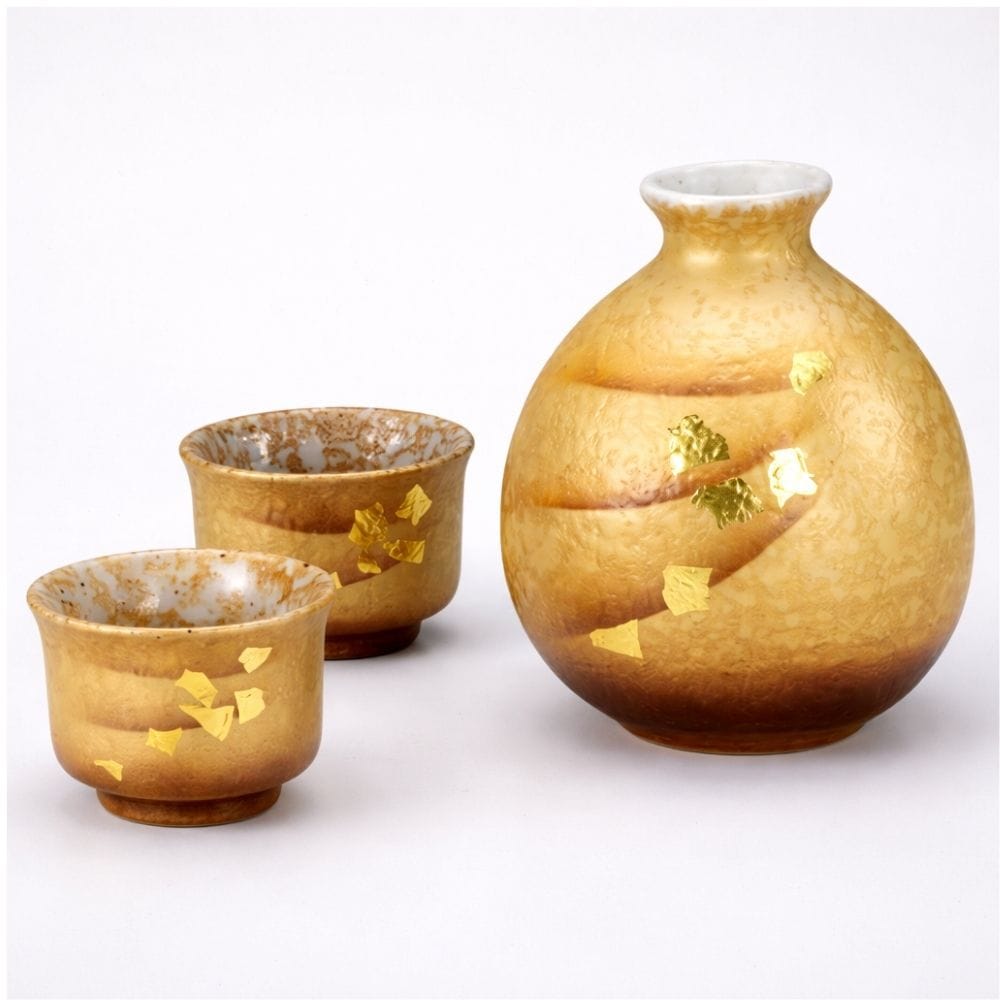
Kutani Sake Set with Gold Leaf

Why You'll Love It?
Directly sourced from artisan workshops in Japan
No US customs fees or surprise import charges — we take care of everything
Learn moreSecure, insured delivery from Japan
Shipping policyA quiet piece of Japan, brought to your home.
Pairs well with
Kutani Sake Set with Gold Leaf
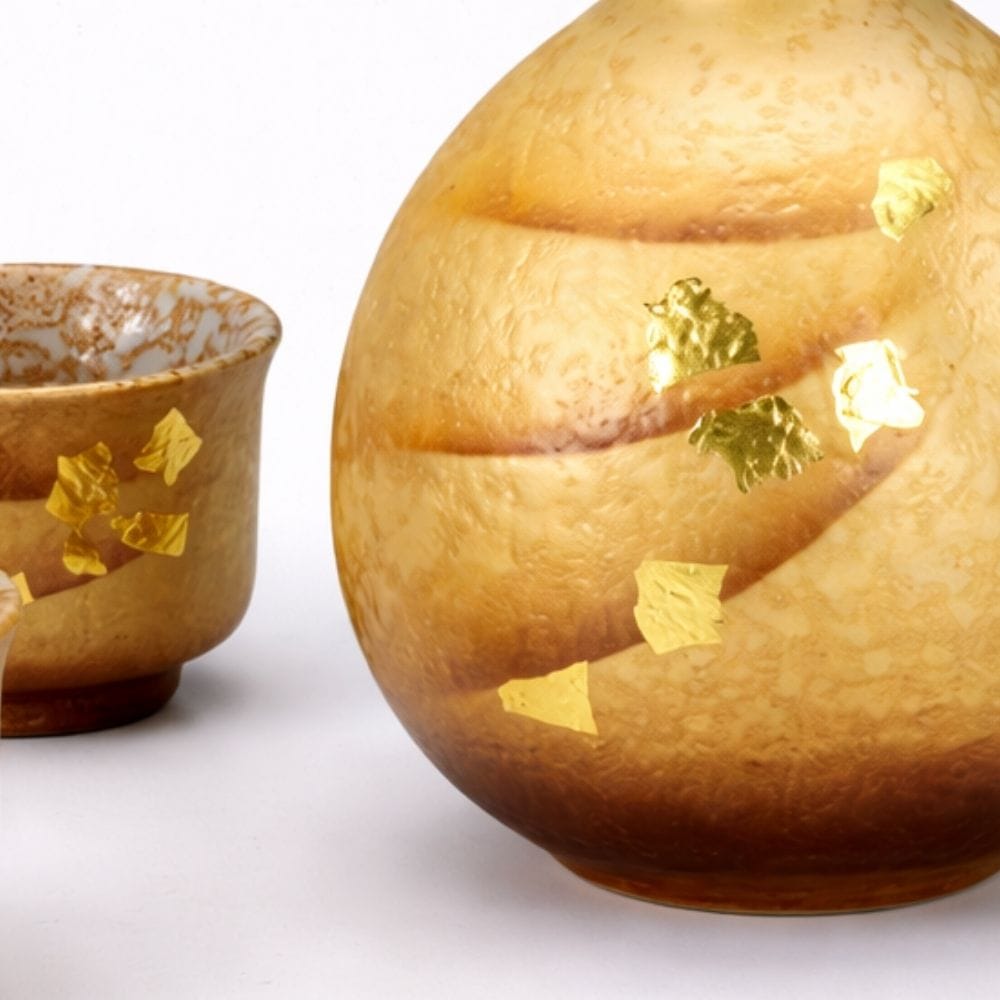
Gold Leaf Kutani Ware Sake Set
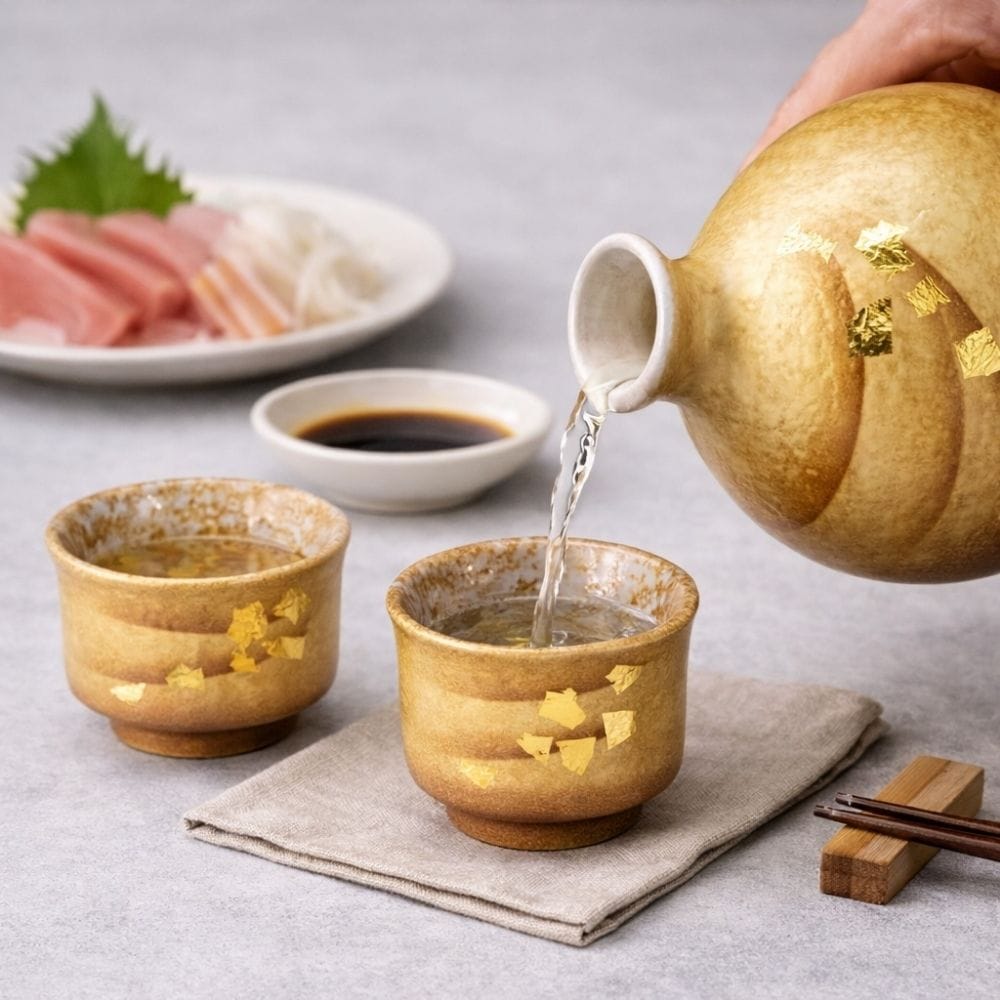
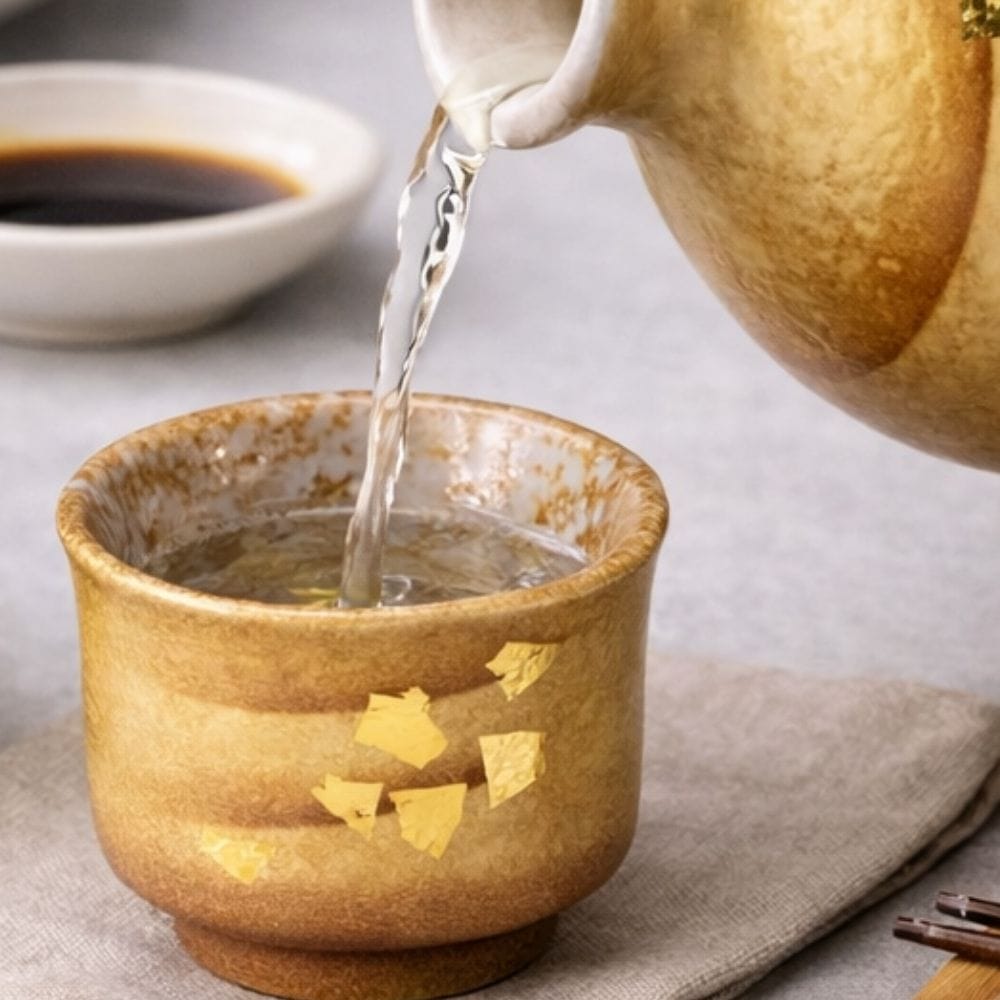
Indulge in authentic Japanese craftsmanship with our Gold Leaf Kutani Sake Set. This handcrafted set from the Kutani region in Japan brings warmth and artistry into your home. Each piece, from the tokkuri (sake pitcher) to the sake cups, showcases intricate patterns inspired by nature, making every sip a celebration of Japanese culture.
Artisan CraftsmanshipThis Kutani ware set represents exquisite craftsmanship. Each piece is made from durable ceramic, adorned with vibrant colors such as red, green, yellow, purple, and dark blue. You will see deft brushwork that illustrates delicate flowers, graceful birds, and serene landscapes. This artistry enhances the aesthetic and creates a deep connection to Japanese pottery traditions.
Enhancing Your Sake MomentsThe tokkuri has a capacity of 350ml (approximately 12 oz), while the sake cups measure 2.2 inches in diameter and 1.6 inches in height. Ideal for intimate gatherings or personal enjoyment, these well-designed pieces enrich your sake-drinking rituals. Whether hosting a dinner party or enjoying a quiet evening, this sake set makes your experience uniquely enjoyable.
Thoughtful Packaging and CareEach Gold Leaf Kutani Sake Set comes in an elegant cosmetic box, making it a thoughtful gift for loved ones or a special indulgence for yourself. Due to its fragility, gentle handling is crucial to maintain its beauty. We recommend hand washing to preserve the intricate designs. This set enriches daily life while serving as a beautiful decorative piece.
Product Information
Care instructions
Note
Questions & Answers
What’s the first thing people notice when they pour sake?
Is the gold just decorative, or does it have meaning?
What kind of sake works best with this set?
How does Kutani craftsmanship show up here?
Is this the kind of gift people remember?

FAQs
All you need to know about Japanese Kutani Ware.
What makes Kutani ware different from other Japanese ceramics?
Kutani ware is instantly recognizable for its vivid overglaze enamels—greens, reds, blues, yellows, and purples—painted in bold, layered designs. Unlike many regional wares that rely on clay texture or natural glazes, Kutani emphasizes ornamental artistry. Each piece is hand-painted after firing, then fired again at a lower temperature to fuse the enamel. This two-step process creates the signature glossy, high-contrast look unmatched by other Japanese styles.
Is Kutani ware safe to use with food, sauces, and liquids?
Yes. Modern Kutani ware is food-safe and meets Japan’s strict ceramic safety standards. The bright overglaze enamels may look delicate, but they are formulated using lead-free, cadmium-free pigments suitable for tableware. After application, they are re-fired to create a stable, sealed surface. As long as the piece is contemporary and intended for functional use (not antique), it is safe for soy sauce, oils, vinegar, and daily dining.
Why are Kutani colors so bright, and do they fade over time?
Kutani’s signature brilliance comes from metal-oxide-based overglaze pigments, carefully applied in layers to achieve depth and luminosity. After the second firing, the colors are fused into a glassy enamel surface. Under normal use, they do not fade, even after decades. However, prolonged exposure to strong acidic cleaners or harsh scrubbing can dull the enamel. Gentle handwashing is recommended for preserving clarity and shine.
How is Kutani ware made in the Kaga region today?
Artisans in Ishikawa’s Kaga area follow a blend of traditional and modern methods. Local porcelain stone (hakusan-ishi) is shaped, bisque-fired, and coated with a clear base glaze. Once fired to porcelain hardness, painters add the characteristic Gosai-de (Five Colors) palette or detailed motifs such as birds, landscapes, or geometric patterns. After painting, pieces undergo a second firing around 800°C to set the overglaze. Many workshops still rely on individual brushwork, ensuring each item is one-of-a-kind.
Is Kutani ware suitable for everyday use or mainly for display?
Kutani ware is durable enough for daily use, particularly for items such as plates, mugs, and sauce dispensers. The porcelain body is non-porous and resistant to staining, making it ideal for use with soy sauce and other strong-flavored seasonings. However, because the overglaze decoration sits on the surface (unlike underglaze ceramics), it’s best to avoid dishwashers and microwaves unless the maker specifically states they are safe. Many collectors use Kutani both as functional tableware and as decorative art due to its vibrant, expressive aesthetic.