This site uses cookies for better user experience and analytics.
Sakura Multifunction Japanese Scissors – 8.7 inches (22 cm)
Sale price$85.00Regular price$99.00
4 reviews
Stainless steel • 8.7" • Made in Japan • Hand wash only
In stock
Ships within 4 business days
Secure, insured delivery from Japan
Complimentary over $199 · otherwise from $30. Shipping policy
$114 away from complimentary shipping
U.S. duties prepaid at checkout
Import duties and taxes are calculated and paid at checkout, so nothing is due on delivery. Learn more
Sourced in Japan, from the makers
Direct from Japanese workshops and their authorised channels.
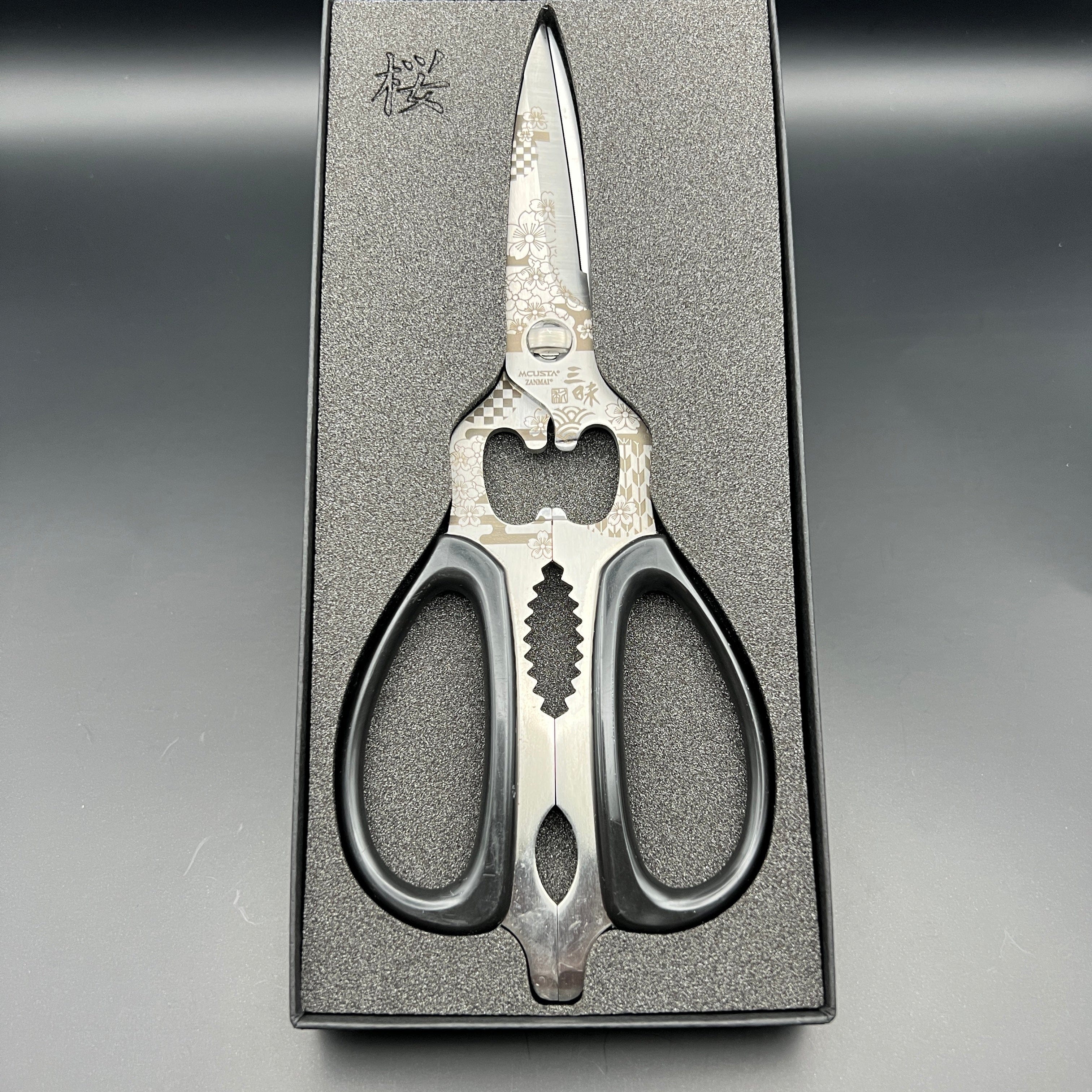
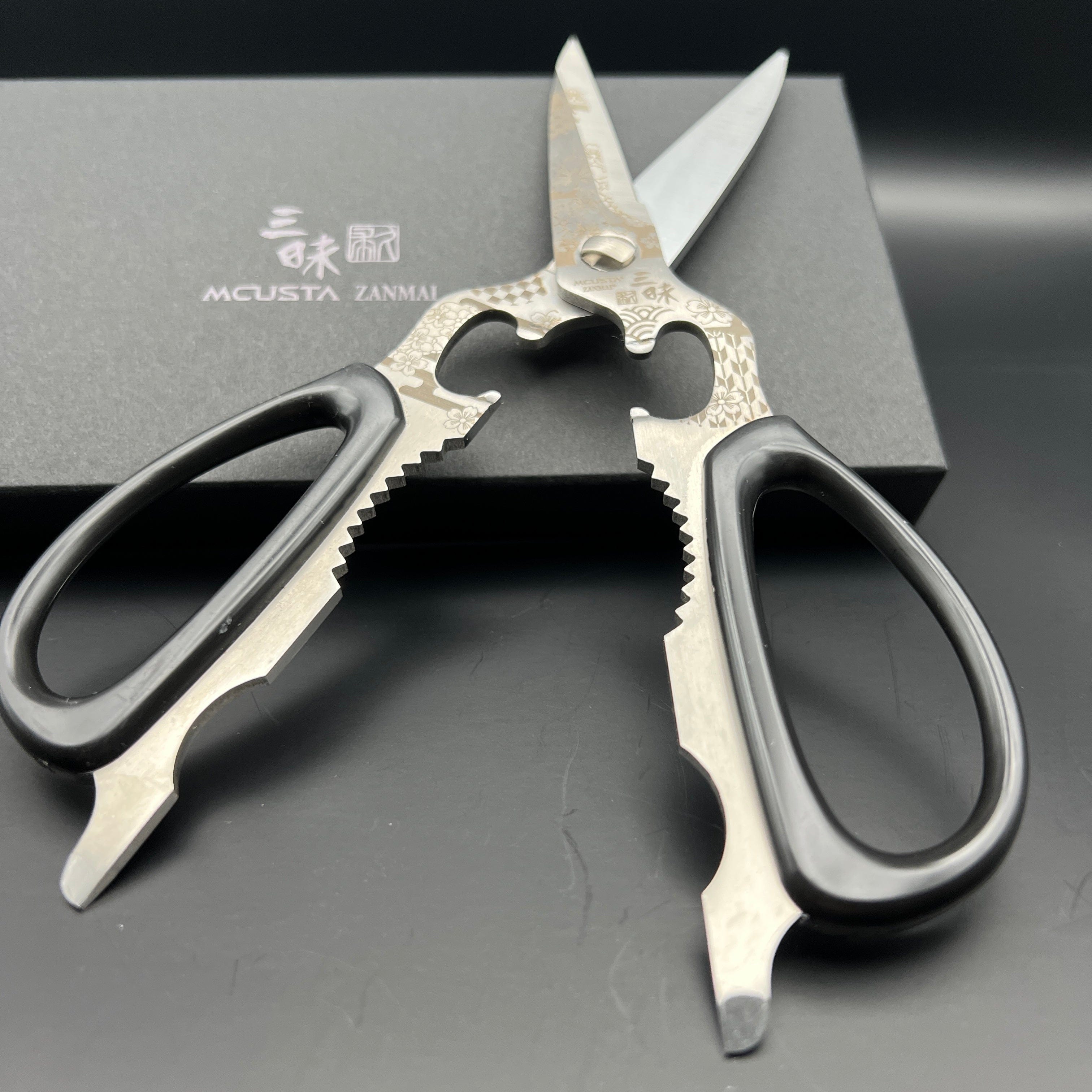
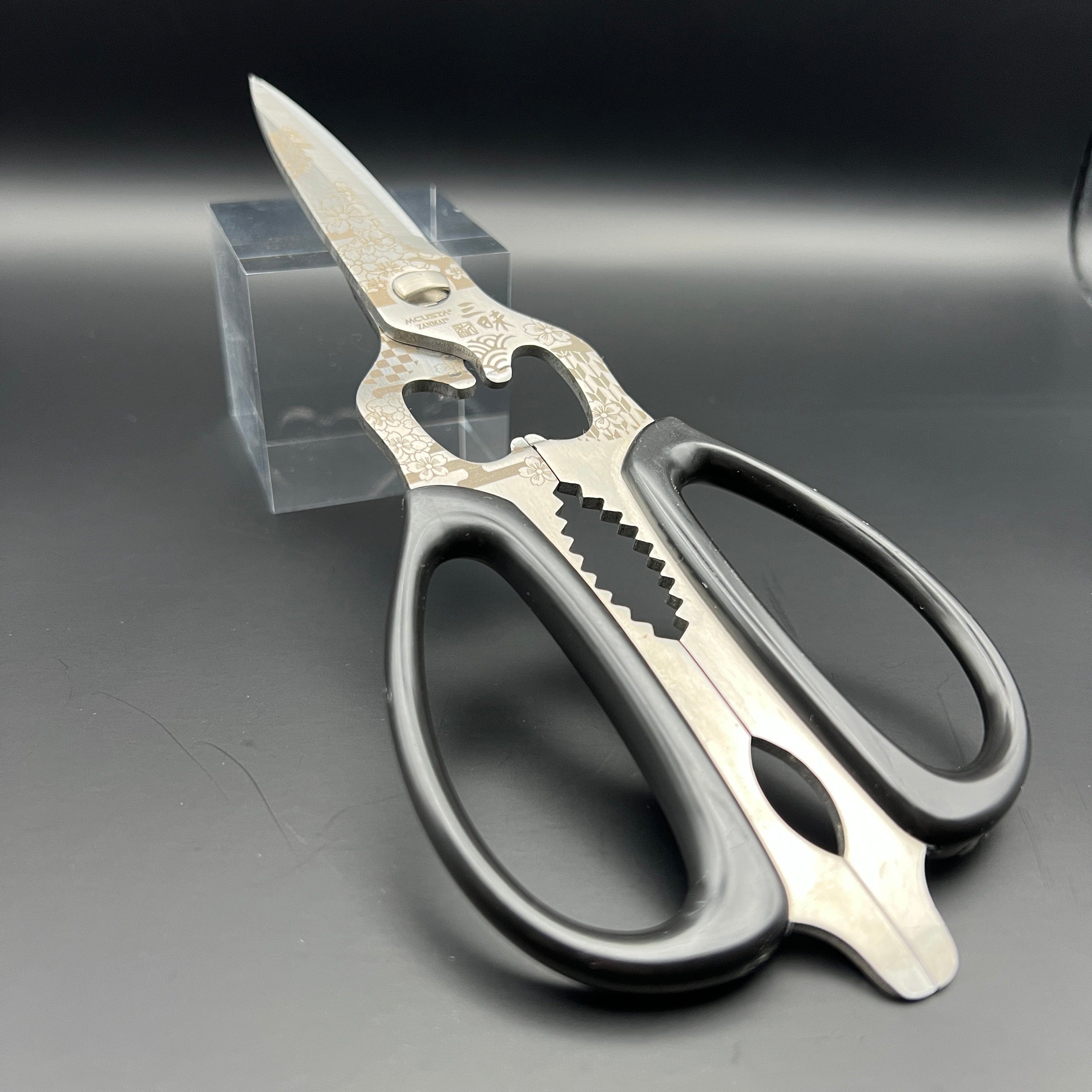
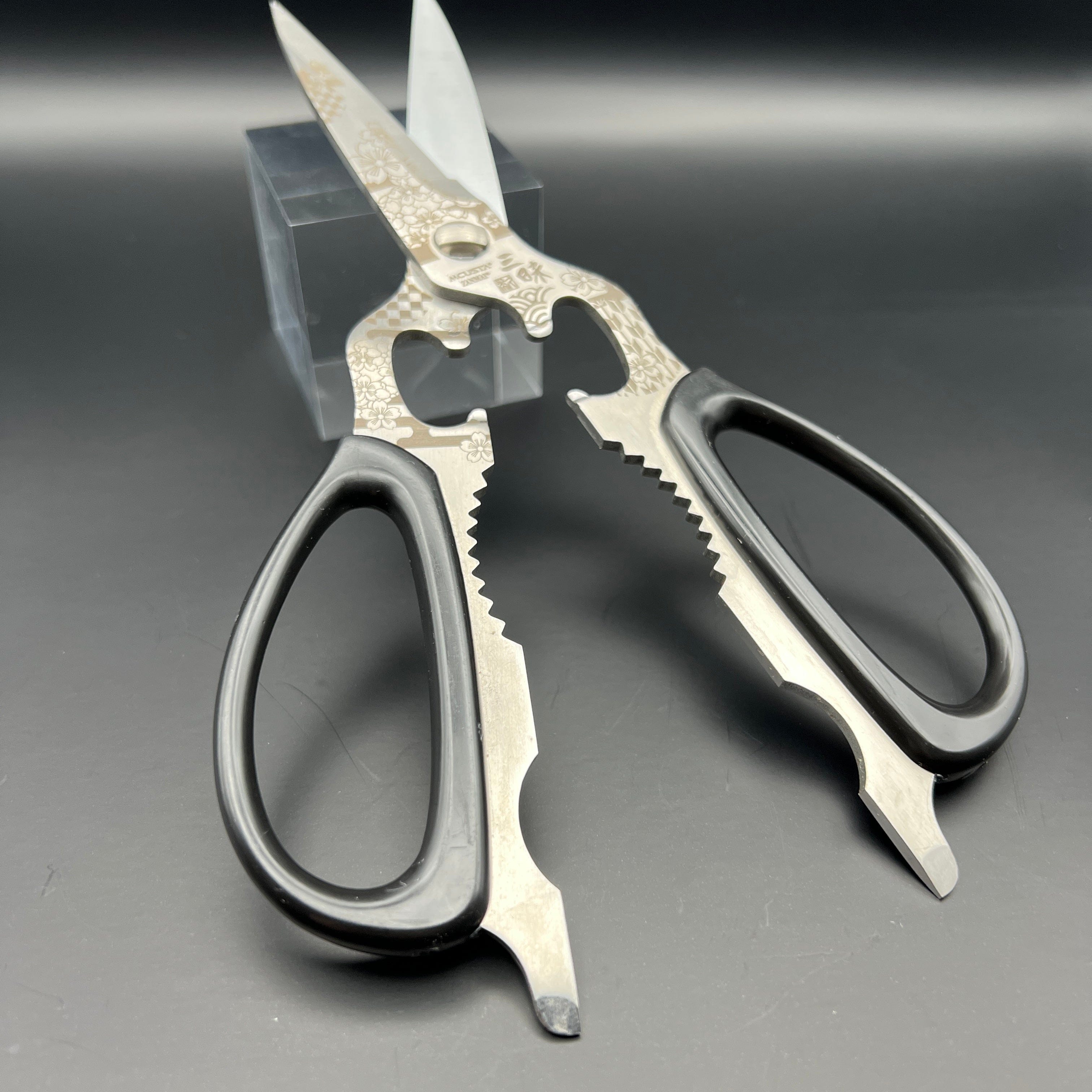
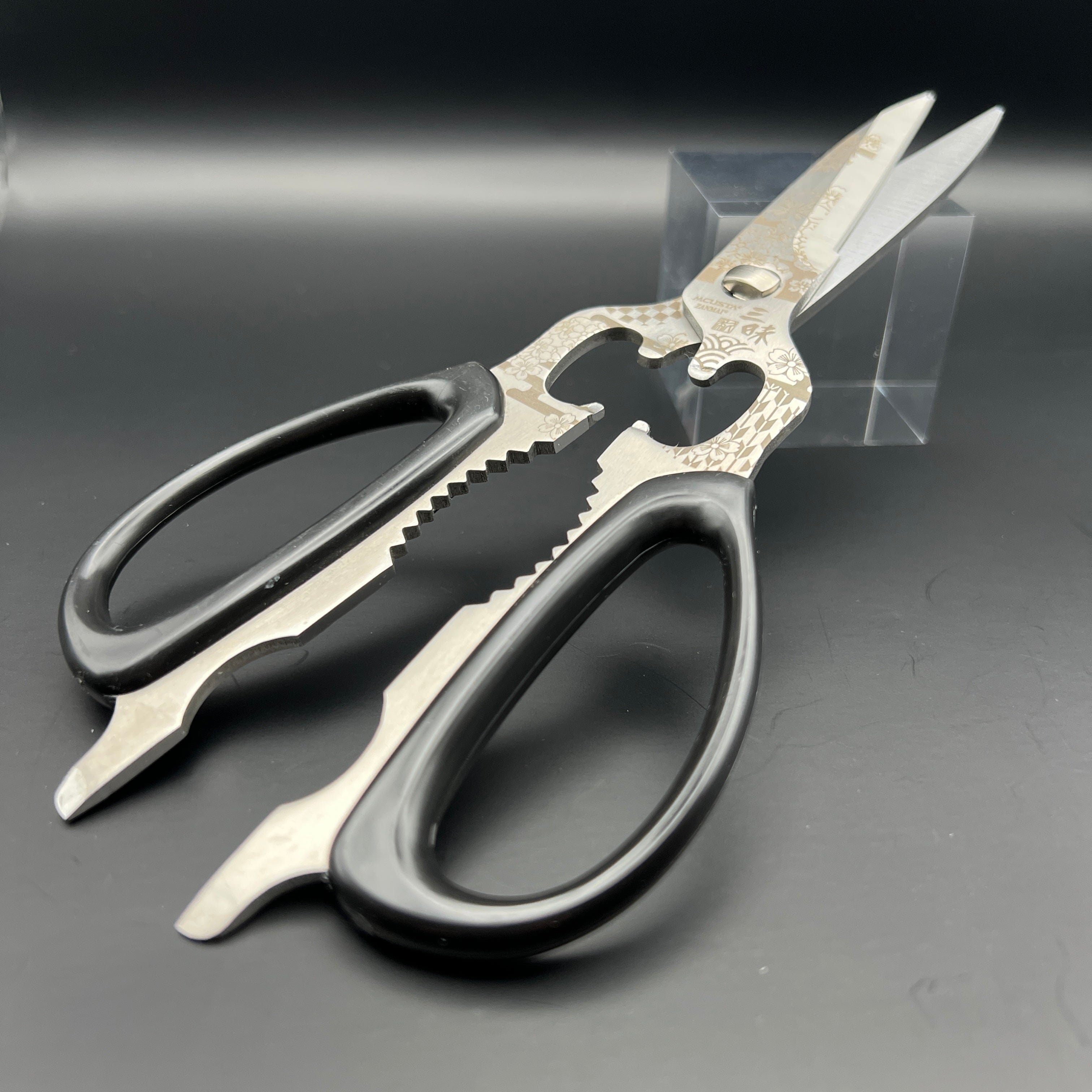
The Sakura Multifunction Japanese Scissors combine a 8.7 in (22 cm) length with stainless steel blades and a comfortable matte black resin handle. Made for kitchen, office, and craft tasks, they offer a balanced feel in hand and a polished edge for clean, controlled cutting.
Why You’ll Love It
8.7 in (22 cm) length gives the scissors a steady, easy-to-control feel.
Stainless steel blades are made for clean cutting across kitchen, office, and craft use.
Matte black resin handle offers an ergonomic grip for extended comfort.
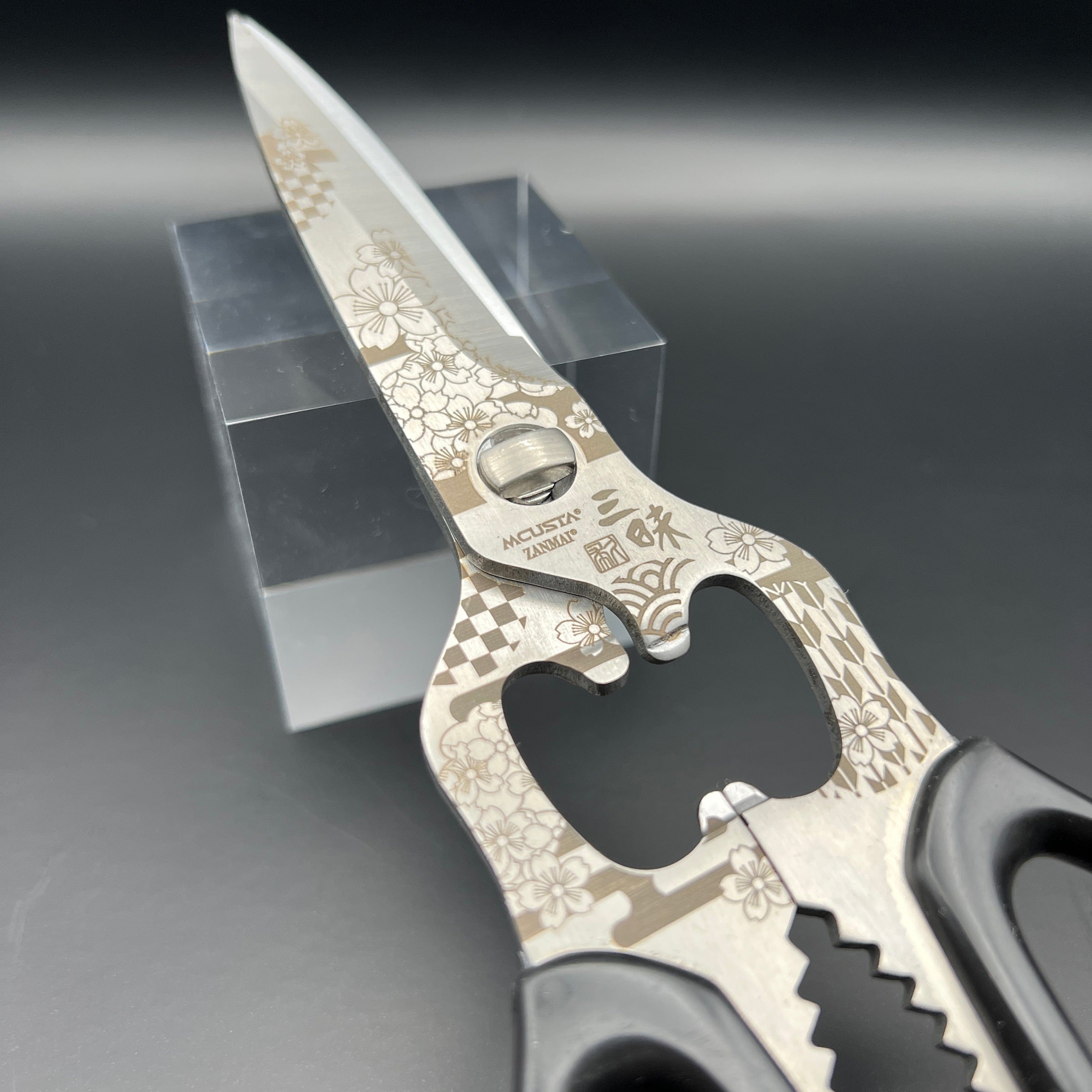
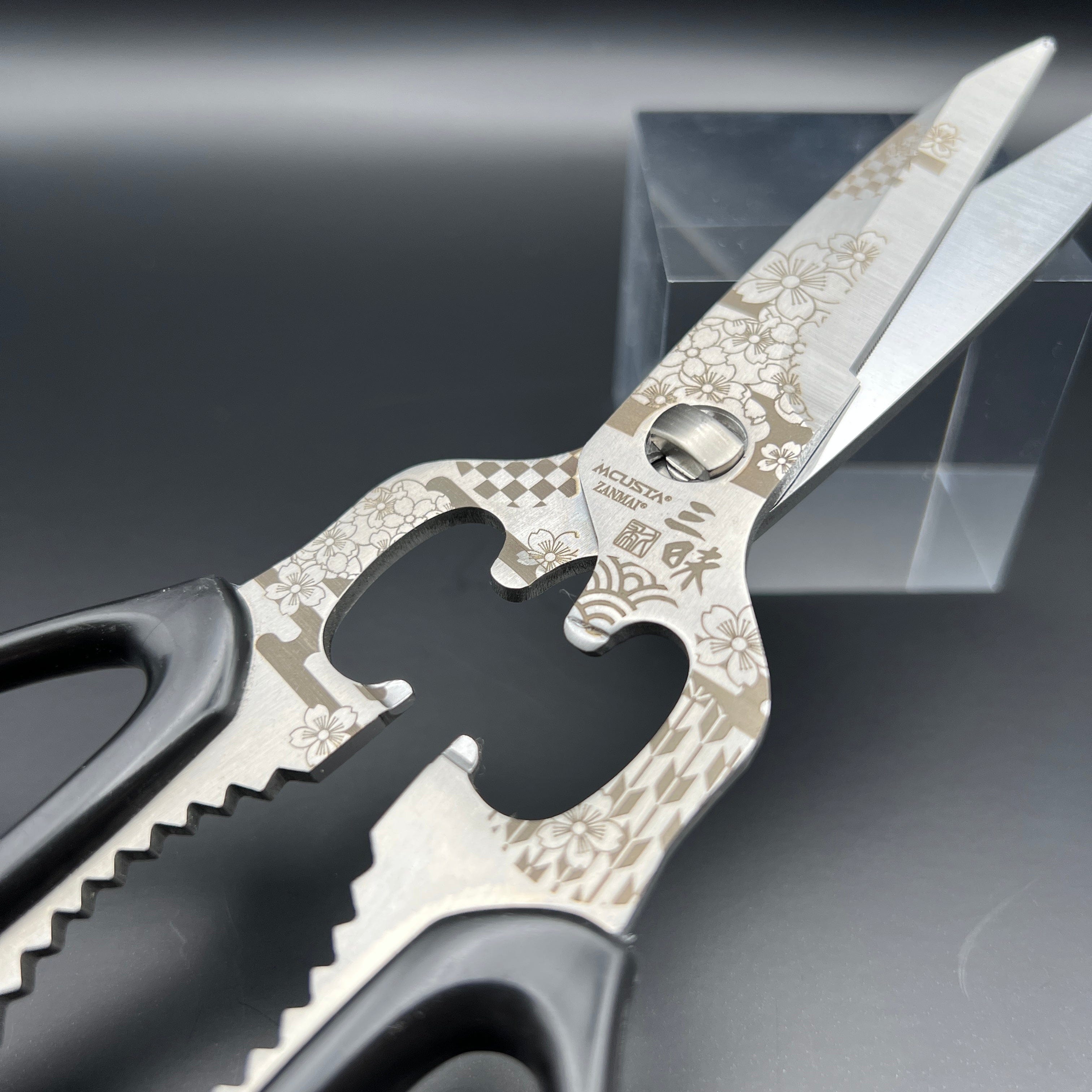
Dragon motif laser-engraved on the inner blade adds a distinctive finish.
A practical multifunction tool for everyday tasks.
Sakura Multifunction Japanese Scissors – 8.7 inches (22 cm)
Sale price$85.00Regular price$99.00
Seki City Japanese Utility Scissors
Product Description
Crafted in Seki City, Japan, these 8.7 in (22 cm) Sakura Multifunction Scissors combine traditional craftsmanship with everyday utility.
Made from high-quality stainless steel, the blades feature a dragon motif laser-engraved on the inner blade. The polished edge is designed for clean cutting, while the matte black resin handle offers an ergonomic grip for extended comfort.
Suitable for the office, the kitchen, and all in between, these scissors are built for practical daily use. Each pair is individually hand-tested and presented in artisan-grade wrapping.
Product Information
Length: 8.7 in (22 cm)
Design: Dragon motif laser-engraved on the inner blade
Handle: Matte black resin, ergonomic grip for extended comfort
Use: Suitable for the office, the kitchen, and all in between
Finish: Polished edge
Packaging: Individually hand-tested and presented in artisan-grade wrapping
Material
High-carbon stainless steel
Care instructions
To ensure your scissors' sharpness, precision, and longevity, clean them after each use with a soft cloth and sanitize them with alcohol if needed. Regularly apply a drop of oil to the pivot point and open and close the scissors to distribute it evenly. Store them in a dry, protective case to prevent rust and damage, and avoid dropping them. Check the tension periodically and adjust if the blades feel loose or tight. For best performance, professionally sharpen them every 6 to 12 months, depending on use.
Artisan & Craft
Made by Towa in Seki City, Gifu Prefecture, Japan.
Note
Keep the scissors clean and dry after use to help maintain the edge and pivot action.
5 stars: 3 (75%)
4 stars: 1 (25%)
3 stars: 0 (0%)
2 stars: 0 (0%)
1 star: 0 (0%)
G
Gerard Lejeune
multifunction scissors
Nice looking pair of scissors and sharp. Cuts well. I haven't tried any of its other functions.
Hi there! Thank you so much for taking the time to leave a review for our Sakura Multifunction Japanese Scissors. We're so glad to hear that you found them sharp and that they cut well. We hope you'll have the chance to try out the other functions as well, and please don't hesitate to reach out to us if you have any questions or concerns. Have a great day!
Best,
My Japanese World Team
L
Levi
I loved this product, thank you.☺️ my japanese world👍👍👍
We're so happy to hear you loved the product—thank you for your support! 🙏
Your kind words mean the world to everyone at My Japanese World.
👍👍 ありがとうございます!✨
T
Taguchi Kazumi
Beautiful and Functional
These scissors are truly a work of art—sharp, versatile, and beautifully crafted with sakura engravings that make them feel special every time I use them. They've handled everything from kitchen prep to stubborn jar lids with ease. The craftsmanship is top-notch, and the gift box presentation is a nice touch. I’m docking one star only because the handles, while elegant, could be a bit more cushioned for longer use. Still, they’re a fantastic addition to my kitchen drawer and well worth the investment.
Thank you so much for your thoughtful and detailed review! We're thrilled that you're enjoying the sharpness, versatility, and beautiful sakura engravings of the scissors.
Regarding the handle—you're absolutely right to mention comfort. While both loops are equal in size, the ergonomic design is intended to fit naturally in either hand, allowing for a firm, balanced grip during a variety of tasks.
For best results, we recommend positioning your hand so the scissors sit securely in your palm, with your fingers wrapping comfortably around both loops. That alignment helps reduce hand fatigue and maximizes control. We truly appreciate your feedback and are glad to hear these scissors have earned a place in your kitchen!
Warm Regards,
The My Japanese World Team
R
Ryan W.
Sharp, sturdy, and beautifully designed!
These scissors are fantastic, super sharp and cut through everything smoothly. The design is not only functional but also really pretty with the sakura pattern. Great quality and fast delivery too. I’m really impressed!
Thank you so much for the great review! We’re thrilled to hear that you’re enjoying the Sakura Multifunction Scissors—both for their performance and their design.
It means a lot to us that you noticed the quality and fast delivery. We really appreciate your support and hope to see you back at My Japanese World again soon!
Warm regards,
The My Japanese World Team
Seki 関 - The city of Blades
In Gifu Prefecture, the city of Seki has been Japan’s blade-forging capital for over 800 years, earning a reputation as the “City of Blades.”
Its legacy began in the Kamakura period, when master swordsmiths—seeking the ideal conditions for forging—settled in Seki for its pure river water, rich charcoal, and fine iron sand.
These artisans developed a unique forging technique known for producing swords that were both incredibly sharp and exceptionally durable, prized by samurai across Japan.
Today, Seki’s blacksmiths uphold this tradition, seamlessly blending centuries-old methods with modern metallurgy to craft kitchen knives of unmatched precision and elegance, trusted by chefs and collectors around the world.
Made by Towa in Japan
Towa knives are meticulously manufactured in a renowned knife factory in Seki City, Gifu Prefecture—a town with an 800-year legacy of swordsmithing excellence.
Known as the “City of Blades,” Seki has long been home to master swordsmiths who forged weapons for samurai with unmatched precision and skill.
Towa continues this storied tradition by collaborating directly with local artisans to create original, high-performance kitchen knives.
Each blade reflects a seamless blend of time-honored craftsmanship and thoughtful innovation, delivering the sharpness, balance, and durability that define true Japanese quality.
Made by Towa in Japan
Towa knives are meticulously manufactured in a renowned knife factory in Seki City, Gifu Prefecture—a town with an 800-year legacy of swordsmithing excellence.
Known as the “City of Blades,” Seki has long been home to master swordsmiths who forged weapons for samurai with unmatched precision and skill.
Towa continues this storied tradition by collaborating directly with local artisans to create original, high-performance kitchen knives.
Each blade reflects a seamless blend of time-honored craftsmanship and thoughtful innovation, delivering the sharpness, balance, and durability that define true Japanese quality.
FAQs
All you need to know about Japanese Knives.
What makes Japanese knives different from Western knives?
Japanese knives typically feature harder steel, thinner and sharper blades, and lighter handles compared to Western knives. These characteristics allow for precision cutting, especially suited for detailed culinary tasks, but require careful maintenance to preserve sharpness and avoid damage.
How should I maintain and sharpen a Japanese knife?
Regularly hand-wash and dry your knife immediately after use to prevent rust and corrosion. Sharpen using a whetstone designed specifically for Japanese knives, maintaining a consistent angle (usually around 15 degrees). Avoid dishwashers and harsh cleaning methods to preserve blade integrity.
Can Japanese knives be used for any type of food preparation?
While versatile, certain Japanese knives are specialized: Gyuto (chef’s knife) handles most ingredients, Santoku excels in chopping vegetables and meats, while Yanagiba is specifically suited for slicing sashimi and seafood. Selecting the right knife enhances performance and preserves blade condition.
Why are Japanese knives often more expensive?
Japanese knives are handcrafted, employing traditional methods and premium high-carbon steel, which contributes to their exceptional sharpness, durability, and aesthetics. This artisanal craftsmanship and the high-quality materials used typically result in higher pricing compared to mass-produced knives.
Are Japanese knives suitable for beginners?
Yes, beginners can effectively use Japanese knives, but it’s essential to start with user-friendly styles like Santoku or Gyuto, known for balanced handling and versatility. Proper care, handling, and regular sharpening practices will ensure a positive experience, even for novices.
Choosing a selection results in a full page refresh.