This site uses cookies for better user experience and analytics.
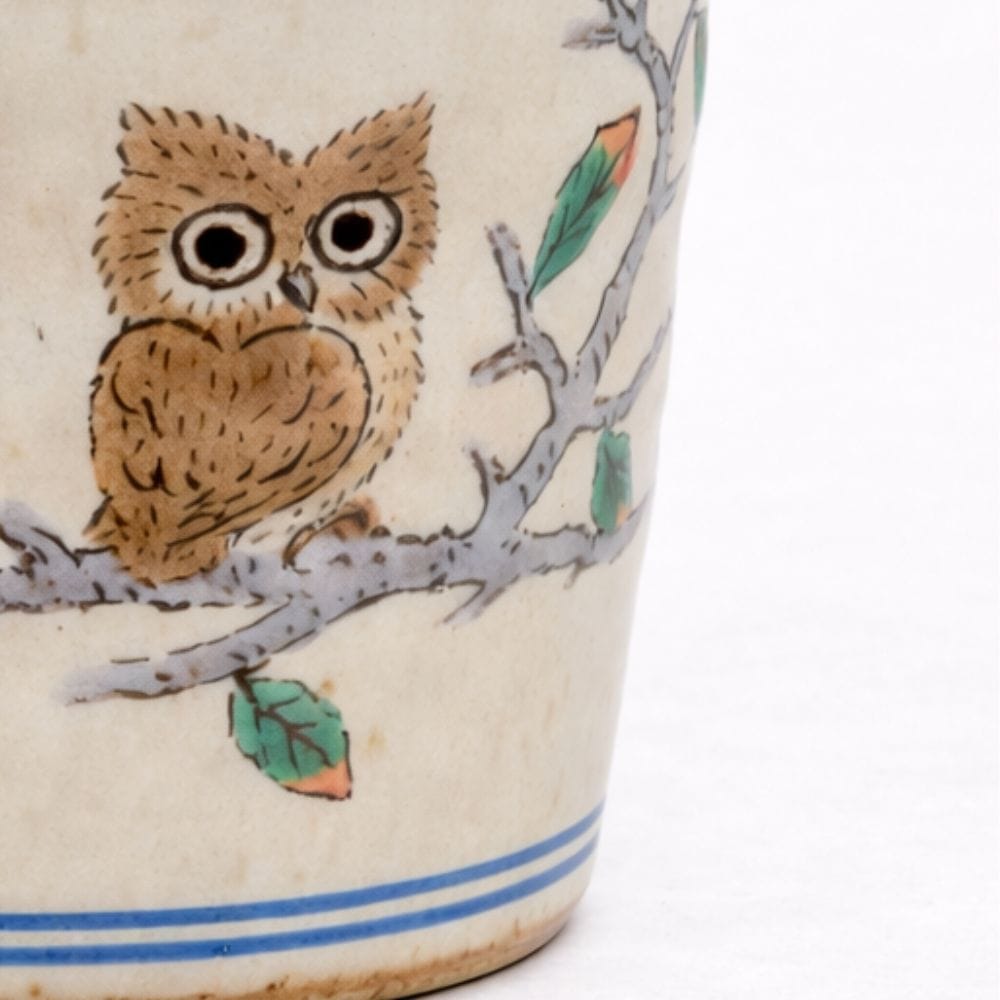
Kutani Owls Soba Cup
$49.00
No reviews
No reviews yet · Customers rate us 4.9/5 (44 reviews) · Read them
Kutani cup • Ceramic • Made in Japan
In stock
Ships within 4 business days
Secure, insured delivery from Japan
Worldwide shipping from $30 · free over $150. Shipping policy
$49 of $150 with this item · $101 to go
U.S. duties prepaid
No extra import charges on delivery — the price you see is the price you pay. Learn more
Sourced in Japan, from the makers
Direct from Japanese workshops and their authorised channels.
The Kutani Owls Soba Cup is a ceramic Japanese tableware piece with a compact 3.0" (7.6 cm) diameter and 2.5" (6.3 cm) height. Made in Japan and packaged in a paper box, it brings Kutani ware character to everyday serving and display.
Why You’ll Love It
Ceramic cup made in Japan, with Kutani ware styling.
Compact 3.0" (7.6 cm) diameter and 2.5" (6.3 cm) height.
Comes packaged in a paper box for easy gifting or storage.
Suitable for soba servings and other small table uses.
The Kutani Owls Soba Cup is a ceramic Japanese tableware piece made in Japan. Its compact size, 3.0" (7.6 cm) in diameter and 2.5" (6.3 cm) in height, makes it easy to use for soba serving and other small table settings.
Finished with Kutani ware character and packed in a paper box, it is a practical piece for everyday use or gifting. To help preserve the ceramic, wash gently by hand with mild soap and a soft sponge, and avoid the dishwasher and microwave.
Product Information
Dimensions: 3.0 in (Diameter) x 2.5 in (Height) / 7.6 cm (Diameter) x 6.3 cm (Height)
Material: Ceramic
Packaging: Paper box
Made in Japan
Care instructions
- Hand wash gently with mild soap and a soft sponge; do not place in the dishwasher.
- Avoid using it in the microwave to preserve the integrity of the ceramic.
- Dry thoroughly after washing to prevent moisture accumulation.
- Store in a dry place, ideally in the provided paper box, to protect from scratches and dust.
Respecting the craftsmanship of Kutani ware ensures its beauty and longevity for generations to enjoy.
Artisan & Craft
Kutani ware is a celebrated pottery tradition from Ishikawa Prefecture, and this cup is made in Japan. Its ceramic form and Kutani decoration reflect that craft tradition in a compact tableware piece.
Note
Introducing the Kutani Owls Soba Cup, an exquisite artisan-made piece that beautifully embodies the charm of traditional craftsmanship. Each cup is carefully hand-crafted, resulting in unique variations and delightful imperfections that add to its character and allure. These subtle differences are not flaws; rather, they celebrate the individuality of each piece, making your Kutani Owls Soba Cup a truly one-of-a-kind treasure for your collection. Embrace the beauty of imperfection and enjoy the artistry that comes with every sip.
Questions About This Piece
What comes with the cup?
One ceramic soba cup packaged in a paper box.
What are the dimensions?
It measures 3.0" (7.6 cm) in diameter and 2.5" (6.3 cm) in height.
How should I care for it?
Wash it gently by hand with mild soap and a soft sponge, then dry it thoroughly. Do not use a dishwasher or microwave.
Is this piece made in Japan?
Yes, it is made in Japan.
Kutani ware · Ishikawa, Japan
Kutani: Japan’s art of brilliant color
Kutani ware emerged in Ishikawa in the 17th century and became
celebrated for bold overglaze painting and an unmistakably rich use
of color. Its decorative language ranges from expressive nature motifs
to highly detailed compositions, giving Kutani porcelain a vivid
character unlike almost any other Japanese ceramic tradition.
17th-century rootsborn in Ishikawa
Kutani Gosaifive signature colors
Overglaze paintingbold, layered, expressive
Ishikawa · Hokuriku · Japan
Discover Kutani
Learn more about Kutani ware
What is Kutani ware?
Kutani ware is a tradition of Japanese porcelain associated with
Ishikawa Prefecture. It first developed in the 17th century and is
especially known for richly colored overglaze decoration, bold
compositions and a wide range of styles that evolved over several
centuries.
What are the five colors of Kutani ware?
The traditional Kutani palette is often referred to as Kutani Gosai,
or the five Kutani colors: red, yellow, green, purple and dark blue.
These vivid overglaze enamels are used in different combinations,
from dense decorative painting to more restrained contemporary work.
Where is Kutani ware made?
Kutani ware is associated with Ishikawa Prefecture in Japan’s
Hokuriku region, particularly the areas around Kaga, Komatsu and
Kanazawa. The original Kutani production began near present-day
Kaga in the mid-1600s.
Why does Kutani ware look so different from other Japanese porcelain?
Kutani is distinguished by its emphasis on decoration after the
porcelain body has been fired. Layers of colored enamel are applied
over the glaze, allowing artists to create saturated color, strong
outlines and highly expressive imagery. This gives Kutani ware a
more painterly and often more dramatic appearance than many other
Japanese porcelain traditions.