

Handmade Nezumi Shino Sake Set

Why You'll Love It?
Directly sourced from artisan workshops in Japan
No US customs fees or surprise import charges — we take care of everything
Learn moreSecure, insured delivery from Japan
Shipping policyA quiet piece of Japan, brought to your home.
Pairs well with
Handmade Nezumi Shino Sake Set
Earth Meets Mist – Handmade Nezumi Shino Sake Set by Keizan Kiln
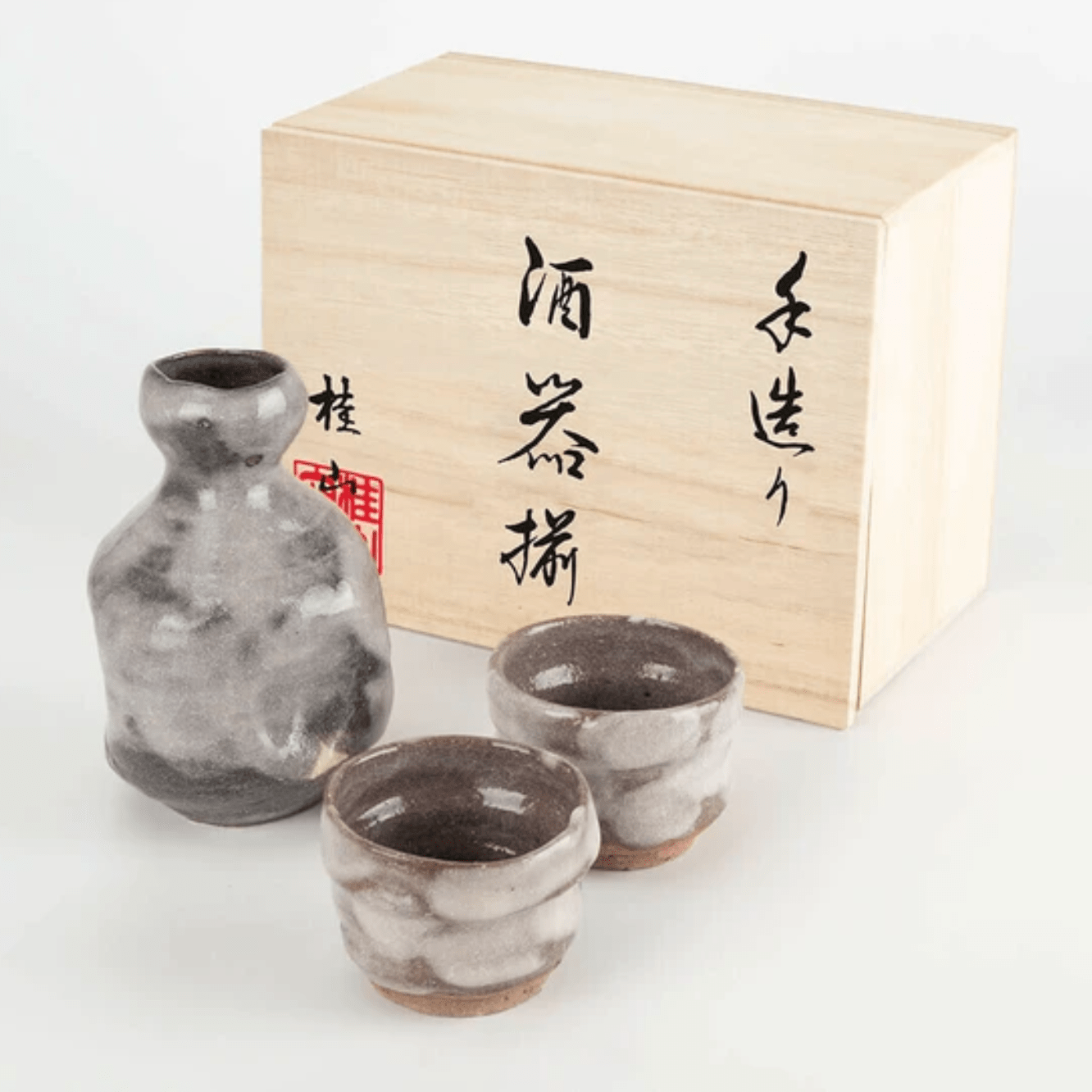
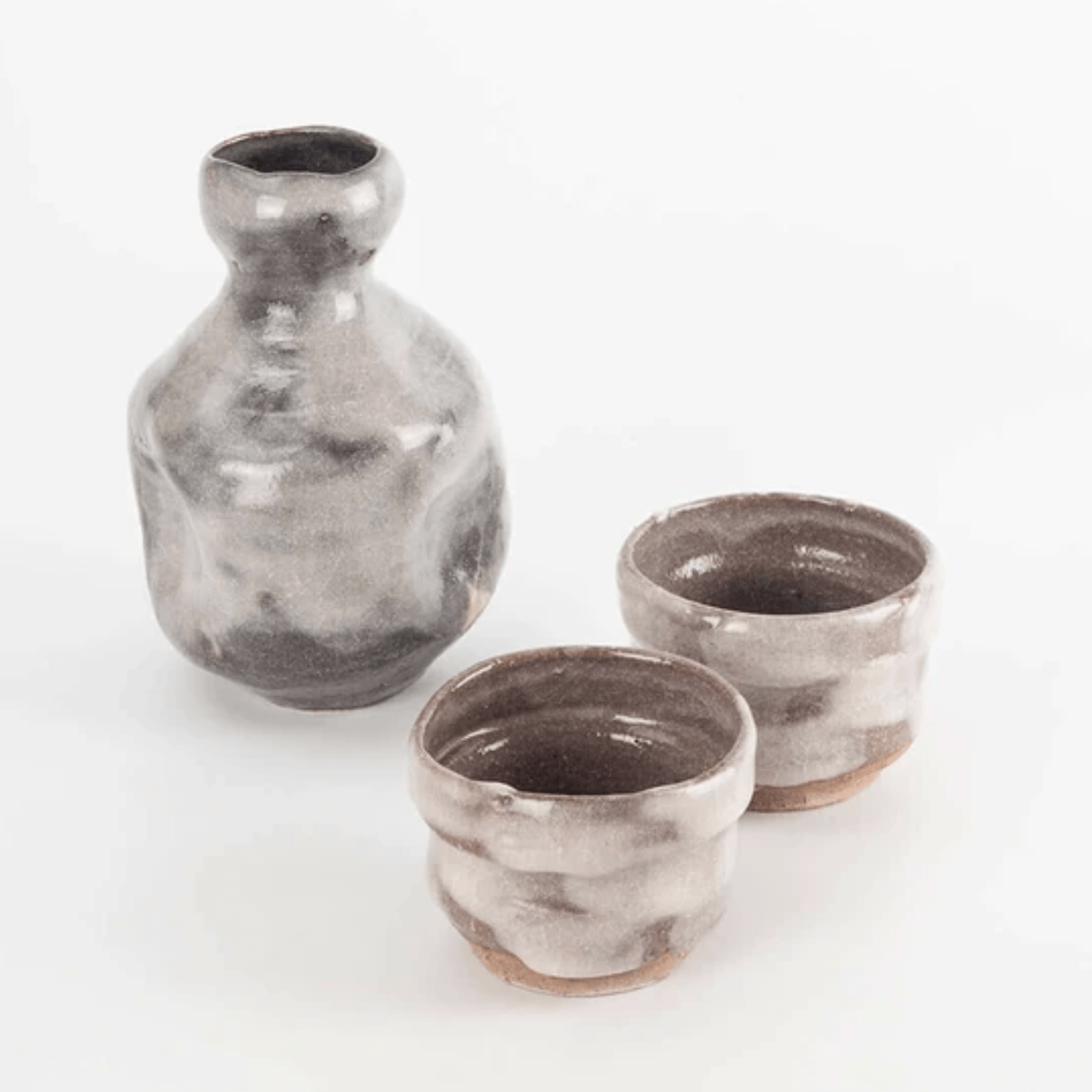
This Handmade Nezumi Shino Sake Set embodies calm, character, and heritage. Crafted by Kazufumi Wada, a Takuo Award-winning master potter from the celebrated Keizan Kiln, each piece reflects a perfect harmony between function and artistry. The Nezumi Shino (literally “mouse-grey Shino”) finish creates a moody backdrop, reminiscent of ink-wash landscapes and winter mists. The tokkuri (sake bottle) measures approximately 8 inches in height and 5 inches in width, featuring an organic silhouette with a gently flared rim that feels inviting in hand. The two accompanying ochoko (cups) stand about 3 inches tall and 3 inches wide, with rounded, textured forms that enhance the tactile experience as you savor each sip.
The Oni Shino glaze is a deeper, more intense variant of traditional Shino, delivering bold contrast and movement across each hand-thrown piece. Shades of stone grey, ash, and warm clay swirl and settle in a natural rhythm, creating a unique look for every set. With this attention to detail, no two pieces are ever alike, making your sake experience distinctly personal.
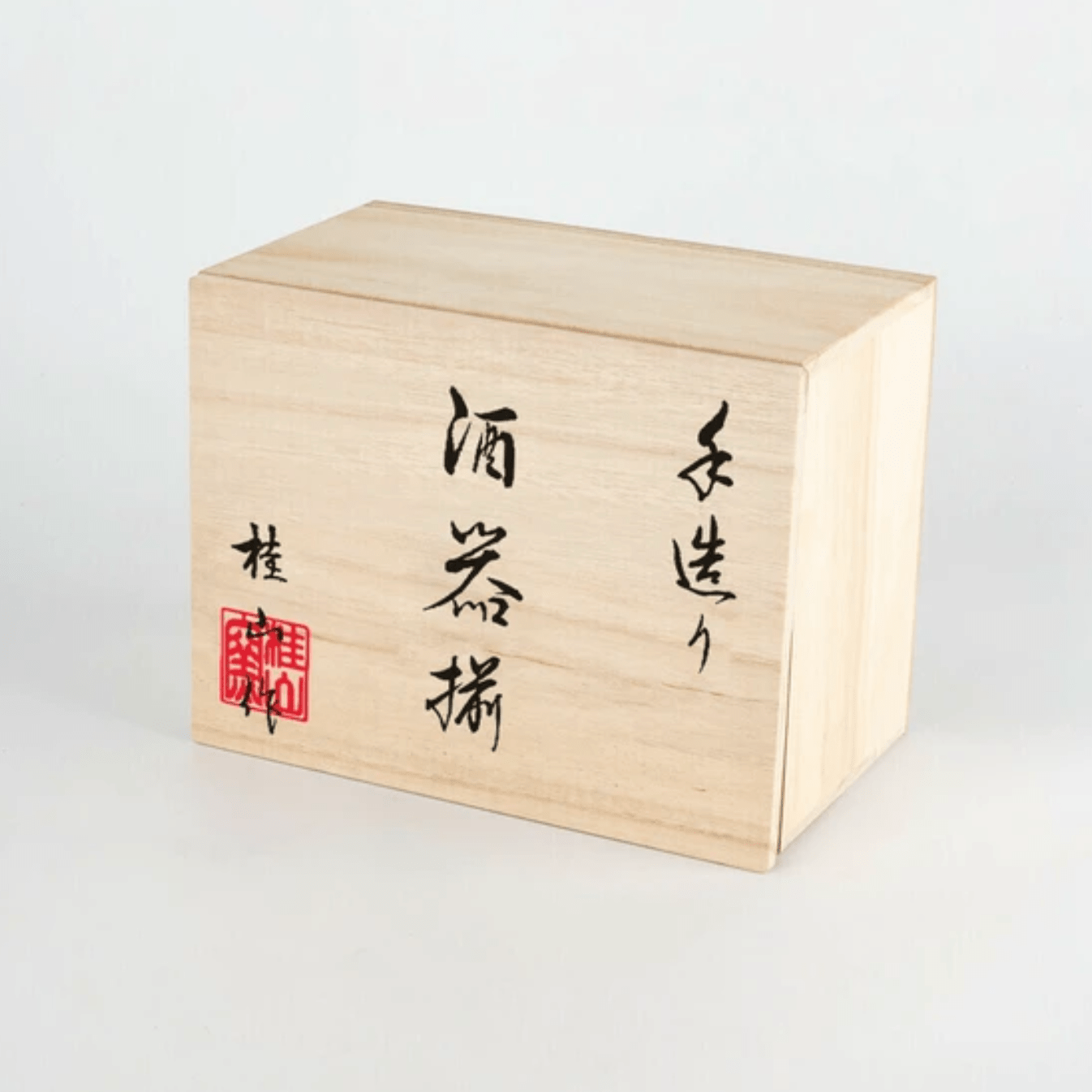
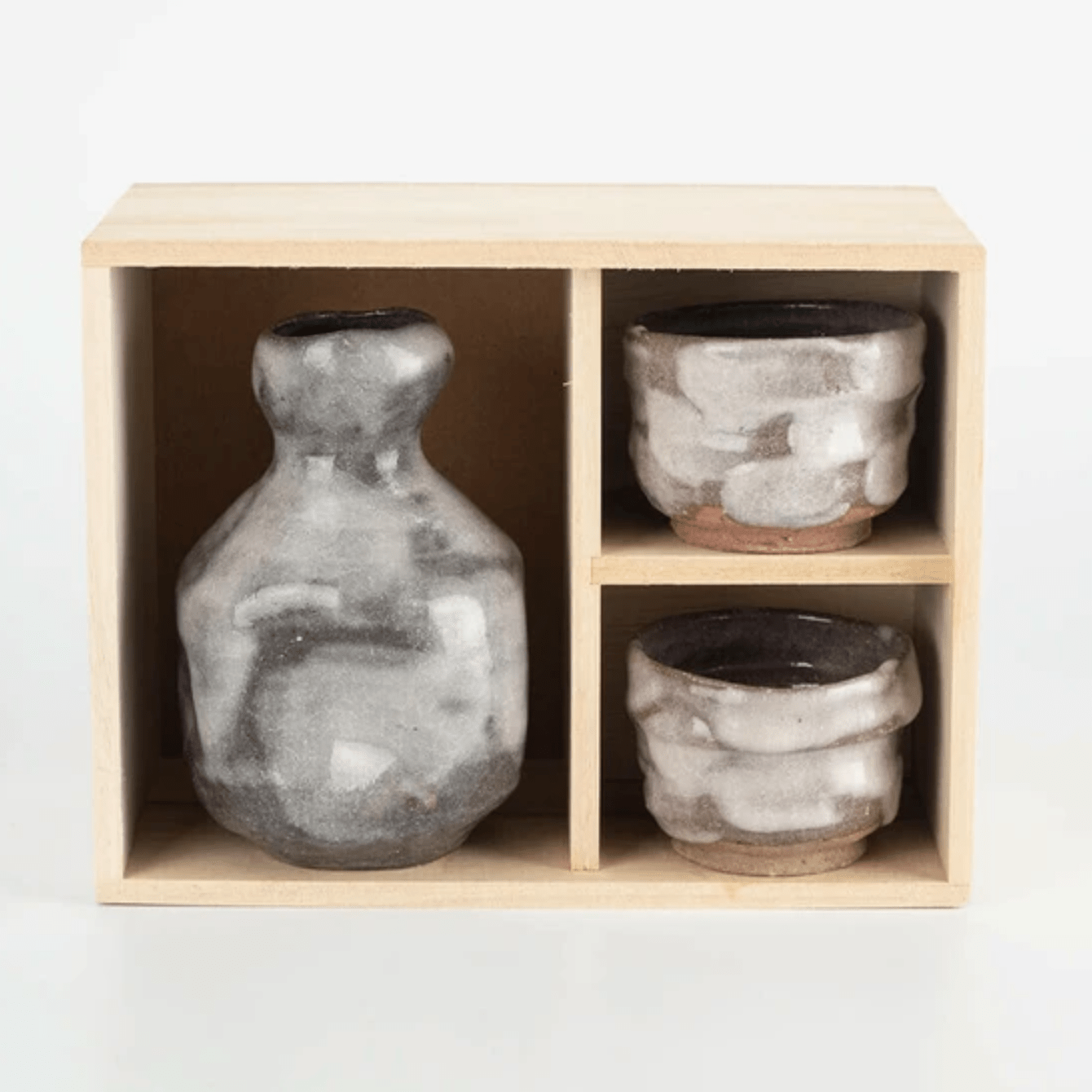
Packaged in an artisan-crafted wooden gift box inscribed with graceful Japanese calligraphy, this set is ideal for intimate gatherings, meaningful gifts, or cherished personal rituals. Whether filled with warm sake on a quiet night or offered as a centerpiece, the Nezumi Shino Sake Set encourages mindfulness and appreciation for subtle beauty. To maintain its exquisite finish, handwashing with gentle soap is recommended.
Let each pour transform into a serene ritual with this one-of-a-kind set—balancing tradition, texture, and tranquility in refined form.
Product Information
Care instructions
Notes
Questions & Answers
What does “Nezumi Shino” mean?
Why does the glaze look slightly uneven?
What comes in the set?
Is this more rustic or refined?


Made by Kazufumi Wada in Toki City, Japan
Kazufumi Wada carries forward a legacy of over 90 years at Keizan Kiln, founded by his grandfather Keijiro Wada, with an unwavering commitment to the timeless art of Japanese ceramics. A true master of his craft, Wada creates each piece entirely by hand—eschewing molds in favor of intuition, tradition, and an acute sensitivity to clay, glaze, and flame. His work is defined by a pursuit of glaze richness, achieved through meticulous control of kiln temperature and firing time, resulting in surfaces that feel both organic and refined. A member of the Mino Ceramics Association, Wada has earned numerous accolades, including selections to prestigious exhibitions such as the Asahi Ceramic Exhibition, Chunichi International Ceramic Exhibition, and the International Ceramic and Porcelain Festival. In recognition of his artistry, he was awarded the 35th Takuo Award by the Mino Ceramic Art Association. Through his guidance and creations, Kazufumi Wada offers a rare and intimate glimpse into the living tradition of Japanese pottery.
FAQs
All you need to know about Japanese Pottery.
What types of traditional pottery are made in Japan?
Japan is home to several renowned pottery styles, including Mino ware (Gifu), Bizen ware (Okayama), Arita and Imari ware (Saga), Shigaraki ware (Shiga), and Mashiko ware (Tochigi). Each region has its own distinct materials, glazes, and firing techniques that reflect local history and aesthetics. Toki City in Gifu Prefecture is particularly renowned as the heart of Mino ware (Minoyaki)—the most widely produced pottery style in Japan.
What materials are used in artisan Japanese pottery?
Most artisan pottery in Japan is made from locally sourced clay, often mixed and refined by hand. Natural minerals and ash are used in glazes, and many pieces are wood-fired or fired in traditional climbing kilns (noborigama), producing unique surface textures and natural variations.
Are artisan Japanese pottery pieces safe for food use?
Yes. Authentic artisan pottery is made with food-safe, lead-free glazes and is carefully fired at high temperatures to ensure durability and safety. However, it's important to follow care instructions, especially for unglazed or porous ceramics.
What makes Japanese pottery different from Western ceramics?
Japanese pottery often emphasizes wabi-sabi—the beauty of imperfection—resulting in organic shapes, subtle asymmetry, and natural glazes. Unlike Western ceramics, which may prioritize uniformity, Japanese pieces often celebrate the individuality of each item, reflecting the artist's hand and the firing process.
How should I care for artisan-made Japanese pottery?
Hand-wash pottery with mild soap and avoid extreme temperature changes (like placing hot items into cold water). Some unglazed pieces may absorb moisture, so allow them to fully dry before storing. Avoid microwaves or dishwashers unless the piece is specifically labeled as safe for such use.
Do I need to season my matcha bowls before using them?
In most cases, seasoning a matcha bowl is not necessary—especially if the bowl is fully glazed, as the glaze naturally seals the surface and makes it ready for use. However, if the bowl is unglazed or has a raw clay base, a simple seasoning process called medome can help prevent cracking or staining. To season, soak the bowl in warm water mixed with a spoonful of cooked rice or flour for about 30–60 minutes, then rinse and let it dry completely. This step helps fill tiny pores in the ceramic and adds durability over time.