Complimentary over $199 · otherwise from $30. Shipping policy
$100 away from complimentary shipping
U.S. duties prepaid at checkout
Import duties and taxes are calculated and paid at checkout, so nothing is due on delivery. Learn more
Sourced in Japan, from the makers
Direct from Japanese workshops and their authorised channels.
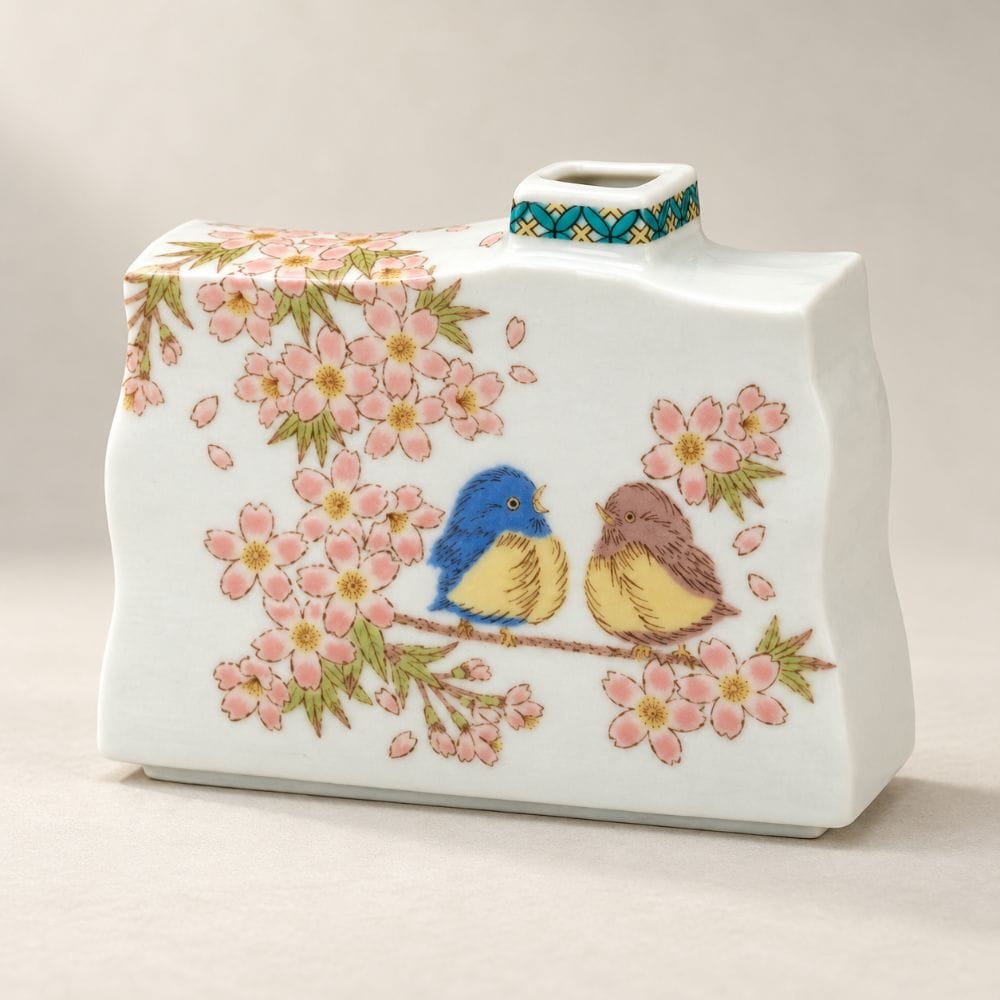
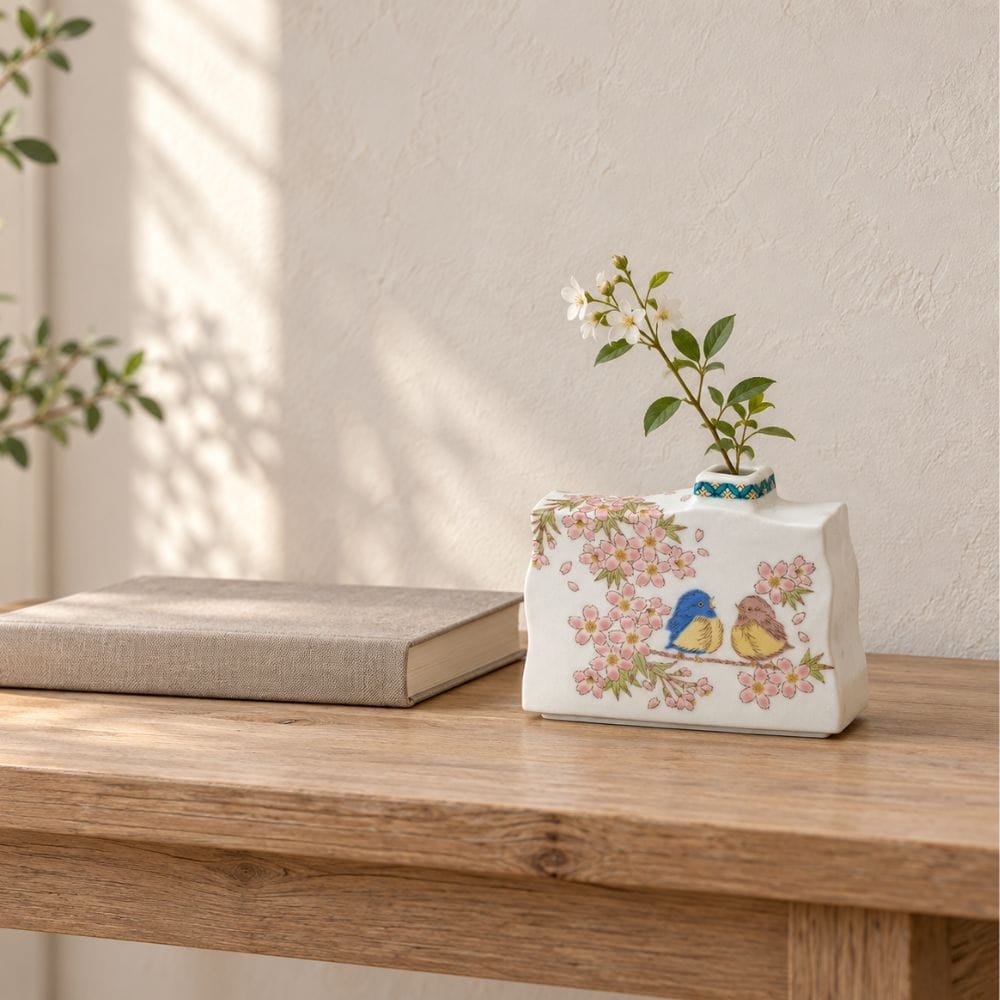
Set the Flower Vase with Sparrow Motif on a narrow shelf and add a few stems to its low, rounded ceramic body. At 2.0" × 6.1" × 4.7" (5 × 15.5 × 12 cm), it gives flowers presence without crowding the surface. Made in Japan, its sparrow uses five Kutani colors and reflects centuries-old Kutani tradition and skilled wheel work. A presentation box makes it a considered gift for flower lovers.
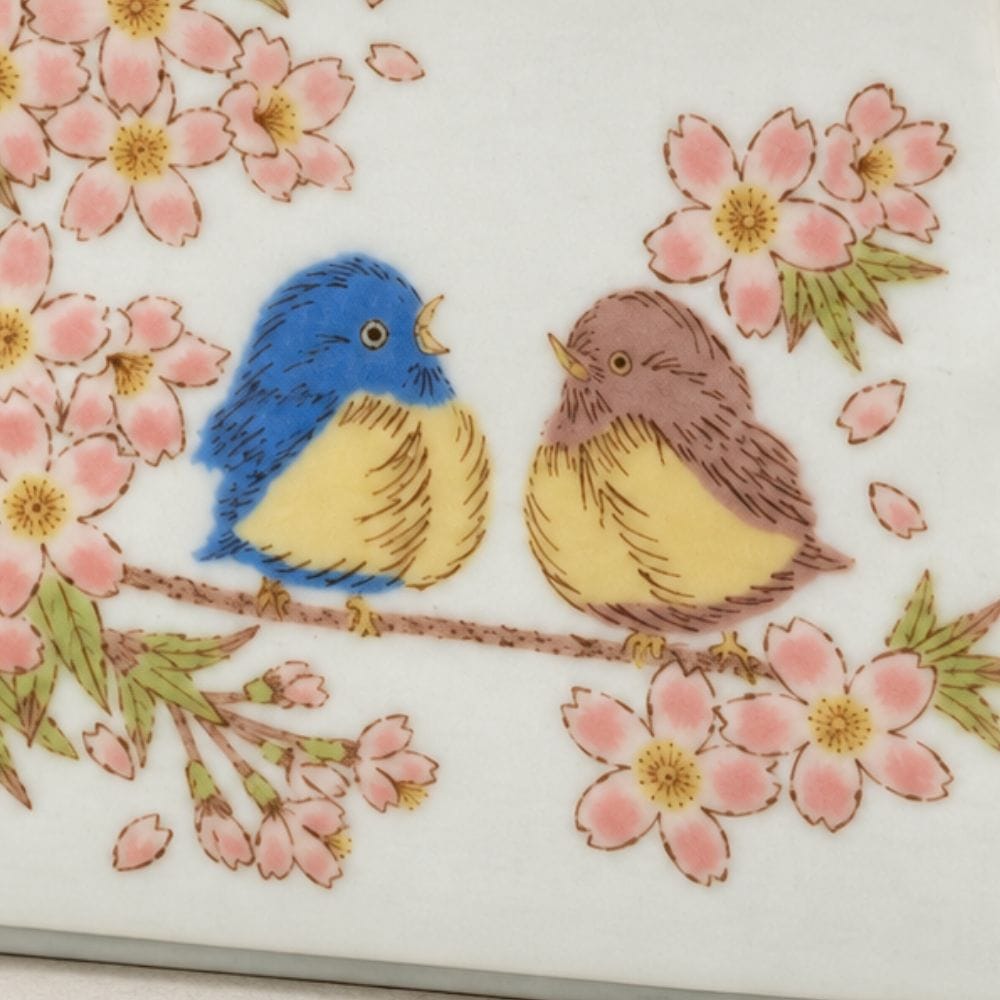
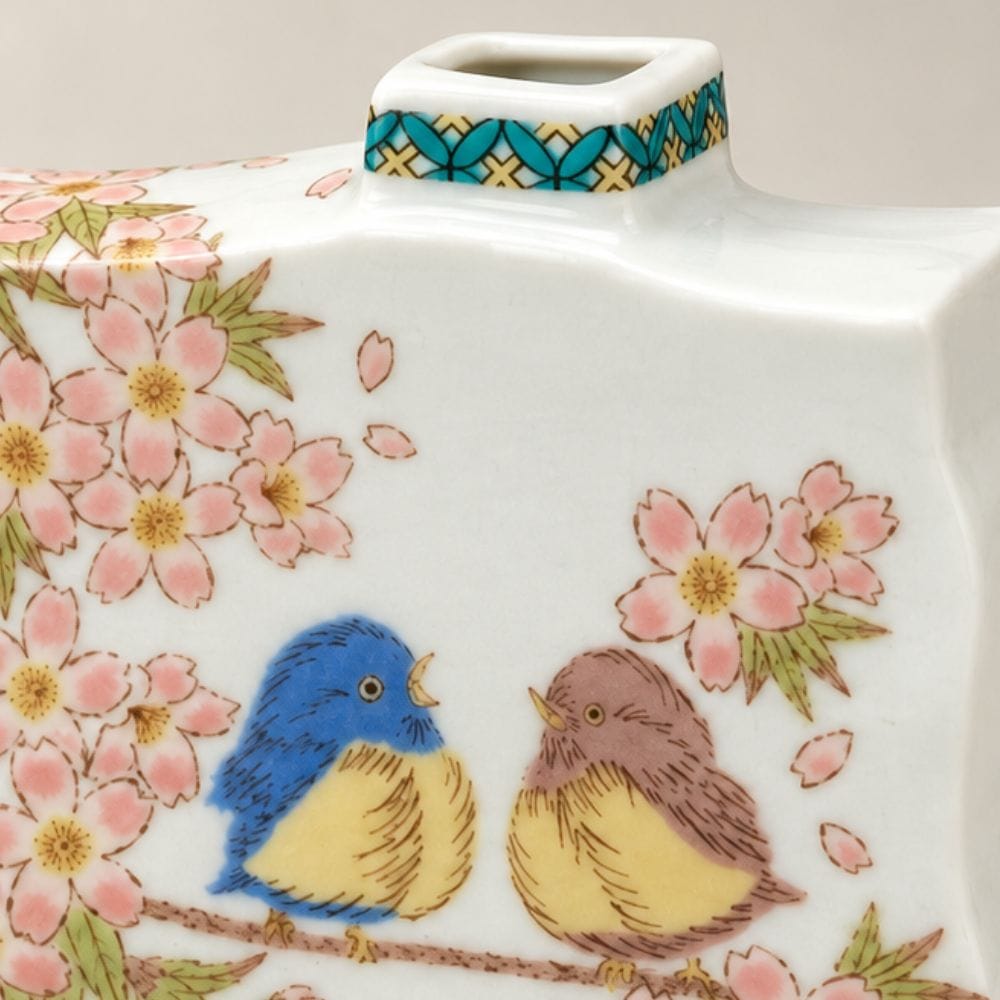
Two sparrows rest on a flowering branch, surrounded by soft pink cherry blossoms. One bird is blue, the other warm brown, with yellow breasts that bring a gentle contrast to the pale ceramic background. Fine outlines, green leaves and scattered petals give the scene plenty to discover at close range.
The broad, softly rectangular face provides space for the decoration to unfold. Gently uneven shoulders rise to a short, off-centre neck, finished with a turquoise geometric band. That small detail gives the vase a distinct character even before a flower is added.
At just 12 cm high, 15.5 cm wide and 5 cm deep, this is a compact piece for a shelf, console or bedside table. Its narrow opening suits a single bloom, a slender sprig or a few fine stems. A light arrangement leaves the sparrows and blossom-covered branches in view; displayed empty, the vase is equally enjoyable as a decorative object.
Made in Japan, the vase belongs to the Kutani ceramic tradition. Its appeal lies in the combination of a simple sculptural form and an intimate nature scene, bringing the colours of spring into the room throughout the year.
Supplied in a presentation box, it makes a thoughtful gift for a bird lover, a flower enthusiast or someone beginning a collection of Japanese ceramics.
Product Information
Material: Ceramic
Style: Kutani ware with sparrow motif
Dimensions (D × W × H): 1.97" × 6.10" × 4.72" (5 cm × 15.5 cm × 12 cm)
Origin: Japan
Packaging: Presentation box
Care: Handle with care; fragile.
Care instructions
Hand wash gently with a soft sponge and mild detergent. Handle with care to protect the fragile ceramic and painted surface.
Artisan & Craft
This compact ceramic vase is shaped on the potter’s wheel, then brought to life with a sparrow motif and the expressive brushwork of Kutani ware. Rooted in Ishikawa’s celebrated Kaga tradition, Kutani is known for its rich five-colour palette—red, green, yellow, purple, and deep blue—applied to nature-inspired scenes with remarkable clarity. Its elongated 6.10" (15.5 cm) form makes a graceful setting for a few stems, while the painted surface remains captivating even when displayed alone.
Note
This ceramic vase is fragile; handle it carefully to protect the painted surface. Hand wash gently with a soft sponge and mild detergent.
Questions About This Piece
What makes the decoration distinctive?
This vase reflects Kutani ware’s distinctive artistic tradition, with expressive decoration using five colors: red, green, yellow, purple, and navy blue. The artwork draws on classic flower-and-bird themes, including the sparrow motif.
Is it suitable for gifting?
Yes. The vase comes in a decorative presentation box, making it a thoughtful gift for someone who appreciates Japanese ceramics and traditional craftsmanship.
How should I care for and handle it?
Handle it carefully because it is a fragile ceramic piece. Its decorative finish and traditional Kutani craftsmanship are best enjoyed with gentle handling.
Kutani ware · Ishikawa, Japan
Kutani: Japan’s art of brilliant color
Kutani ware emerged in Ishikawa in the 17th century and became
celebrated for bold overglaze painting and an unmistakably rich use
of color. Its decorative language ranges from expressive nature motifs
to highly detailed compositions, giving Kutani porcelain a vivid
character unlike almost any other Japanese ceramic tradition.
17th-century rootsborn in Ishikawa
Kutani Gosaifive signature colors
Overglaze paintingbold, layered, expressive
Ishikawa · Hokuriku · Japan
Discover Kutani
Learn more about Kutani ware
What is Kutani ware?
Kutani ware is a tradition of Japanese porcelain associated with
Ishikawa Prefecture. It first developed in the 17th century and is
especially known for richly colored overglaze decoration, bold
compositions and a wide range of styles that evolved over several
centuries.
What are the five colors of Kutani ware?
The traditional Kutani palette is often referred to as Kutani Gosai,
or the five Kutani colors: red, yellow, green, purple and dark blue.
These vivid overglaze enamels are used in different combinations,
from dense decorative painting to more restrained contemporary work.
Where is Kutani ware made?
Kutani ware is associated with Ishikawa Prefecture in Japan’s
Hokuriku region, particularly the areas around Kaga, Komatsu and
Kanazawa. The original Kutani production began near present-day
Kaga in the mid-1600s.
Why does Kutani ware look so different from other Japanese porcelain?
Kutani is distinguished by its emphasis on decoration after the
porcelain body has been fired. Layers of colored enamel are applied
over the glaze, allowing artists to create saturated color, strong
outlines and highly expressive imagery. This gives Kutani ware a
more painterly and often more dramatic appearance than many other
Japanese porcelain traditions.
Choosing a selection results in a full page refresh.