This site uses cookies for better user experience and analytics.
Artisan Kutani Botanical Tea Cup
$99.00
No reviews
No reviews yet · Customers rate us 4.9/5 (44 reviews) · Read them
Artisan Kutani Ceramic Tea Cup • 3.1" diameter • 280cc (9.5 oz) • Made in Japan
In stock
Ships within 4 business days
Secure, insured delivery from Japan
Worldwide shipping from $30 · free over $150. Shipping policy
$99 of $150 with this item · $51 to go
U.S. duties prepaid
No extra import charges on delivery — the price you see is the price you pay. Learn more
Sourced in Japan, from the makers
Direct from Japanese workshops and their authorised channels.
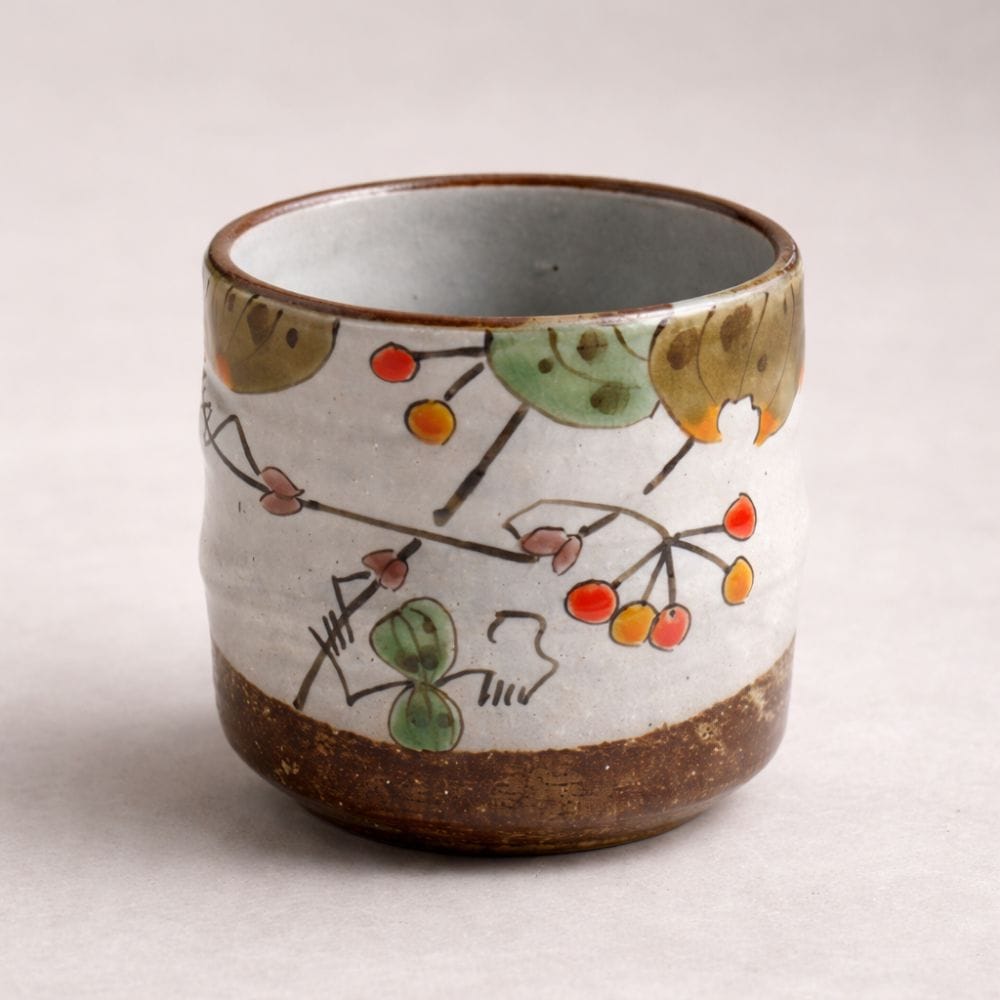
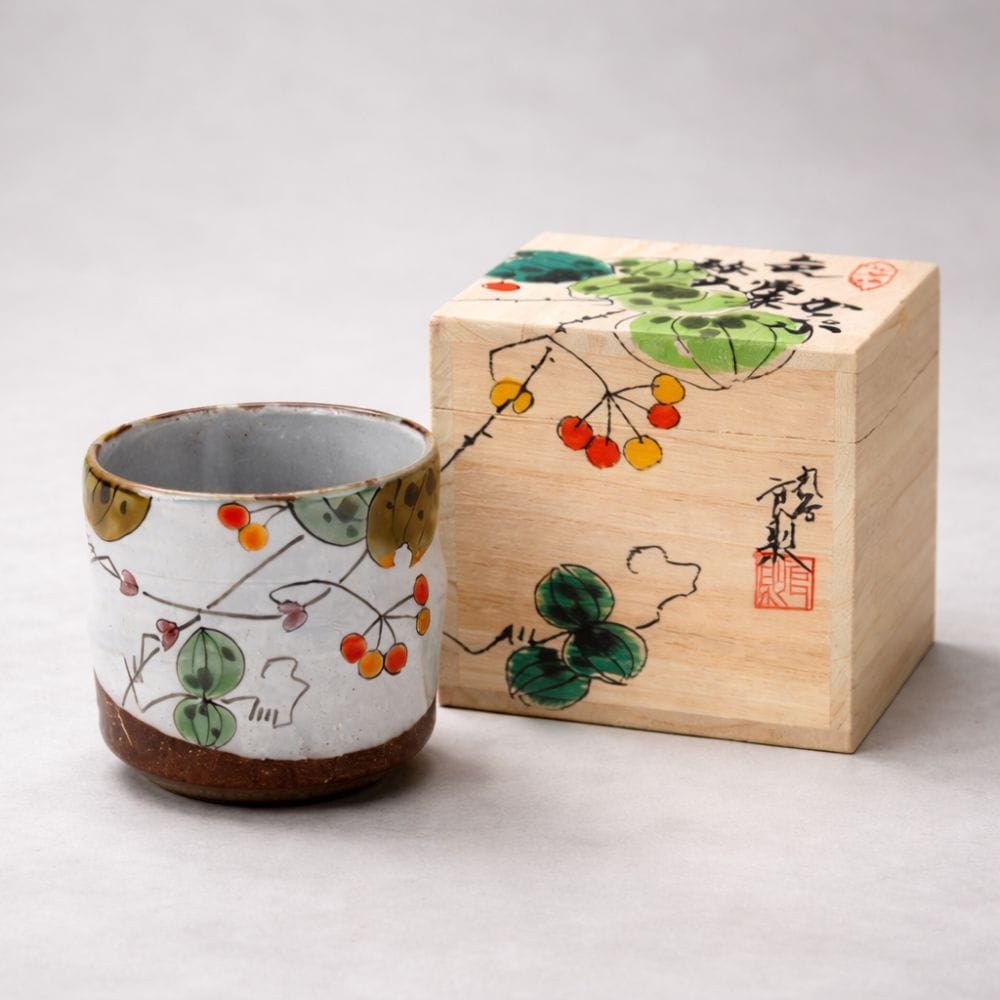
Enjoy tea in the Artisan Kutani Botanical Tea Cup, a ceramic cup made in Japan and finished with hand-drawn overlay and box writing by Kutani craftsman Yoshinori Fukuda. Sized for 280 cc of tea, it comes with a paulownia box that can also be used for display or storage.
Why You’ll Love It
Ceramic cup made in Japan for everyday tea use
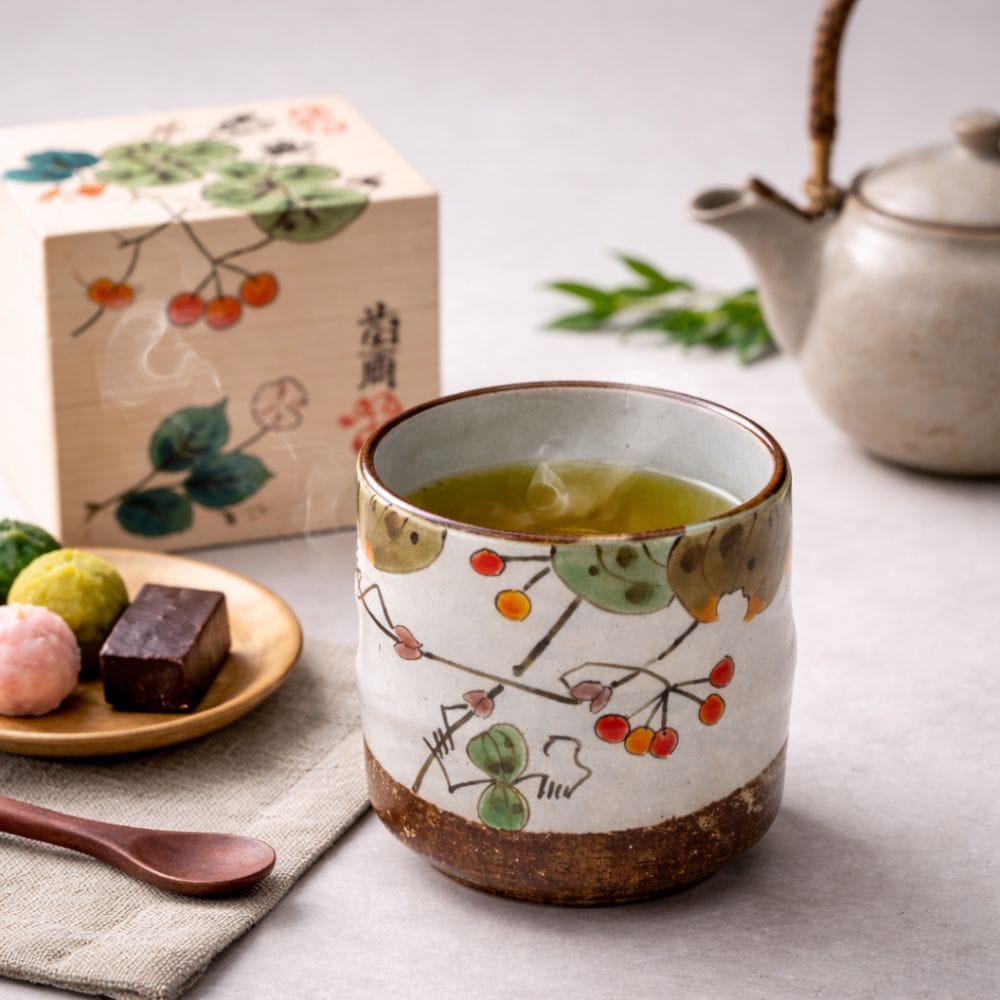
280 cc capacity suits a full serving of tea
Hand-drawn overlay by Yoshinori Fukuda
Includes a paulownia box you can use for storage or display
Enjoy tea with the Artisan Kutani Botanical Tea Cup, a ceramic cup made in Japan and finished with hand-drawn overlay and box writing by Kutani traditional craftsman Yoshinori Fukuda.
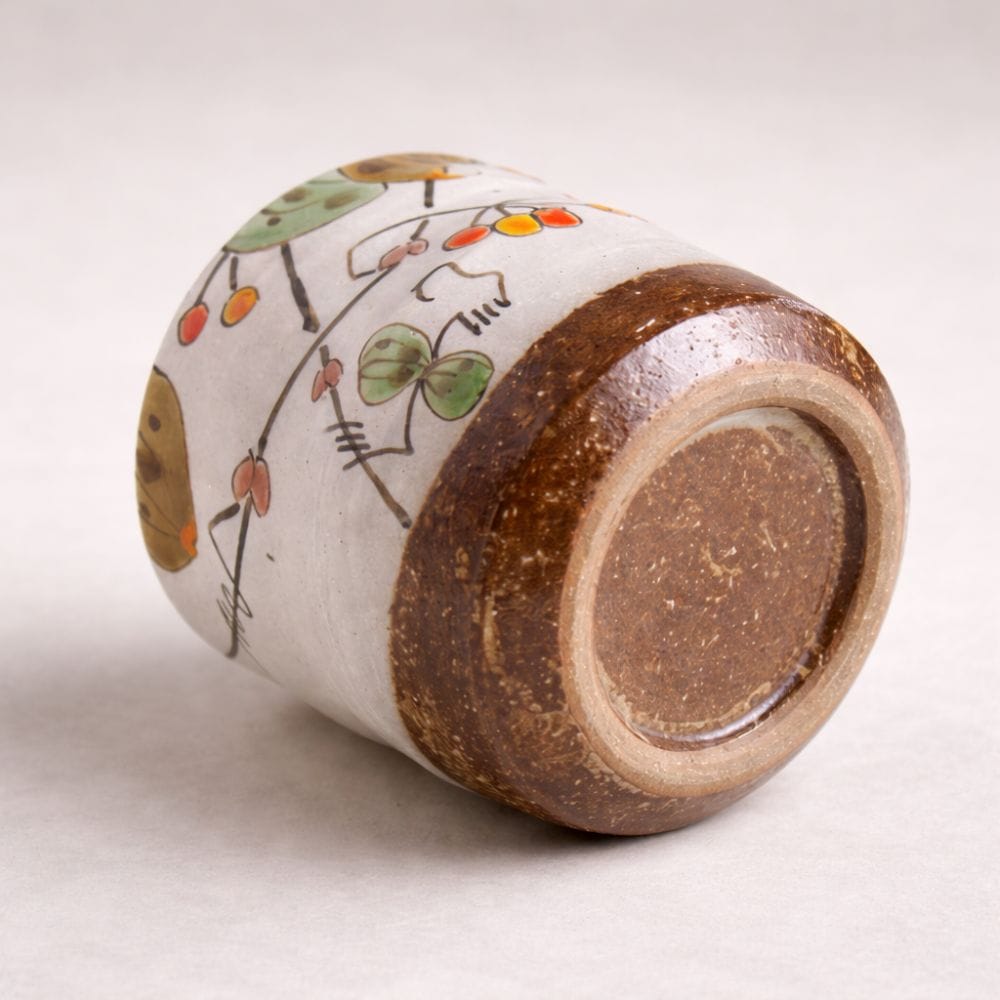
The cup measures 3.1" (8.0 cm) in diameter and 3.0" (7.5 cm) in height, with a capacity of 280 cc. It is packaged in an individual paulownia box, which can also be used for decoration or to hold small items.
The box writing is painted with water-based paint, so please keep it away from water. Hand wash only; do not use a dishwasher or microwave.
Product Information
Dimensions: Diameter 3.1 in / 8.0 cm, Height 3.0 in / 7.5 cm
Capacity: 9.5 fl oz / 280 cc
Material: Ceramic, Paulownia box
Made in Japan
Packaging: Individual box
Precautions: Box writing is painted with water-based paint; keep away from water
Care instructions
- Gently wipe clean with a soft, damp cloth after each use.
- Avoid using abrasive materials that may scratch the surface.
- Do not place in the dishwasher or microwave; hand wash only.
- Keep the decorative box away from water, as the writing is painted with water-based paint.
Artisan & Craft
Kutani ware is a traditional Japanese craft, and this tea cup is made in Japan with hand-drawn overlay and box writing by Yoshinori Fukuda, a Kutani traditional craftsman certified by the Ministry of Economy, Trade and Industry.
Note
The decorative box is painted with water-based paint, so please keep the box away from water.
Questions About This Piece
What comes with the tea cup?
The cup comes in an individual paulownia box. The box can also be used for decoration or for storing small items.
How much tea does it hold?
It holds 280 cc, which is about 9.5 fl oz.
Who made the decoration on the cup?
The overlay and box writing were hand-drawn by Kutani traditional craftsman Yoshinori Fukuda.
How should I care for the cup and box?
Hand wash only, and avoid the dishwasher and microwave. Keep the decorative box away from water because the writing is painted with water-based paint.
Kutani ware · Ishikawa, Japan
Kutani: Japan’s art of brilliant color
Kutani ware emerged in Ishikawa in the 17th century and became
celebrated for bold overglaze painting and an unmistakably rich use
of color. Its decorative language ranges from expressive nature motifs
to highly detailed compositions, giving Kutani porcelain a vivid
character unlike almost any other Japanese ceramic tradition.
17th-century rootsborn in Ishikawa
Kutani Gosaifive signature colors
Overglaze paintingbold, layered, expressive
Ishikawa · Hokuriku · Japan
Discover Kutani
Learn more about Kutani ware
What is Kutani ware?
Kutani ware is a tradition of Japanese porcelain associated with
Ishikawa Prefecture. It first developed in the 17th century and is
especially known for richly colored overglaze decoration, bold
compositions and a wide range of styles that evolved over several
centuries.
What are the five colors of Kutani ware?
The traditional Kutani palette is often referred to as Kutani Gosai,
or the five Kutani colors: red, yellow, green, purple and dark blue.
These vivid overglaze enamels are used in different combinations,
from dense decorative painting to more restrained contemporary work.
Where is Kutani ware made?
Kutani ware is associated with Ishikawa Prefecture in Japan’s
Hokuriku region, particularly the areas around Kaga, Komatsu and
Kanazawa. The original Kutani production began near present-day
Kaga in the mid-1600s.
Why does Kutani ware look so different from other Japanese porcelain?
Kutani is distinguished by its emphasis on decoration after the
porcelain body has been fired. Layers of colored enamel are applied
over the glaze, allowing artists to create saturated color, strong
outlines and highly expressive imagery. This gives Kutani ware a
more painterly and often more dramatic appearance than many other
Japanese porcelain traditions.
Choosing a selection results in a full page refresh.